
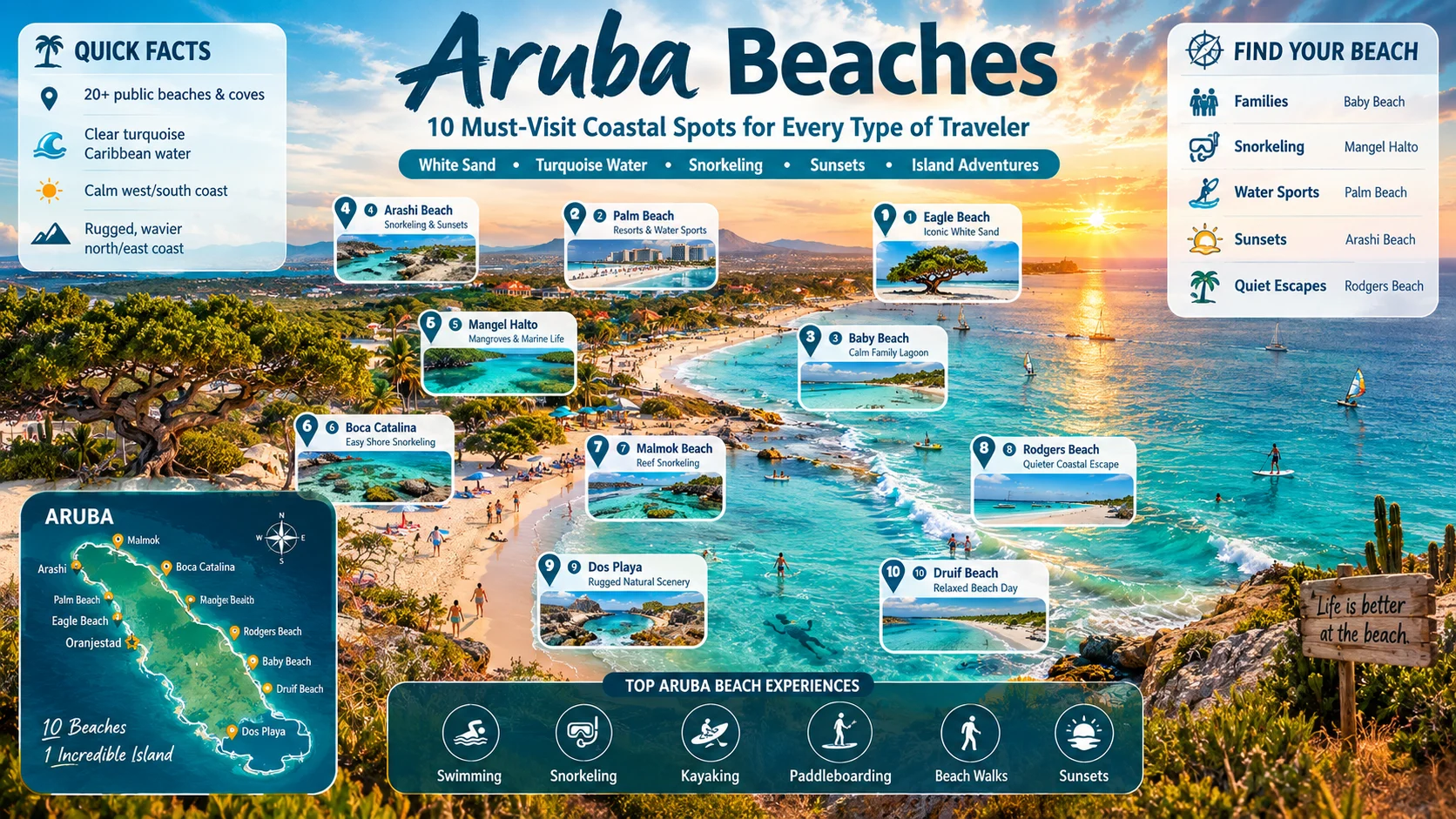

Aruba beaches are known for powdery white sand, crystal-clear turquoise Caribbean water, calm swimming bays, vibrant coral reefs, and dramatic wind-swept coastlines. Popular beaches to explore include Eagle Beach, Palm Beach, Baby Beach, Arashi Beach, Mangel Halto, and Boca Catalina, offering swimming, snorkeling, relaxation, and scenic coastal experiences.
Aruba may be famous for postcard-perfect white sand and turquoise water, but its beaches are more diverse than they first appear.
The island has more than 20 public beaches and coves, ranging from calm, shallow bays to rugged shores exposed to stronger waves and trade winds. The west and south coasts generally offer calmer conditions, while the north and east sides feel wilder and more dramatic.
That difference is important when planning a beach day.
If you want easy swimming, you may prefer Baby Beach or Boca Catalina. If snorkeling is your priority, Mangel Halto and Malmok deserve attention. For the classic Caribbean beach experience, Eagle Beach is hard to overlook.
And if you want to see a less-developed side of Aruba, Dos Playa offers a completely different landscape inside Arikok National Park.
Aruba Beaches: Quick Facts
| Feature | Details |
|---|---|
| Destination | Aruba |
| Region | Southern Caribbean |
| Beach Access | Public beaches and coves |
| Number of Public Beaches & Coves | 20+ |
| Main Water | Caribbean Sea |
| Typical Sand | White, fine coral sand on many west-coast beaches |
| Water | Clear turquoise to deep Caribbean blue |
| Calmest Areas | West and south coasts |
| Stronger Waves | North and east coasts |
| Typical Temperature | Around 80–90°F (27–32°C) year-round |
| Peak Dry Season | December–April |
| Rainier Period | October–December |
| Main Activities | Swimming, snorkeling, diving, kayaking, SUP, wind/water sports |
| Beach Environment | Reefs, mangroves, limestone shores, dunes and coves |
Aruba’s tourism authority describes the island as having a consistently warm climate, refreshing trade winds and relatively little rainfall. Average temperatures generally remain around 27–32°C (80–90°F).
1. Eagle Beach — The Iconic Aruba Beach


If you have seen an Aruba postcard, there is a good chance you have seen Eagle Beach.
Its wide stretch of soft white sand, clear Caribbean water and famous fofoti trees make it one of the island’s most recognizable coastal landscapes. Aruba’s tourism authority says Eagle Beach is the island’s widest beach and notes that it has parking, shaded areas, beach huts and water-sports options.
It is also an important nesting area for sea turtles, so visitors should take care around marked nesting sites and avoid disturbing wildlife.
Best for: Swimming, relaxing, photography, sunsets and long beach walks
Don’t miss: The famous fofoti trees near the shoreline.
Why visit: This is the beach to choose when you want the classic Aruba image in real life.
2. Palm Beach — Best for Resorts, Dining and Water Sports


Palm Beach brings a livelier side of Aruba.
The beach sits alongside the island’s major resort area and offers easy access to restaurants, beach bars, piers and water-sports operators. Aruba’s official tourism information specifically highlights diving, water sports, piers and beach bars around Palm Beach.
This makes it especially convenient if you want your beach day to include plenty of activity.
You can spend the morning swimming, try a water sport in the afternoon, then stay nearby for dinner and nightlife.
Best for: Resorts, couples, water sports, dining and nightlife
Don’t miss: Staying through sunset when the coastline becomes especially atmospheric.
3. Baby Beach — Best for Families and Shallow Water


Baby Beach is shaped around a shallow lagoon at Aruba’s southeastern end, close to San Nicolas.
Its calm, shallow water is one of its defining features. Aruba’s tourism authority describes it as particularly suitable for families with small children and notes that visitors can wade a considerable distance while still touching the bottom.
The area also offers food and refreshment options, making it easier to spend several hours here rather than treating it as a quick photo stop.
One important detail: where the lagoon opens toward the sea, snorkeling conditions can change, so visitors should stay within marked snorkeling areas and pay attention to local guidance.
Best for: Families, shallow-water swimming, relaxing and beginner snorkeling
Don’t miss: The lagoon’s transition toward the open Caribbean.
4. Arashi Beach — Best for Snorkeling and Sunsets


Arashi Beach sits north of Malmok, on the road toward the California Lighthouse.
It combines white sand with relatively calm, clear water and easy access. Aruba’s tourism authority highlights Arashi for swimming, snorkeling, family visits and sunsets, with beach huts, parking and other amenities available.
Its location also makes it easy to combine with nearby attractions.
Spend the afternoon snorkeling, then continue toward the California Lighthouse area before returning for sunset.
Best for: Snorkeling, families, swimming, sunsets and sightseeing
Don’t miss: Combining your beach stop with the California Lighthouse.
5. Mangel Halto — Best for Snorkeling, Kayaking and Nature


Mangel Halto feels different from the large resort beaches.
Mangroves surround its shallow, clear waters, creating a more natural setting for snorkeling, kayaking and stand-up paddleboarding. Aruba’s tourism authority also identifies it as a shore-diving location with marine life including reef fish, sponges and anemones.
The combination of mangroves, reef habitat and shallow water makes it particularly interesting for travelers who want to explore rather than simply lie on the sand.
Best for: Snorkeling, kayaking, SUP, shore diving and nature
Don’t miss: Exploring the mangrove-lined water and reef environment.
6. Boca Catalina — Best for an Easy Snorkeling Stop


Boca Catalina is a small, sheltered bay in the Malmok area.
Its clear, calm water and close-to-shore reef make it a convenient snorkeling location, particularly for travelers who don’t want to commit to a long excursion. Aruba’s tourism authority describes it as suitable for swimming and snorkeling across different age groups.
The beach is accessible by steps from a parking area beside the road, making it a practical stop during a northern-coast beach drive.
Best for: Snorkeling, swimming, families and quieter beach time
Don’t miss: Arriving earlier on busy days if you prefer a quieter experience.
7. Malmok Beach — Best for Reef Snorkeling


Malmok is not the traditional wide sandy beach.
Instead, its limestone coastline is broken by small sandy sections and coves. The shallow, exceptionally clear water makes the area popular for snorkeling, while reefs and nearby wrecks provide additional opportunities for diving.
Because parts of the shoreline are rocky, appropriate footwear can be useful when entering or moving around the water.
Best for: Snorkeling, diving, reef exploration and swimming
Don’t miss: Looking beneath the surface—the underwater scenery is a major part of Malmok’s appeal.
8. Rodgers Beach — Best for a Quieter Local Atmosphere


Next to Baby Beach, Rodgers Beach offers a noticeably quieter atmosphere.
It is a narrow strip of white sand beside a calm bay where local fishermen anchor colorful boats. Aruba’s tourism authority describes it as a quieter alternative to busier Palm Beach and Baby Beach, particularly during weekdays.
That makes Rodgers a good choice when you want to slow down and experience a less resort-focused side of Aruba.
Best for: Quiet beach time, swimming, photography and local atmosphere
Don’t miss: The colorful fishing boats along the bay.
9. Dos Playa — Best for Rugged Natural Scenery


Dos Playa is where Aruba’s beach personality changes completely.
Located inside Arikok National Park, it consists of two adjoining coves carved into the island’s limestone coastline. The setting is far more rugged than the calm resort beaches on Aruba’s western side.
There are no resort-style facilities here, which is part of the attraction.
However, this is not the place to treat like a casual swimming beach. Aruba’s tourism authority warns that the water can have strong undertow and rough conditions, making it unsuitable for inexperienced swimmers and bodyboarders.
Best for: Photography, exploration, hiking and wild coastal scenery
Don’t miss: The surrounding Arikok National Park landscape.
10. Druif Beach — Best for a Relaxed Beach Day


Druif Beach is a long, oval-shaped stretch of ivory sand close to the Eagle Beach area.
Its relatively calm Caribbean waters and proximity to accommodations make it convenient for a relaxed day by the sea. Aruba’s tourism authority notes that Druif connects with other beaches in the Eagle Beach area, creating a long stretch of white-sand coastline.
It is particularly useful for travelers who want beach access without going far from their accommodation.
Best for: Swimming, relaxing, beach walks and water activities
Don’t miss: Walking along the connected coastline toward the Eagle Beach area.
Which Aruba Beach Is Right for You?
| What You Want | Beach to Consider |
|---|---|
| Iconic white-sand scenery | Eagle Beach |
| Resorts and nightlife | Palm Beach |
| Family-friendly shallow water | Baby Beach |
| Snorkeling + sunset | Arashi Beach |
| Mangroves + snorkeling | Mangel Halto |
| Easy snorkeling | Boca Catalina |
| Reef and wreck snorkeling | Malmok Beach |
| Quiet local atmosphere | Rodgers Beach |
| Rugged nature | Dos Playa |
| Relaxed beach day | Druif Beach |
This isn’t a ranking of the beaches. Aruba’s coastline is diverse enough that the right choice depends heavily on what you want to do.
Best Time to Visit Aruba Beaches
Aruba is a year-round beach destination, with average temperatures generally in the low-to-mid 80s Fahrenheit.
For visitors prioritizing drier weather, Aruba’s tourism authority identifies December through April as the peak period. October through December is generally the wetter period, although rainfall is usually limited and often arrives as short showers.
The trade winds are another important part of the experience. Aruba remains breezy throughout the year, while stronger winds from May through October can create favorable conditions for wind-related water sports.
So instead of asking only “When is Aruba’s beach season?”, think about your priority:
Dry-weather beach vacation: December–April
Potentially quieter and more budget-conscious trip: Shoulder and off-season periods
Wind-related water sports: May–October can be particularly interesting
Things to Do at Aruba Beaches
Aruba offers much more than swimming.
Depending on the beach and conditions, visitors can enjoy:
Swimming
Snorkeling
Scuba diving
Kayaking
Stand-up paddleboarding
Windsurfing
Kitesurfing
Beach walking
Photography
Sunset watching
Wildlife observation
The west and south coasts are generally more protected, while the north and east coasts are more exposed to waves and wind. That difference should guide your activity choice.
Aruba Beach Safety Tips
Beautiful water does not automatically mean safe conditions.
Before entering the sea, check local conditions and understand whether the beach is exposed to stronger waves or currents.
Dos Playa, for example, has rougher water and strong undertow, so inexperienced swimmers should avoid entering there.
At Baby Beach, stay within the marked snorkeling area when snorkeling.
For snorkeling around rocky areas such as Malmok, appropriate water footwear can also be useful.
And don’t touch coral, marine animals or sea-turtle nests.
Aruba is currently also operating temporary beach guidelines introduced in 2026 while a broader beach policy is being finalized. The guidance emphasizes that beaches are public shared spaces and asks visitors to use them responsibly.
Responsible Beach Travel in Aruba
The most beautiful parts of Aruba are also places where visitors can make a real difference.
Avoid standing on coral.
Don’t feed marine animals.
Don’t touch sea turtles or their nests.
Take rubbish with you.
Use reef-conscious sunscreen where appropriate.
Respect beach vegetation and protected areas.
Keep noise reasonable in quieter local areas.
Aruba’s tourism guidance specifically encourages visitors to respect wildlife, coral and the cleanliness of the beaches.
Travel Tips for Exploring Aruba Beaches
If you’re planning to visit several beaches rather than staying at one resort beach, a rental car can make the experience easier. Aruba’s major beaches are also accessible by public transportation, but having your own transport gives you more flexibility for smaller coves and the island’s rugged coastline.
A practical beach day kit should include:
Sunscreen
Reusable water bottle
Hat and sunglasses
Swimwear
Towel
Water shoes for rocky areas
Snorkeling equipment
Light cover-up
Waterproof phone pouch
Small day bag
Most importantly, don’t plan every beach around the same experience.
Try one calm swimming beach, one snorkeling location, and one rugged coastal area.
That gives you a much better sense of what makes Aruba’s coastline distinctive.
Final Thoughts
Aruba beaches are not simply a collection of white-sand postcards.
Eagle Beach delivers the iconic scenery. Palm Beach brings energy and activities. Baby Beach offers shallow lagoon waters. Mangel Halto reveals mangroves and marine life. Malmok and Boca Catalina turn snorkeling into the main attraction, while Dos Playa shows a rugged side of the island that feels worlds away from the resort zone.
That variety is the real reason to explore beyond the beach closest to your hotel.
Choose one beach for the view, another for the water, and another for the adventure and you’ll experience far more of Aruba than a single postcard can show.
