
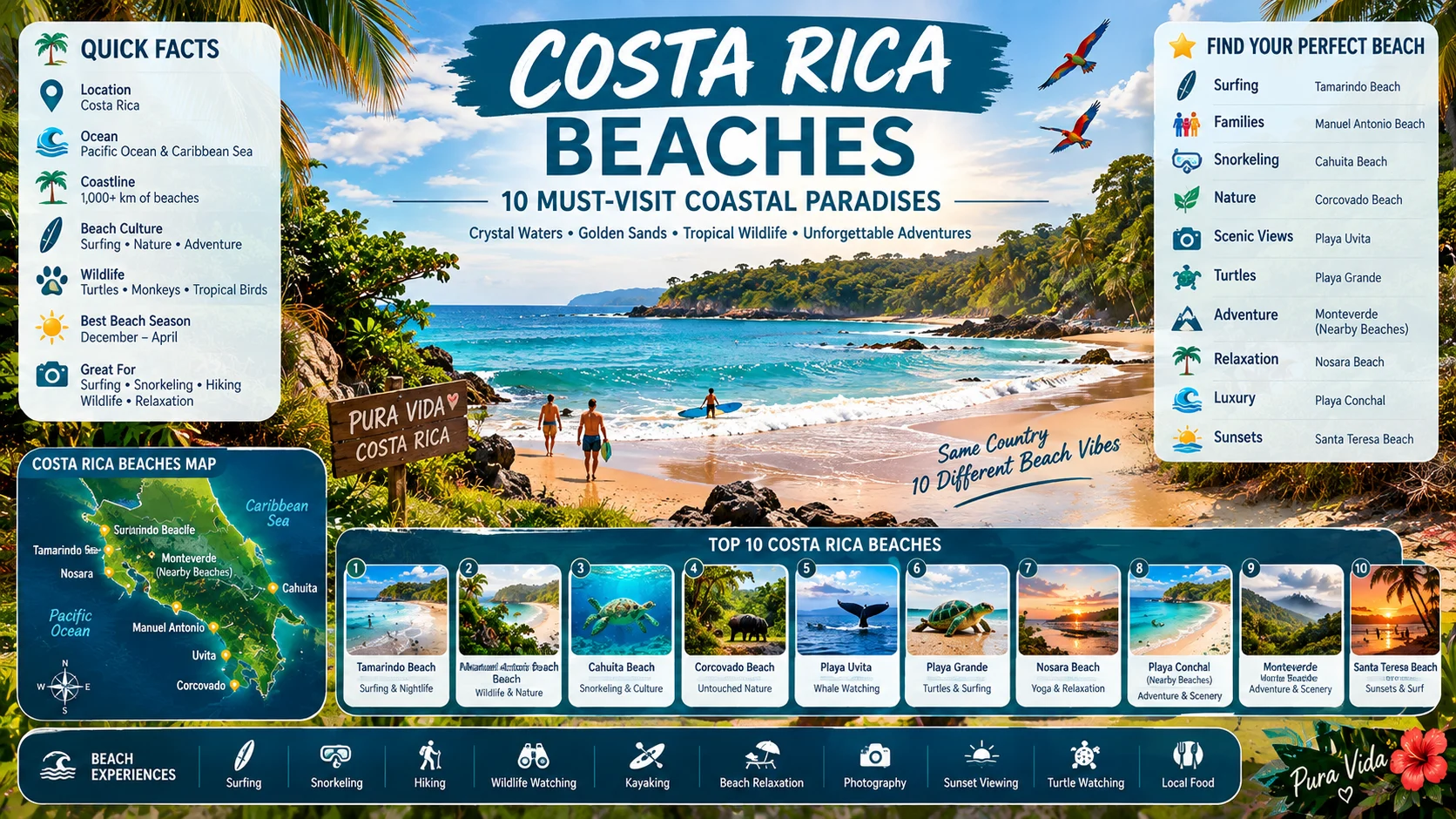

Costa Rica beaches range from white-shell shores and calm bays to powerful surf beaches surrounded by rainforest. The best spots include Playa Conchal, Tamarindo, Nosara, Manuel Antonio, Uvita, Dominical, Cahuita, and Puerto Viejo, each offering a different coastal experience.
Why Costa Rica Beaches Are Worth Exploring
Costa Rica is one of those destinations where a beach trip can become much more than lying on the sand.
One morning, you can watch surfers tackle Pacific waves. Later, you might walk through tropical forest, kayak through a mangrove, spot monkeys, or watch wildlife along the coast.
The country’s beaches are also remarkably diverse. Guanacaste is known for sunny Pacific beaches, while the Central and South Pacific combine coastline with rainforest and national parks. On the Caribbean side, beaches around Cahuita and Puerto Viejo bring together darker and lighter sands, coral reefs, tropical vegetation, and a distinct Caribbean atmosphere.
So instead of asking which beach is simply “the best,” it makes more sense to ask:
What kind of beach experience do you want?
Quick Facts About Costa Rica Beaches
| Feature | Details |
|---|---|
| Country | Costa Rica |
| Coastlines | Pacific Ocean and Caribbean Sea |
| Main Beach Regions | Guanacaste, Central Pacific, South Pacific, South Caribbean |
| Beach Types | White sand, golden sand, dark sand, rocky coves |
| Popular Activities | Swimming, surfing, snorkeling, diving, kayaking, wildlife watching |
| Best For | Beach vacations, nature, surfing, wildlife, adventure |
| Wildlife Highlights | Sea turtles, monkeys, whales, dolphins, seabirds |
| Popular Travel Period | Dry-season beach travel varies by region |
| Famous Destinations | Playa Conchal, Tamarindo, Manuel Antonio, Uvita, Puerto Viejo |
Costa Rica’s tourism board describes the country as having roughly 1,500 kilometers of coastline and emphasizes the diversity of its Pacific and Caribbean beaches.
1. Playa Conchal — Best for Crystal-Clear Water and Shell Beaches


Playa Conchal is one of the most distinctive beaches in Guanacaste.
Its shoreline is famous for being composed largely of tiny shell fragments rather than ordinary sand. Add clear water, tropical vegetation, and a rocky headland, and the result feels very different from a typical beach.
The official Costa Rica tourism board highlights Playa Conchal for swimming, hiking, horseback riding, boat excursions, diving, and other water activities. It also notes its Blue Flag ecological certification.
Best for: Swimming, snorkeling, photography, relaxing
Don’t miss: Walking toward the rocky headland for a wider view of the coastline.
Why visit: If you want a beach that looks noticeably different from the classic palm-tree-and-white-sand postcard, Conchal is a memorable choice.
2. Tamarindo Beach — Best for Surfing, Dining and Nightlife


Tamarindo combines a beautiful Pacific beach with a lively destination atmosphere.
The bay is connected with Playa Grande and Playa Ventanas and sits beside mangrove habitat around the Tamarindo estuary. The tourism board describes Tamarindo as one of the country’s famous surfing beaches and notes its restaurants, hotels, nightlife, and Blue Flag recognition.
Best for: Surfing, first-time Costa Rica visitors, dining, nightlife
Don’t miss: Exploring the estuary and mangrove environment rather than spending your entire visit on the sand.
Travel appeal: Tamarindo works especially well when you want nature during the day and plenty of places to eat and relax afterward.
3. Playa Flamingo — Best for a Refined Beach Escape


Playa Flamingo is a good option when you want beautiful coastal scenery without giving up comfortable accommodation and dining options.
The beach sits in a scenic bay in Guanacaste, where white sand and Pacific water create an inviting setting.
Costa Rica’s tourism information describes Flamingo as suitable for travelers looking for a combination of good hotels and a quieter atmosphere.
Best for: Couples, comfortable beach stays, sunsets, boat excursions
Don’t miss: Sunset from the coast or a viewpoint around the bay.
4. Sámara Beach — Best for Families and Gentle Coastal Days


Sámara offers a very different pace.
The beach forms a long bay with clear sand and moderate waves, while mangroves and tropical vegetation add to the surrounding landscape.
The official tourism board lists swimming, kayaking, fishing, surfing, snorkeling, diving, horseback riding, and boat trips among activities available around Sámara.
Best for: Families, swimming, kayaking, relaxed beach days
Why it stands out: You can enjoy the beach without making the entire trip about surfing.
5. Nosara and Playa Guiones — Best for Surfing, Yoga and Nature


Nosara and Playa Guiones attract travelers looking for a more nature-focused coastal experience.
The beaches are known for strong waves and extensive sandy stretches. Nosara also has an estuary where visitors can explore by boat or kayak and observe birds and other wildlife.
The tourism board specifically identifies Nosara and Guiones as surfing destinations and notes their connection with yoga and wellness tourism.
Best for: Surfing, yoga, wellness, nature
Don’t miss: An estuary excursion or early-morning beach walk.
6. Manuel Antonio Beach — Best for Beach and Wildlife


Few Costa Rica beach experiences combine rainforest and coastline as naturally as Manuel Antonio.
The appeal here is not simply the beach. It is the combination of tropical forest, wildlife, hiking, and Pacific scenery.
Costa Rica’s tourism board identifies Manuel Antonio among the country’s important Central Pacific beach-and-forest destinations.
Best for: Wildlife, families, hiking, photography
Don’t miss: Combining beach time with exploration of the surrounding protected natural environment.
Catchy reason to go: This is where a beach day can turn into a wildlife adventure.
7. Uvita Beach — Best for Dramatic Natural Scenery


Uvita sits on Costa Rica’s South Pacific coast, where beaches meet tropical vegetation, estuaries, mangroves, and marine habitats.
The official tourism board describes Uvita as one of the notable beaches of the Southern Pacific and highlights its moderate surf, walking opportunities, horseback riding, and marine life around Punta Uvita.
Uvita is also associated with Marino Ballena National Park, an important marine area where humpback whales visit seasonally. The tourism board identifies whale activity from August to October and again from December to April.
Best for: Nature, photography, wildlife, coastal walks
Don’t miss: Exploring the coastline around Punta Uvita.
8. Dominical Beach — Best for Surfing and Adventure


Dominical is made for travelers who prefer energy over stillness.
Its Pacific setting and surf culture make it a popular stop for experienced surfers and adventurous visitors.
Costa Rica’s official tourism information lists Dominical among South Pacific destinations for beach time and aquatic sports during the dry season.
Best for: Surfing, adventure, photography, beach walks
Before swimming: Check local conditions because Pacific surf can be powerful.
9. Puerto Viejo and Playa Cocles — Best for Caribbean Vibes


The Caribbean side of Costa Rica feels completely different from Guanacaste.
Puerto Viejo and nearby Playa Cocles combine tropical vegetation, Caribbean culture, and beautiful beaches. The tourism board specifically highlights the contrast between white- and dark-sand beaches around Cahuita and Puerto Viejo and notes opportunities for surfing, fishing, diving, and exploring coral reefs.
Best for: Caribbean atmosphere, surfing, diving, culture
Don’t miss: Exploring beyond the main beach and experiencing the local food and culture.
10. Cahuita Beach — Best for Coral Reefs and Nature


Cahuita is where beach scenery and protected nature come together.
Cahuita National Park includes beaches, coastal forest, and coral reef habitat. Costa Rica’s tourism board notes that the white-sand Blanca Beach within the park has a nearby coral reef that is popular for diving.
Best for: Snorkeling, diving, hiking, wildlife
Don’t miss: Exploring the protected coastal environment rather than treating Cahuita as only a swimming destination.
Which Costa Rica Beach Is Right for You?
| Your Travel Intent | Beach to Consider | Why |
|---|---|---|
| Crystal-clear water | Playa Conchal | Shell-rich shoreline and clear water |
| Surfing + nightlife | Tamarindo | Surf culture, restaurants and nightlife |
| Comfortable getaway | Playa Flamingo | Hotels and quieter atmosphere |
| Family beach day | Sámara | Bay setting and moderate waves |
| Surf + wellness | Nosara / Guiones | Surfing, yoga and nature |
| Wildlife + beach | Manuel Antonio | Rainforest and Pacific coast |
| Marine wildlife | Uvita | Marine park and seasonal whales |
| Adventure + surfing | Dominical | Pacific surf and active atmosphere |
| Caribbean culture | Puerto Viejo | Caribbean setting and diverse beaches |
| Reef + nature | Cahuita | Protected coastal ecosystem |
Best Time to Visit Costa Rica Beaches
There isn’t one perfect beach season for the entire country.
Costa Rica has distinct regional patterns, so your timing should depend on where you’re going.
The official tourism board highlights dry-season beach travel in Guanacaste at destinations such as Tamarindo, Playa Grande, Playa Conchal, and Nosara. It also recommends dry-season beach activities around Puerto Viejo and Playa Cocles and around Dominical and Uvita on the South Pacific coast.
The wetter months can still be rewarding, particularly if wildlife is part of your itinerary.
For example, turtle watching in Tortuguero is highlighted during the green season, while Uvita’s marine area offers seasonal whale watching.
Beyond the Beach: Wildlife Is Part of the Experience
One of Costa Rica’s biggest advantages is how closely its beaches connect with ecosystems on land and in the sea.
In Guanacaste, beaches sit alongside mangroves, dry forests, estuaries, and protected areas. The South Pacific combines beaches with rainforest and marine ecosystems, while the Caribbean coast features coral reefs and tropical forests.
Corcovado National Park takes this connection even further. The protected area includes rainforest, mangroves, lagoons, rivers, and 46 kilometers of sandy beach, with wildlife including macaws and whales. Entry to the park requires an authorized guide.
That means your Costa Rica beach itinerary doesn’t have to stop at the shoreline.
5 Beach Experiences Worth Adding to Your Trip
Chase a Pacific Sunset
Guanacaste’s western-facing coastline creates excellent opportunities for sunset photography. Puerto Soley, for example, is specifically noted for its sunsets.
Take a Mangrove Trip
Tamarindo, Nosara, and other coastal areas provide opportunities to explore estuaries and mangrove ecosystems by boat or kayak.
Watch for Sea Turtles
Playa Grande and nearby beaches are associated with leatherback turtle nesting, while Ostional is internationally known for Olive Ridley turtle nesting.
Look Beyond the Surf
Not every Costa Rica beach is about waves. Sámara, Playa Conchal, and other bays provide opportunities for swimming, relaxing, kayaking, and exploring.
Combine Beach With Rainforest
Manuel Antonio, Uvita, Cahuita, and the South Pacific demonstrate why Costa Rica is more than a traditional beach destination.
Costa Rica Beach Safety Tips
Pacific and Caribbean beaches can have changing conditions, so don’t judge the water only by how calm it looks.
Before swimming or surfing, check local conditions and follow posted warnings.
If you’re visiting a protected area, follow park rules and stay on designated routes.
Wildlife also deserves space. Don’t touch marine animals, disturb nesting turtles, or remove coral, shells, plants, or other natural material from protected environments.
Costa Rica’s tourism board specifically encourages visitors to help keep beaches clean and recommends reef-safe sunscreen.
What to Pack for Costa Rica Beaches
Keep your beach kit simple but practical:
• Reef-safe sunscreen
• Reusable water bottle
• Lightweight towel
• Hat and sunglasses
• Swimwear
• Comfortable walking shoes
• Dry bag or waterproof phone case
• Insect repellent for forested areas
• Snorkeling equipment if needed
• Light rain protection during wetter periods
For wildlife-focused destinations, binoculars can also make a surprisingly useful addition.
Final Thoughts
Costa Rica beaches aren’t defined by one look.
Playa Conchal delivers an unusual shell-covered shoreline. Tamarindo brings surf and nightlife. Sámara slows things down. Nosara blends waves with wellness. Manuel Antonio puts rainforest beside the Pacific. Uvita adds marine wildlife, while Puerto Viejo and Cahuita introduce a completely different Caribbean atmosphere.
That’s what makes Costa Rica so interesting for beach travelers.
You don’t have to choose between a beach vacation and a nature adventure. In Costa Rica, the two often happen in the same place.
For your first trip, build your itinerary around your intent rather than trying to visit every famous beach. Choose surfing, wildlife, relaxation, reef exploration, family time, or scenery first, then pick the coastline that matches it.
