
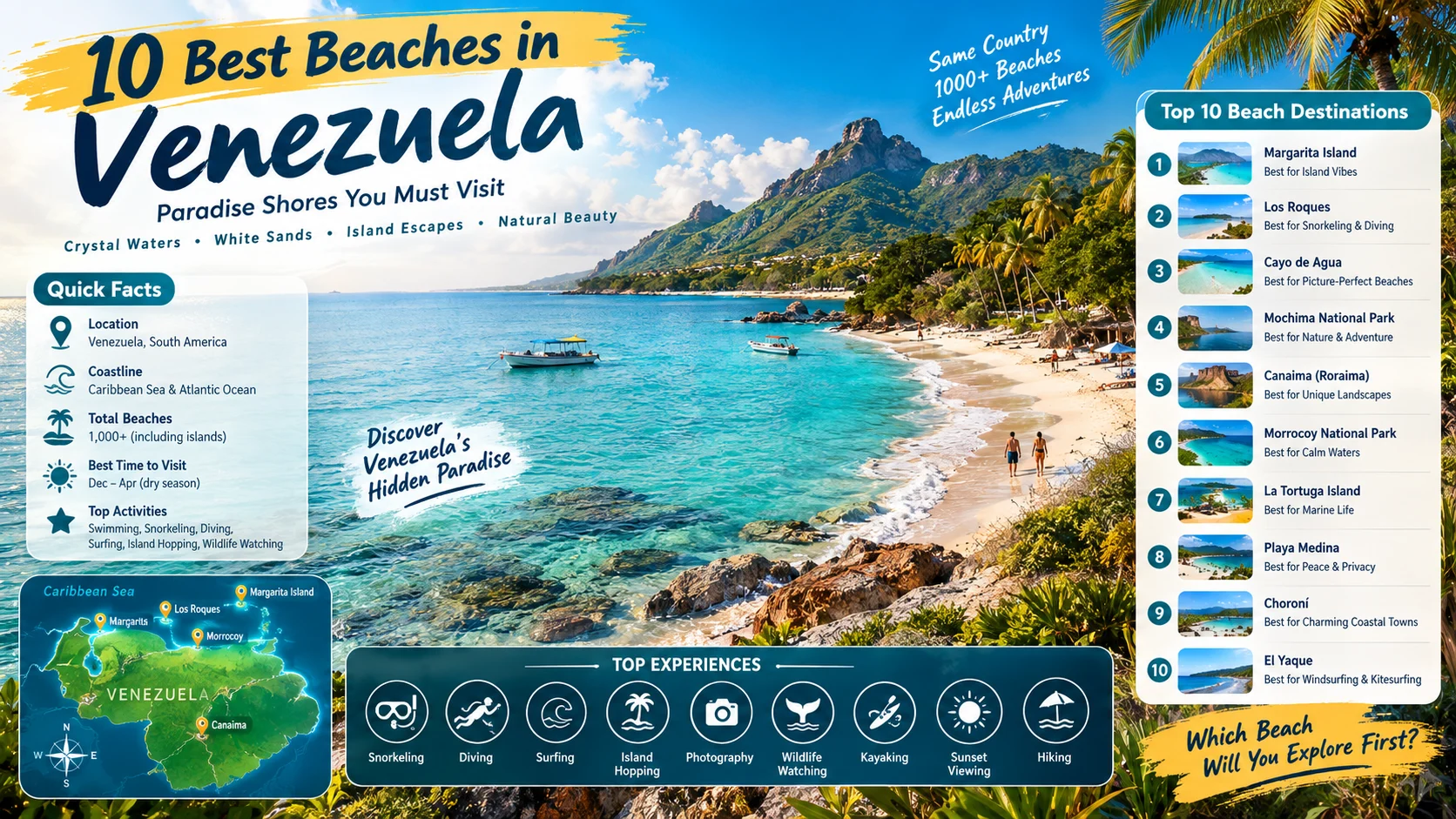

Venezuela beaches offer a diverse mix of white-sand Caribbean islands, turquoise lagoons, secluded coves, scenic surf beaches, and tropical coastal landscapes. Popular destinations include Los Roques, Morrocoy, Margarita Island, Mochima, and Playa Medina, known for swimming, snorkeling, diving, surfing, boating, and nature experiences.
Overview
Venezuela’s coastline has a remarkable variety.
One day can take you from a tiny Caribbean cay surrounded by coral reefs to a mountain-backed beach hidden along the Paria Peninsula. Elsewhere, strong trade winds create world-class conditions for windsurfing and kitesurfing.
That variety is what makes Venezuela beaches interesting for more than just a traditional beach vacation.
Los Roques brings together hundreds of cays and islets, coral reefs and marine wildlife. Morrocoy is known for white-sand keys, mangroves and calm waters. Mochima combines beaches, islands, coral ecosystems and dramatic coastal mountains. Margarita adds a broader tourism infrastructure, while Playa Medina offers a quieter, greener setting.
This guide focuses on 10 coastal spots worth knowing about and explains what makes each one different.
Quick Facts
| Feature | Details |
|---|---|
| Country | Venezuela |
| Main Sea | Caribbean Sea |
| Major Beach Regions | Los Roques, Falcón, Nueva Esparta, Sucre, Anzoátegui, and Aragua |
| Beach Landscapes | Cays, white-sand beaches, bays, lagoons, rocky shores, and mountain-backed coasts |
| Marine Experiences | Snorkeling, diving, kayaking, and sailing |
| Surf Experiences | Surfing, windsurfing, and kitesurfing |
| Wildlife | Sea turtles, coral reefs, seabirds, dolphins, and other marine species |
| Popular Dry Periods | Vary by destination; Los Roques commonly has its drier high season from December to May |
For Los Roques specifically, the destination’s current tourism information describes more than 300 cays and islets, with snorkeling, diving and kayaking among the principal activities. It lists December through May as the dry high season and reports average temperatures around 27–32°C year-round.
Cayo de Agua, Los Roques — Best for Picture-Perfect Caribbean Scenery
Cayo de Agua is one of the most visually distinctive places in the Los Roques archipelago.
Its defining feature is the narrow sandbar connecting two sections of land, with turquoise water stretching on both sides. The surrounding marine environment makes the area particularly appealing for snorkeling and photography.
Los Roques itself is protected as a national park and is recognized for coral reefs, marine biodiversity, white coral sand and clear Caribbean water.
Cayo de Agua is the kind of place where the landscape does most of the talking.
Best for: Photography, snorkeling, swimming, peaceful island escapes
Travel hook: If you want the classic “deserted Caribbean paradise” look, put Cayo de Agua high on your itinerary.


Los Roques Archipelago — Best for Snorkeling, Diving and Island Hopping
Rather than treating Los Roques as just one beach, think of it as an entire beach ecosystem.
The archipelago contains hundreds of cays and islets, allowing visitors to explore different beaches and marine environments during the same trip. Current destination information highlights snorkeling, diving, kayaking, sea turtles, coral reefs and exotic birds.
The result is a destination that works especially well for travelers who prefer exploring several small coastal locations instead of spending every day at one resort beach.
Best for: Snorkeling, diving, kayaking, island hopping, wildlife
Don’t miss: Exploring beyond Gran Roque and visiting different cays with a local boat operator.


Cayo Sombrero, Morrocoy — Best for Calm Water and Coral Reefs
Cayo Sombrero is one of the signature destinations inside Morrocoy National Park.
The park’s official Inparques information describes Cayo Sombrero as a large island within the park, with extensive white-sand beaches, palm trees, turquoise waters and relatively gentle waves. Coral reefs close to shore support snorkeling, where visitors may encounter marine life including sea urchins, starfish and parrotfish.
But Morrocoy is more than a postcard beach.
The wider park includes mangrove channels, coral environments, numerous cays and coastal habitats supporting birds, fish and reptiles.
Best for: Families, snorkeling, swimming, boat trips, nature
Travel hook: Combine a beach day with a boat ride through Morrocoy’s mangrove channels.


Playa El Agua, Margarita — Best for a Classic Island Beach Day
Playa El Agua is one of the best-known beaches on Margarita Island.
Unlike the remote cays of Los Roques, El Agua offers a more developed tourism environment, making it suitable for travelers who want beach time combined with restaurants, accommodation and other services.
The beach occupies a prominent stretch of Margarita’s northeastern coast and has long been identified with the island’s tourism scene.
This is the destination to consider if you want a classic Caribbean beach experience without completely disconnecting from tourist infrastructure.
Best for: Beach vacations, couples, families, dining, relaxation
Don’t miss: Staying through sunset when the beach atmosphere changes as the day cools down.


Playa El Yaque, Margarita — Best for Windsurfing and Kitesurfing
El Yaque has a completely different personality.
The beach is internationally associated with windsurfing and kitesurfing because of its wind conditions and relatively shallow water. Venezuelan tourism sources describe it as a major destination for these wind sports, while current local tourism information continues to highlight its strong connection to the activities.
That makes El Yaque especially interesting for active travelers.
You can watch colorful sails moving across the water, try lessons, enjoy the beach or simply experience the energetic atmosphere.
Best for: Kitesurfing, windsurfing, water sports, sunsets
Important tip: Conditions can vary, so beginners should use established schools or qualified local instructors.


Playa Medina, Paria Peninsula — Best for Nature and Seclusion
Playa Medina offers a different side of Venezuela.
Located along the northern coast of the Paria Peninsula in Sucre, the beach is surrounded by abundant tropical vegetation and coconut palms. The Sucre tourism portal describes it as a nearly pristine beach whose appeal comes from the contrast between the sea and dense greenery.
This is not the beach to choose if your priority is a large resort complex.
Its attraction is the natural setting.
The combination of forest, palms and Caribbean water creates a more secluded atmosphere that appeals to travelers searching for scenery and quiet.
Best for: Nature, photography, relaxation, couples
Travel hook: Playa Medina is a reminder that Venezuela’s beach appeal extends far beyond its famous island destinations.


Playa Colorada, Mochima — Best for Mountain-and-Sea Scenery
Mochima National Park is one of Venezuela’s most important coastal landscapes.
Located between Sucre and Anzoátegui, the protected area includes bays, islands, beaches, coral reefs and mangroves. Inparques also notes the presence of dolphins, marine turtles and diverse coastal birdlife.
Within this broader destination, Playa Colorada is a notable beach option.
The real attraction is the combination of sea and landscape: clear Caribbean water, tropical vegetation and the rugged terrain surrounding Mochima.
Best for: Scenery, swimming, snorkeling, boat trips, nature
Don’t miss: Exploring Mochima by boat rather than limiting your visit to one beach.


Playa El Saco, Mochima — Best for a Quiet Turquoise Bay
Playa El Saco sits on Isla Chimana Grande within Mochima National Park.
Inparques describes it as a frequently visited cove known for serene turquoise water and fine sand.
Its sheltered character makes it visually different from exposed surf beaches.
Instead of dramatic waves, the appeal is the enclosed tropical setting and clear water.
Best for: Swimming, relaxing, photography, boat excursions
Travel hook: Add El Saco to a Mochima boat itinerary if you want to experience the park through smaller bays and islands.


Playa Grande, Choroní — Best for Beach + Mountain Culture
Playa Grande brings together two landscapes that make Venezuela’s Caribbean coast distinctive: mountains and sea.
The beach lies near Choroní within the Henri Pittier National Park landscape. Inparques highlights Playa Grande among the region’s notable beaches and describes the area as a meeting point between the green mountains and the Caribbean coast.
The nearby town adds another reason to stay longer.
Choroní has strong cultural and historical character, including Afro-Venezuelan traditions and a connection with the region’s cacao-growing heritage.
Best for: Beach trips, culture, photography, mountain scenery
Don’t miss: Exploring Choroní rather than treating Playa Grande as a beach-only stop.


Cayo Sal, Morrocoy — Best for a Caribbean Island Escape
Cayo Sal is another option within Morrocoy’s network of white-sand keys and shallow coastal environments.
The wider national park contains numerous cays and islets, with Cayo Sombrero, Cayo Sal, Los Juanes and Tucupido among the better-known destinations. Inparques highlights the combination of fine sand, palm trees, calm water and marine ecosystems across these islands.
A trip here is less about a single landmark and more about the experience of moving through Morrocoy’s island landscape.
Best for: Swimming, boat trips, relaxation, island photography
Travel hook: Make the boat journey part of the experience the mangrove channels and surrounding marine landscape are part of Morrocoy’s appeal.


Which Venezuela Beach Is Right for You?
| If You Want | Consider |
|---|---|
| Iconic Caribbean Scenery | Cayo de Agua |
| Snorkeling & Diving | Los Roques |
| Calm Water & Coral Reefs | Cayo Sombrero |
| Classic Island Vacation | Playa El Agua |
| Kitesurfing & Windsurfing | Playa El Yaque |
| Nature & Seclusion | Playa Medina |
| Mountain + Sea Scenery | Playa Colorada |
| Quiet Turquoise Cove | Playa El Saco |
| Beach + Local Culture | Playa Grande, Choroní |
| Island Escape | Cayo Sal |
Best Things to Do at Venezuela Beaches
Swimming
Calmer beaches and sheltered cays can be ideal for swimming, but conditions are destination-specific. Always check local conditions rather than assuming clear water means safe water.
Snorkeling and Diving
Los Roques, Morrocoy and Mochima offer some of the strongest marine-focused experiences. Los Roques highlights coral reefs and marine biodiversity, while Morrocoy and Mochima also contain important coral and mangrove ecosystems.
Surfing and Wind Sports
El Yaque is particularly associated with windsurfing and kitesurfing. Henri Pittier’s coastal region also includes Cuyagua, which Inparques identifies as an internationally recognized surf destination.
Island Hopping
For travelers who dislike staying in one place, Los Roques and Morrocoy are especially appealing because their geography naturally encourages boat-based exploration.
Wildlife Watching
Venezuela’s protected coastal areas support diverse marine and bird life. Mochima’s official park information mentions dolphins, marine turtles, pelicans and other birds, while Los Roques highlights sea turtles, coral reefs and exotic birds.
Best Time to Visit Venezuela Beaches
There is no single perfect month for every Venezuelan beach.
Weather and wind conditions vary by region and activity.
For Los Roques, current destination information identifies December through May as the dry high season, with generally clearer skies and conditions suited to beach activities, sailing and photography.
For wind sports at El Yaque, wind conditions are a major part of the destination’s appeal, so travelers should plan around the activity rather than relying only on a generic “best beach season.”
If your priority is photography and relaxed beach days, check the local weather and marine conditions shortly before traveling.
Venezuela Beach Safety and Responsible Travel
Beautiful Caribbean water can still have currents, waves and changing marine conditions.
Use local guidance when swimming, boating, snorkeling or diving. If you are visiting a national park, follow park regulations and avoid damaging coral, wildlife or vegetation.
Environmental protection is particularly important because many of Venezuela’s most attractive beach destinations are protected ecosystems. Morrocoy includes coral reefs and mangrove habitats, while Mochima protects coral, mangrove and marine environments.
There are also ongoing coastal-cleanup and conservation initiatives across Venezuela. In 2026, Inparques reported nationwide beach-cleaning and ecological activities involving protected coastal areas, including Mochima and Morrocoy.
A simple rule makes a difference:
Take your waste with you, avoid touching coral and marine animals, and use established operators for boat and water-sport activities.
What to Pack for Venezuela Beaches
Keep your beach kit practical:
• High-SPF sunscreen
• Hat and sunglasses
• Reusable water bottle
• Lightweight clothing
• Swimwear and quick-dry towel
• Waterproof phone pouch
• Snorkeling equipment if appropriate
• Comfortable sandals
• Insect repellent for greener coastal areas
• Dry bag for boat trips
• Extra cash where card facilities may be limited
For remote islands and protected areas, confirm transport, park access, accommodation and activity arrangements before departure.
Final Thoughts
The best thing about Venezuela beaches is their variety.
Los Roques delivers coral cays and extraordinary turquoise water. Morrocoy combines white-sand islands with mangroves and marine ecosystems. Margarita offers a more developed island experience, while El Yaque adds serious wind-sport energy. Playa Medina brings tropical seclusion, and Mochima creates a dramatic meeting point between mountains, islands and the Caribbean.
So don’t plan your trip around a single image of a Venezuelan beach.
Choose the experience first
Want coral reefs and island hopping? Explore Los Roques.
Want calm water and white-sand cays? Look toward Morrocoy.
Want windsurfing or kitesurfing? Head to El Yaque.
Want lush scenery and a quieter atmosphere? Playa Medina deserves attention.
Want mountains, culture and beach in one trip? Explore Choroní and Playa Grande.
That variety is what turns Venezuela’s coastline from a simple beach destination into a much broader Caribbean travel experience.
