
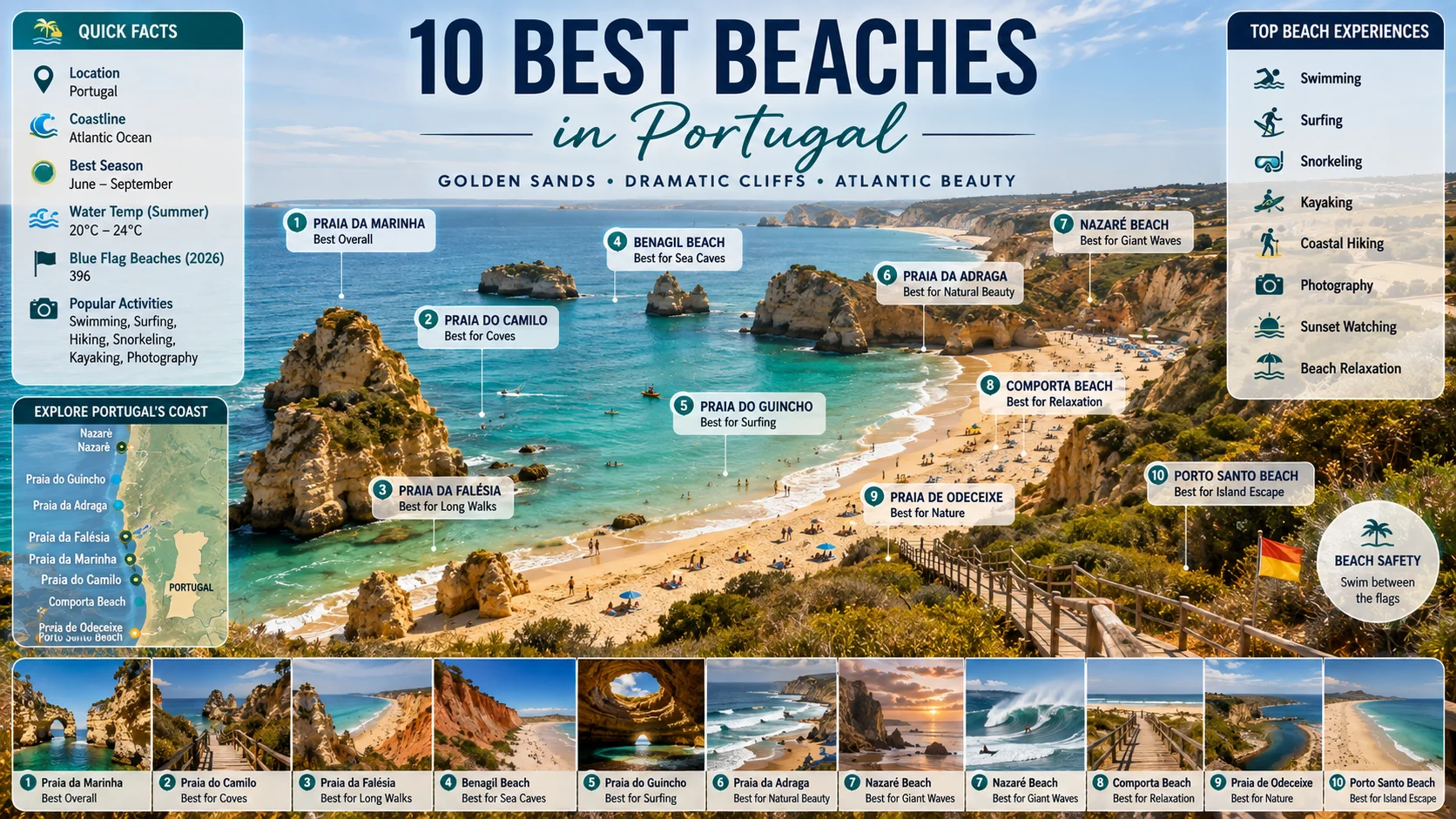

The best beaches in Portugal include Praia da Marinha, Praia do Camilo, Praia da Falésia, Praia do Guincho, Praia da Adraga, Nazaré, Comporta, Odeceixe, and Porto Santo. Portugal offers everything from dramatic Algarve cliffs and turquoise coves to powerful Atlantic surf and peaceful stretches of golden sand.
Portugal is one of those destinations where choosing a single beach feels almost impossible. One day, you can be standing beneath golden limestone cliffs in the Algarve. The next, you could be watching giant Atlantic waves crash along the coast near Nazaré or walking across an almost endless stretch of sand in Alentejo.
That variety is exactly what makes beaches in Portugal so special.
Whether you are planning a romantic trip, a family holiday, a surfing adventure, or simply want a beautiful place to relax beside the Atlantic Ocean, Portugal has a coastline to match your travel style. The country also places strong emphasis on monitored bathing water, safety, and accessibility. For 2026, Portugal has 396 Blue Flag beaches, while official environmental information lists hundreds of supervised beaches and accessible beach facilities.
Travel Tip: Don’t choose your Portuguese beach only by popularity. Ask yourself what you want most calm water, dramatic scenery, surfing, family facilities, or a peaceful escape.
Quick Facts About Beaches in Portugal
| Feature | Details |
|---|---|
| Country | Portugal |
| Main Ocean | Atlantic Ocean |
| Famous Regions | Algarve, Lisbon Coast, Alentejo, Silver Coast, Madeira, Azores |
| Beach Styles | Golden sand, limestone coves, wild Atlantic beaches, volcanic shores |
| Best for Scenery | Algarve |
| Best for Surfing | Nazaré, Peniche, Guincho and west coast areas |
| Best for Relaxation | Algarve, Comporta and Porto Santo |
| Best Time for Classic Beach Weather | Generally June–September |
| 2026 Blue Flag Beaches | 396 beaches nationwide |
| Popular Activities | Swimming, surfing, snorkeling, kayaking, hiking and photography |
Portugal’s coastline offers remarkable variety, from sheltered coves to wide-open Atlantic shores. Tourism authorities highlight beaches such as Praia Dona Ana, Praia da Marinha, Porto Santo, and numerous Algarve destinations as some of the country’s most scenic coastal experiences.
1. Praia da Marinha — Best Overall for Iconic Algarve Scenery


If you’ve ever seen a postcard showing Portugal’s dramatic coastline, there is a good chance it looked something like Praia da Marinha.
Located near Lagoa in the Algarve, this beach is famous for its towering golden cliffs, sculpted rock formations, clear water, and sheltered sandy cove. The journey down the stairs is part of the experience, but the view from the clifftop is equally unforgettable.
Why visit Praia da Marinha?
- Spectacular limestone cliffs
- Clear blue-green water
- Incredible photography opportunities
- One of Portugal’s most iconic coastal landscapes
- Close to other Algarve attractions
Portugal’s official tourism information describes Marinha as a preserved natural setting framed by erosion-sculpted cliffs and notes that it is considered among the world’s top beaches. Summer water temperatures are typically listed around 20–22°C.
Best for: Couples, photographers, scenic travel, and first-time Algarve visitors.
2. Praia do Camilo — Best for a Hidden Cove Experience


Praia do Camilo near Lagos feels like a small natural treasure hidden between the Algarve’s famous cliffs.
A long wooden staircase leads visitors down toward the beach, where golden rock formations surround small areas of soft sand. The setting is intimate and dramatically different from Portugal’s wide Atlantic beaches.
This is the kind of place where you may spend more time looking around than actually sitting still.
Why it stands out:
- Beautiful cliff scenery
- Clear water
- Small coves and rock formations
- Excellent for photography
- Close to Lagos and Ponta da Piedade
The Algarve coast around Lagos is known for beaches framed by striking golden cliffs, including Camilo and nearby Dona Ana, as well as sea caves and grottos that can be explored by boat in the Ponta da Piedade area.
Best for: Scenic travelers and couples.
Catchy travel tip: Arrive early. Small beaches can feel very different once the midday crowds arrive.
3. Praia da Falésia — Best for Long Beach Walks


If tiny coves are not your thing, Praia da Falésia offers the complete opposite experience.
This famous Algarve beach is known for its long stretch of sand and dramatic cliffs painted in shades of orange, red, and gold. It gives you room to walk, relax, and enjoy a bigger sense of space.
The contrast between the colorful cliffs and blue Atlantic Ocean makes Falésia one of Portugal’s most visually memorable beaches.
Don’t miss:
- Early-morning walks along the sand
- Sunset photography
- Views from the clifftop areas
- A long, relaxing beach day
Best for: Long walks, families, couples, and travelers staying near Albufeira.
Why travelers love it: You get the Algarve’s dramatic scenery without feeling confined to a tiny cove.
4. Benagil Beach — Best for Sea Caves and Boat Adventures


Benagil has become one of Portugal’s most famous coastal names because of the extraordinary sea cave nearby.
The famous Benagil Cave is known for its dramatic natural opening in the roof, allowing sunlight to enter the sandy interior. Boat and kayak excursions have made this coastline a major attraction for visitors exploring the Algarve.
The beach itself is smaller, but the surrounding coast is the real adventure.
Best experiences:
- Boat trips
- Kayaking, where conditions and regulations allow
- Coastal sightseeing
- Photography
- Exploring nearby coves
Best for: Adventure seekers and visitors who want an unforgettable Algarve experience.
Important: Always follow local safety guidance and tour regulations. Sea caves and Atlantic conditions can change quickly.
5. Praia do Guincho — Best for Surfing and Wild Atlantic Beauty


Praia do Guincho feels completely different from the sheltered coves of southern Portugal.
Located near Cascais, this broad, windswept beach is known for powerful Atlantic conditions, large dunes, and a dramatic open coastline. It is particularly popular with surfers and water-sports enthusiasts.
Don’t expect a calm, tropical-style swimming experience here. Guincho’s appeal comes from its raw, energetic atmosphere.
Why visit?
- Excellent surf culture
- Dramatic scenery
- Sand dunes
- Beautiful Atlantic sunsets
- Easy access from the Lisbon and Cascais region
Best for: Surfers, photographers, and travelers who love wild landscapes.
6. Praia da Adraga — Best for Dramatic Natural Rock Formations


Near Sintra, Praia da Adraga offers one of Portugal’s most dramatic beach settings.
Towering cliffs, sea-carved rocks, caves, and tunnels create a landscape that feels wild and untouched compared with more developed resort beaches.
The beach is especially rewarding for visitors exploring the Sintra coastline and nearby Cabo da Roca.
Why it deserves a place on your itinerary:
- Stunning rock formations
- Dramatic photography
- Wild Atlantic scenery
- A more natural atmosphere
Portugal’s tourism information specifically highlights Adraga for its preserved environment, cliffs, grottoes, and natural rock formations.
Best for: Nature lovers and photographers.
Safety note: Atlantic waves and tides can be powerful. Check conditions before swimming or exploring rocky areas.
7. Praia do Norte, Nazaré — Best for Legendary Waves


Nazaré is not famous because it offers the calmest water in Portugal.
It is famous because the Atlantic Ocean can be absolutely enormous here.
Praia do Norte has become internationally associated with giant-wave surfing, attracting some of the world’s most experienced big-wave surfers when conditions are right. Even if you never step into the water, watching the ocean from the cliffs can be an unforgettable experience.
Visit for:
- Giant-wave watching
- Surf culture
- Dramatic coastal views
- Photography
- A unique Portuguese beach atmosphere
Best for: Adventure travelers and ocean lovers.
Don’t confuse “famous beach” with “safe swimming beach.” Conditions at Nazaré can be extremely powerful, especially during big-wave periods.
8. Praia da Comporta — Best for Peace and Relaxation


Comporta is the beach for travelers who want to slow down.
Located south of Lisbon in the Alentejo region, this area is known for wide sandy beaches, dunes, and a quieter atmosphere. Instead of towering resort buildings, the experience here feels more connected to nature.
Official Portuguese tourism information notes Comporta’s extensive sandy shoreline and its location near the Sado Estuary Nature Reserve.
Why visit Comporta?
- Wide open beaches
- Peaceful surroundings
- Beautiful dunes
- Great sunset atmosphere
- Relaxed, slow-travel feeling
Best for: Couples, peaceful holidays, and travelers escaping busy resort areas.
9. Praia de Odeceixe — Best for Nature and Unique Landscapes


Praia de Odeceixe offers something visually different: a beautiful meeting point between a river and the Atlantic coast.
The beach sits near the boundary of the Algarve and Alentejo coastal regions and provides a scenic combination of cliffs, sand, and water.
The wider Costa Vicentina area is known for its less-developed coastline and beaches that attract travelers looking for nature and outdoor adventure.
Top experiences:
- Swimming in suitable areas
- Coastal hiking
- Photography
- Exploring the Costa Vicentina
- Relaxing in a more natural setting
Best for: Nature lovers, families, and road-trip travelers.
10. Porto Santo Beach — Best for a Peaceful Island Escape


Want to escape the crowds and experience a different side of Portugal?
Porto Santo, an island near Madeira, is famous for its exceptionally long golden-sand beach and peaceful atmosphere. While mainland Portugal has dramatic cliffs and surf-heavy coastlines, Porto Santo offers a more relaxed island-beach feeling.
Portugal’s tourism authority highlights Porto Santo among the country’s standout beach destinations and describes the region as an attractive choice for travelers seeking beautiful sandy shores.
Best for:
- Relaxation
- Long beach walks
- Couples
- Island holidays
- Escaping busy destinations
Best for: Travelers who want Portugal’s beach beauty without the typical Algarve crowds.
Which Beach in Portugal Is Best for You?
| If You Want… | Go To… |
|---|---|
| The most iconic Algarve scenery | Praia da Marinha |
| A beautiful hidden cove | Praia do Camilo |
| Long beach walks | Praia da Falésia |
| Sea caves and adventure | Benagil |
| Surfing and wild Atlantic scenery | Praia do Guincho |
| Dramatic rock formations | Praia da Adraga |
| Giant waves | Nazaré |
| Peace and relaxation | Comporta |
| Nature and unique landscapes | Odeceixe |
| A quiet island escape | Porto Santo |
This is the most important part of planning your trip. Portugal does not have one single “best beach.” The right beach depends on what you want from your holiday.
Best Time to Visit Beaches in Portugal
For classic beach weather, late spring through early autumn is generally the most popular period. Summer brings warmer air and more visitors, especially to the Algarve and famous beaches near major tourist centers.
However, Portugal’s Atlantic Ocean can remain surprisingly cool, even when the weather is hot. For example, official information for Praia da Marinha lists typical summer water temperatures around 20–22°C.
June to September
Best for traditional beach holidays, swimming, and sunny days.
April to May
Excellent for sightseeing, coastal walks, and avoiding the largest summer crowds.
October
Can still be attractive for mild weather, but sea conditions and rainfall become less predictable.
Winter
Best for surfing, dramatic ocean scenery, and quieter travel—not necessarily for classic swimming holidays.
Beach Safety and Responsible Travel in Portugal
Portugal has a strong beach-management system, but every beach is different. Conditions can change depending on waves, currents, tides, and weather.
Before swimming:
- Check local beach signs and flags.
- Swim only in appropriate designated areas.
- Respect lifeguard instructions.
- Be careful around cliffs and sea caves.
- Check tide times before exploring rocky areas.
- Don’t assume clear water means calm or safe water.
Portugal’s official environmental platform provides updated information about bathing water quality, beach alerts, accessibility, and supervised beaches during the bathing season. It reported 601 lifeguarded beaches for the 2026 season, alongside extensive monitoring of bathing-water quality.
Final Thoughts
The real magic of beaches in Portugal is their diversity.
You can watch giant waves in Nazaré, discover golden caves in the Algarve, walk through peaceful dunes near Comporta, surf the wild Atlantic at Guincho, and then escape to the calm golden sands of Porto Santo.
If you only visit one beach, choose the one that best matches your travel style. But if you have time for a road trip, Portugal becomes even more rewarding when you explore different coastal regions.
Our top overall recommendation? Praia da Marinha for unforgettable scenery. But the best personal experience may come from a quieter beach that gives you exactly what you came to Portugal to find: adventure, relaxation, nature, or simply a perfect day beside the Atlantic.
Quick travel reminder: Beach conditions, seasonal facilities, access, and water-quality alerts can change, so always check official local information before your visit.
