
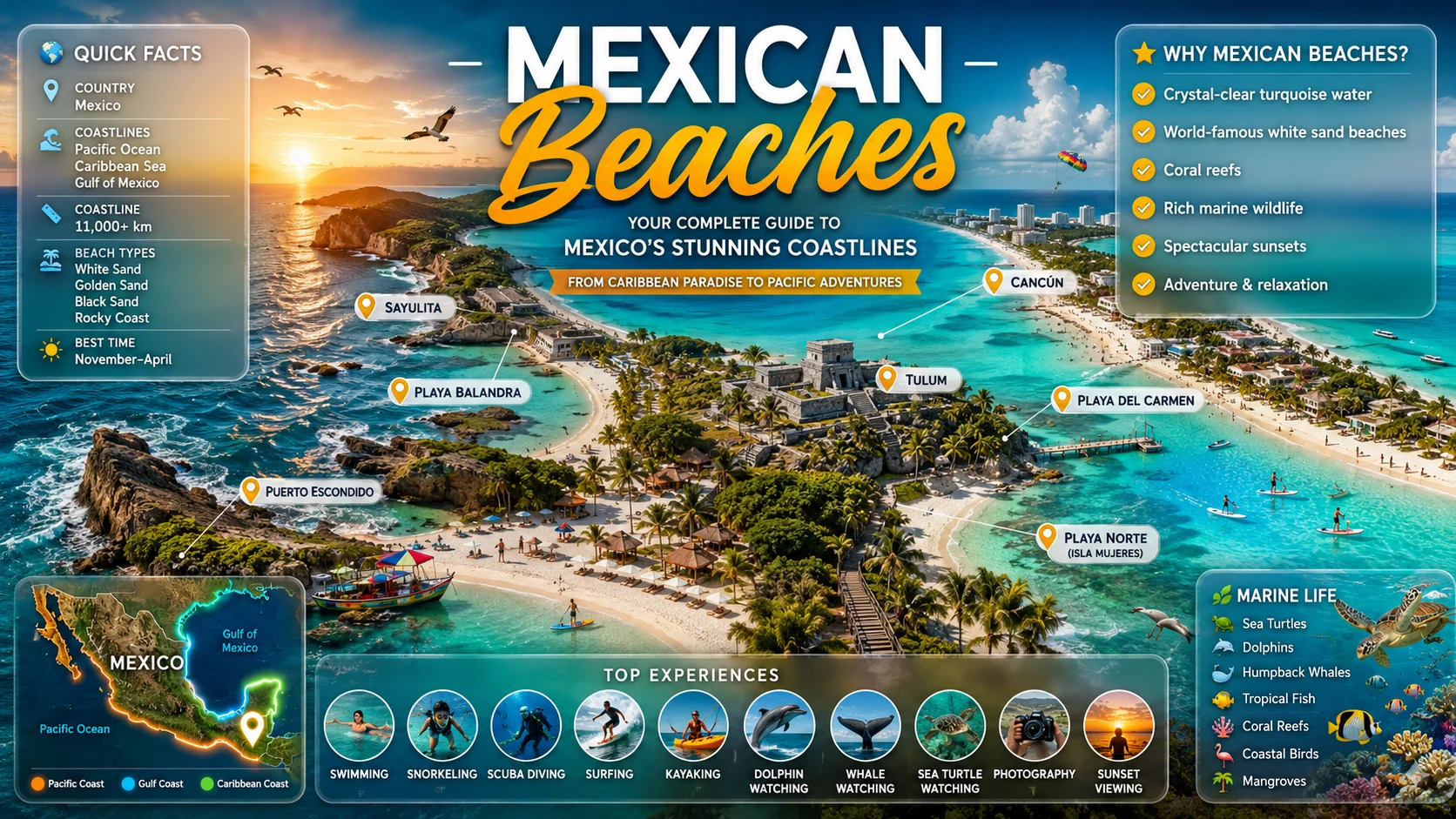

Mexican beaches are among the world’s most diverse coastal destinations, stretching across both the Pacific Ocean and the Caribbean Sea. They are known for powder-soft white sand, turquoise waters, dramatic cliffs, vibrant marine life, and year-round opportunities for swimming, snorkeling, surfing, and nature exploration.
💡 Did You Know?
Mexico has more than 11,000 kilometers (6,800+ miles) of coastline across the Pacific Ocean, the Gulf of Mexico, and the Caribbean Sea, making it one of North America’s richest coastal destinations.
Mexico is home to some of the most breathtaking beaches in the world. Whether you’re looking for crystal-clear Caribbean waters, dramatic Pacific coastlines, secluded coves, or vibrant beach towns, the country’s coastline offers an incredible variety of landscapes and experiences.
From the world-famous beaches of Cancún and Tulum to hidden gems like Playa Balandra and Isla Holbox, Mexico attracts millions of visitors every year with its warm tropical climate, rich marine biodiversity, and picturesque coastal scenery.
Beyond their natural beauty, Mexican beaches also play an important role in the country’s culture, economy, and environment. Coastal communities rely on tourism and fishing, while many beaches serve as nesting grounds for sea turtles and habitats for countless marine species.
This guide explores everything you need to know about Mexican beaches, including their geography, famous destinations, wildlife, recreational activities, environmental significance, and the best time to experience Mexico’s remarkable coastline.
Quick Facts
| Feature | Details |
|---|---|
| Country | Mexico |
| Region | North America |
| Coastlines | Pacific Ocean, Gulf of Mexico & Caribbean Sea |
| Total Coastline | Over 11,000 km (6,800+ miles) |
| Number of Beaches | Thousands of beaches across three coastlines |
| Beach Types | White Sand, Golden Sand, Black Sand, Rocky Shores, Hidden Coves |
| Water Types | Pacific Ocean, Caribbean Sea & Gulf of Mexico |
| Water Color | Crystal-clear turquoise, emerald green, deep blue (varies by region) |
| Average Water Temperature | 22–30°C (72–86°F) depending on season and location |
| Climate | Tropical, Subtropical & Semi-Arid Coastal Climate |
| Best Time to Visit | November–April (dry season in most coastal regions) |
| Peak Tourist Season | December–March |
| Famous Beach Destinations | Cancún, Tulum, Playa del Carmen, Playa Balandra, Playa Norte, Sayulita, Puerto Escondido, Mazatlán |
| Popular Activities | Swimming, Surfing, Snorkeling, Scuba Diving, Kayaking, Paddleboarding, Whale Watching, Dolphin Watching, Fishing, Beach Walking, Photography |
| Marine Ecosystems | Coral Reefs, Mangroves, Seagrass Beds, Coastal Lagoons |
| Famous Wildlife | Sea Turtles, Dolphins, Humpback Whales, Whale Sharks, Tropical Fish, Rays, Pelicans |
| UNESCO & Protected Areas | Mesoamerican Barrier Reef, Cabo Pulmo National Park, Sian Ka’an Biosphere Reserve, Isla Contoy National Park |
| Blue Flag Beaches | Mexico has dozens of Blue Flag-certified beaches, recognized for environmental quality, safety, and sustainable management. |
| Best For | Families, Couples, Nature Lovers, Divers, Surfers, Photographers & Adventure Travelers |
| Nearest International Gateways | Cancún International Airport, Los Cabos International Airport, Puerto Vallarta International Airport, Cozumel International Airport |
| Currency | Mexican Peso (MXN) |
| Language | Spanish (English is widely spoken in major tourist areas) |
| Time Zones | Multiple time zones depending on the region |
| Conservation Focus | Coral reef protection, sea turtle nesting conservation, mangrove restoration, sustainable coastal tourism |
What Are Mexican Beaches?
Definition
Mexican beaches are the country’s coastal shorelines located along the Pacific Ocean, Gulf of Mexico, and Caribbean Sea. They include a wide range of natural environments, from tropical white-sand beaches and coral reef coastlines to volcanic black-sand shores and secluded island beaches.
Together, these coastal regions form one of the most diverse beach systems in the Americas, offering everything from calm, family-friendly waters to world-renowned surfing destinations.
Why Are They Famous?
Mexican beaches are internationally recognized for their exceptional natural beauty and remarkable diversity.
Unlike many countries with a single coastal environment, Mexico offers completely different beach experiences depending on the region. Visitors can relax on the turquoise Caribbean coast, explore dramatic Pacific cliffs, discover quiet island beaches, or enjoy vibrant seaside towns filled with local culture.
Several factors contribute to their global popularity:
- Crystal-clear turquoise water
- Soft white and golden sand
- Warm tropical climate
- Rich coral reef ecosystems
- Spectacular sunsets
- Diverse marine wildlife
- Excellent snorkeling and diving
- Internationally recognized beach destinations
- Coastal national parks and protected reserves
These features have made Mexico one of the world’s leading beach tourism destinations while also supporting important ecosystems and local communities.
📌 Highlight
One of Mexico’s greatest natural advantages is that it borders three major bodies of water the Pacific Ocean, the Gulf of Mexico, and the Caribbean Sea creating an extraordinary variety of beach landscapes.
What Makes Mexican Beaches Unique?
Every coastline in Mexico has its own distinctive character.
The Caribbean coast is famous for calm turquoise water, vibrant coral reefs, and powdery white sand that is largely formed from crushed coral and shells. Beaches in destinations such as Cancún and Tulum are known for their postcard-perfect scenery and exceptional water clarity.
On the Pacific coast, visitors encounter dramatic cliffs, powerful surf, golden beaches, and spectacular sunsets. Regions such as Puerto Escondido and Sayulita have earned international recognition among surfers thanks to their consistent waves.
The Gulf of Mexico coastline offers a different experience again, with gentle beaches, diverse wetlands, mangrove forests, and important wildlife habitats.
This remarkable geographical diversity allows travelers to experience multiple types of coastal environments within a single country.
Location and Coastline
Mexico occupies a strategic position in North America and possesses one of the continent’s longest coastlines. Stretching across thousands of kilometers, its shores touch three major bodies of water, giving rise to an extraordinary variety of coastal landscapes.
Because of this unique geography, Mexico is often considered one of the world’s premier beach destinations.
Pacific Coast
Mexico’s Pacific coastline extends from Baja California in the northwest to Chiapas in the south.
This region is characterized by:
- Wide sandy beaches
- Rocky cliffs
- Hidden coves
- Surf-friendly waves
- Dramatic coastal mountains
- Beautiful sunsets
Many internationally known beach destinations, including Puerto Vallarta, Sayulita, Mazatlán, and Puerto Escondido, are located along this coast.
Caribbean Coast
The Caribbean coastline lies primarily in the state of Quintana Roo on Mexico’s eastern Yucatán Peninsula.
This region is famous for:
- Bright turquoise water
- White coral sand
- Calm swimming conditions
- Coral reefs
- Tropical islands
- Luxury beach resorts
Some of Mexico’s most visited beaches including Cancún, Playa del Carmen, Cozumel, and Tulum are located here.
🌎 Natural Wonder
The Caribbean coast is home to part of the Mesoamerican Barrier Reef, the second-largest coral reef system on Earth. It supports an extraordinary diversity of marine life and is one of the world’s most important reef ecosystems.
Gulf of Mexico Coast
Mexico’s Gulf Coast stretches from Tamaulipas to the Yucatán Peninsula.
Compared with the Caribbean and Pacific coasts, this region is generally quieter and is known for:
- Calm beaches
- Coastal lagoons
- Wetlands
- Mangrove forests
- Birdwatching opportunities
- Traditional fishing communities
Its peaceful atmosphere makes it especially attractive for travelers interested in nature and wildlife.
Major Coastal Regions
Mexico’s beaches are spread across several well-known coastal regions, each offering unique scenery and experiences.
Some of the country’s most popular beach regions include:
- Baja California Peninsula
- Riviera Maya
- Costa Maya
- Riviera Nayarit
- Oaxaca Coast
- Jalisco Coast
- Yucatán Coast
- Gulf Coast
Each region reflects a different combination of climate, geography, biodiversity, and local culture, making Mexico one of the most geographically diverse coastal destinations in the world.
History and Background
Mexico’s relationship with the sea dates back thousands of years. Long before modern tourism developed, coastal regions supported thriving Indigenous civilizations that depended on fishing, maritime trade, and coastal resources for their livelihoods.
The Maya civilization, for example, established important settlements along the Caribbean coast, where the sea played a vital role in commerce, transportation, and daily life. Many archaeological sites, including the famous ruins at Tulum, still overlook the coastline today, offering a unique blend of history and natural beauty.
Following the arrival of European explorers in the 16th century, Mexico’s coastlines became increasingly important for international trade and naval activity. Over time, fishing villages gradually evolved into ports, and many coastal towns developed into thriving communities.
During the second half of the 20th century, Mexico emerged as one of the world’s leading beach tourism destinations. Purpose-built resort areas such as Cancún transformed previously undeveloped coastlines into internationally recognized vacation hubs, while many traditional beach towns preserved their local character and cultural heritage.
Today, Mexican beaches continue to balance tourism, environmental conservation, and community life. Protected marine parks, sustainable tourism initiatives, and conservation programs help safeguard coral reefs, mangrove forests, and endangered wildlife, ensuring these remarkable coastal environments remain valuable for future generations.
Geography and Natural Features
Mexico’s coastline is one of the most geographically diverse in the world, extending across the Pacific Ocean, the Gulf of Mexico, and the Caribbean Sea. This remarkable variety creates dramatically different beach landscapes, ranging from tropical white-sand coastlines and coral reefs to rugged cliffs, volcanic shores, and tranquil bays.
Because each coastline has its own climate, marine ecosystem, and geological features, visitors can experience a wide range of coastal environments without leaving the country.
White Sand Beaches
Mexico is internationally recognized for its spectacular white-sand beaches, particularly along the Caribbean coast.
Many of these beaches owe their brilliant white appearance to finely crushed coral and shells rather than traditional quartz sand. Combined with the Caribbean’s clear turquoise waters, they create some of the country’s most iconic coastal scenery.
Well-known white-sand destinations include:
- Cancún
- Playa del Carmen
- Tulum
- Isla Mujeres
- Holbox Island
These beaches are especially popular for swimming, snorkeling, photography, and family vacations.
💡 Did You Know?
The dazzling white sand found on many Caribbean beaches in Mexico remains surprisingly cool underfoot because coral reflects sunlight differently than darker mineral sand.
Golden Sand Beaches
Golden sand beaches are commonly found along Mexico’s Pacific coastline.
These beaches often feature wider shorelines, rolling waves, and dramatic sunsets, making them ideal for outdoor recreation and scenic coastal walks.
Popular golden-sand destinations include:
- Puerto Vallarta
- Mazatlán
- Sayulita
- Huatulco
- Acapulco
Many are surrounded by tropical hills, fishing villages, and lush forests that add to their natural beauty.
Black Sand Beaches
Although less common, Mexico also has several volcanic black-sand beaches created by ancient volcanic activity.
These unique coastlines offer striking contrasts between dark sand, blue ocean water, and green vegetation.
Black-sand beaches are generally found near volcanic regions along parts of the Pacific coast.
Their unusual appearance makes them attractive to photographers and travelers interested in geology.
Rocky Coastlines and Cliffs
Not every Mexican beach consists of soft sand.
Several coastal regions feature:
- Limestone cliffs
- Rocky coves
- Sea caves
- Natural arches
- Elevated viewpoints
These dramatic landscapes are especially common around Baja California and sections of the Pacific coast, where erosion has created spectacular coastal formations.
Coral Reefs
Mexico contains some of the world’s most important coral reef ecosystems.
The Mesoamerican Barrier Reef, located off the Caribbean coast, supports an extraordinary diversity of marine species and attracts snorkelers and divers from around the globe.
These reefs provide habitat for:
- Tropical reef fish
- Sea turtles
- Rays
- Nurse sharks
- Coral colonies
- Sponges
- Sea fans
Healthy coral reefs also help protect coastlines by reducing wave energy and limiting coastal erosion.
🌊 Natural Wonder
The Mesoamerican Barrier Reef stretches for more than 1,000 kilometers (620 miles), making it the second-largest barrier reef system in the world after Australia’s Great Barrier Reef.
Islands and Coastal Bays
Mexico’s coastline includes hundreds of islands, bays, lagoons, and peninsulas.
Some of the country’s most famous island destinations include:
- Cozumel
- Isla Mujeres
- Holbox
- Isla Espíritu Santo
- Isla Contoy
These islands provide important habitats for marine wildlife while offering visitors peaceful beaches and exceptional opportunities for snorkeling, diving, and wildlife observation.
Climate
Mexico’s beaches enjoy warm weather throughout much of the year, although conditions vary by region.
The Caribbean coast is typically warm and humid, while parts of the Pacific coast experience drier conditions.
In general:
- Winter (November–February): Mild temperatures and low humidity.
- Spring (March–May): Warm weather with excellent beach conditions.
- Summer (June–August): Hot temperatures and warmer sea water.
- Autumn (September–October): Transition season with occasional tropical storms in some coastal regions.
These varied climates make Mexico a year-round beach destination.
Why Mexican Beaches Are So Popular
Mexico consistently ranks among the world’s leading beach destinations because it combines outstanding natural beauty with exceptional biodiversity and cultural richness.
Unlike many countries that offer only one type of coastal environment, Mexico provides an extraordinary variety of beach experiences from tranquil Caribbean lagoons to powerful Pacific surf beaches and wildlife-rich Gulf Coast wetlands.
Scenic Beauty
One of the main reasons visitors are drawn to Mexican beaches is their breathtaking scenery.
Depending on the destination, travelers may encounter:
- Crystal-clear turquoise water
- Powder-soft white sand
- Dramatic sea cliffs
- Palm-lined shores
- Hidden coves
- Tropical islands
- Colorful sunsets
This diversity ensures that every coastal region has its own unique character.
Rich Marine Biodiversity
Mexico’s coastal waters support an incredible variety of marine life.
Visitors may encounter:
- Dolphins
- Sea turtles
- Whale sharks
- Tropical fish
- Coral reefs
- Rays
- Seahorses
- Colorful reef invertebrates
Many coastal regions are protected marine reserves that help conserve these ecosystems while allowing sustainable tourism.
Adventure Opportunities
Mexico offers beach activities suitable for travelers of all ages and interests.
Popular activities include:
- Swimming
- Surfing
- Snorkeling
- Scuba diving
- Paddleboarding
- Kayaking
- Whale watching
- Deep-sea fishing
- Sailing
- Coastal hiking
Adventure enthusiasts often visit the Pacific coast, while calmer Caribbean waters attract snorkelers and families.
Family-Friendly Destinations
Many Mexican beaches feature calm waters, modern facilities, and easy accessibility.
Popular family destinations include:
- Cancún
- Playa del Carmen
- Isla Mujeres
- Huatulco
- Riviera Maya
These areas offer shallow swimming zones, nearby accommodations, restaurants, and family-oriented attractions.
Luxury and Eco-Tourism
Mexico successfully combines luxury tourism with environmental conservation.
Travelers can choose between:
- Luxury beachfront resorts
- Boutique eco-lodges
- Sustainable island accommodations
- Nature reserves
- Marine parks
- Small coastal villages
This wide range of experiences appeals to both luxury travelers and those seeking environmentally responsible tourism.
Notable Mexican Beaches
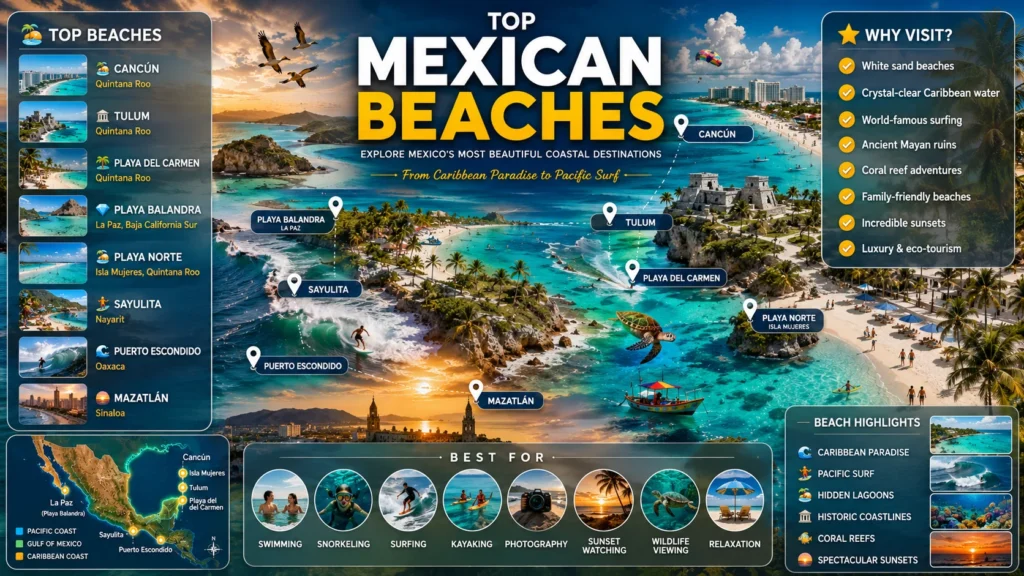
Mexico is home to hundreds of beautiful beaches, each offering its own distinctive scenery and attractions. While some are famous for luxury resorts and vibrant nightlife, others are celebrated for their untouched natural beauty and peaceful surroundings.
Cancún Beaches
Cancún is one of Mexico’s most internationally recognized beach destinations.
Its coastline features brilliant white sand, turquoise Caribbean waters, and an extensive range of visitor amenities.
Popular beaches include:
- Playa Delfines
- Playa Tortugas
- Playa Langosta
- Playa Chac Mool
These beaches are ideal for swimming, water sports, and family vacations.
Playa del Carmen
Located along the Riviera Maya, Playa del Carmen combines beautiful beaches with a lively coastal atmosphere.
Visitors enjoy:
- Calm Caribbean water
- Beachfront cafés
- Coral reef excursions
- Snorkeling
- Ferry access to Cozumel
Its central location also makes it an excellent base for exploring nearby attractions.
Tulum Beach
Tulum offers one of the world’s most distinctive coastal landscapes.
Ancient Mayan ruins overlook white-sand beaches and the turquoise Caribbean Sea, creating a setting that combines history with natural beauty.
Tulum is especially popular for:
- Scenic photography
- Swimming
- Eco-tourism
- Snorkeling
- Relaxation
⭐ Beach Spotlight – Tulum Beach
Few beaches in the world combine ancient archaeological landmarks with crystal-clear Caribbean waters. Tulum’s cliffside ruins overlooking the sea make it one of Mexico’s most iconic coastal destinations.
Playa Balandra
Located near La Paz in Baja California Sur, Playa Balandra is widely regarded as one of Mexico’s most beautiful natural beaches.
It is famous for:
- Shallow turquoise lagoons
- Calm water
- Soft white sand
- The iconic mushroom-shaped rock formation
- Protected natural surroundings
The beach is particularly popular among kayakers and paddleboarders.
Playa Norte
Situated on Isla Mujeres, Playa Norte consistently ranks among the finest beaches in the Caribbean.
Its shallow water, gentle waves, and soft sand make it ideal for families and casual swimmers.
Sayulita Beach
Sayulita has become one of Mexico’s leading surfing destinations.
Its relaxed atmosphere, colorful streets, and reliable Pacific waves attract surfers from around the world while also appealing to artists and photographers.
Puerto Escondido
Puerto Escondido is internationally renowned for its powerful surf and dramatic Pacific scenery.
The famous Playa Zicatela hosts international surfing competitions thanks to its impressive waves.
Although some beaches are best suited to experienced surfers, nearby calmer beaches offer excellent swimming conditions.
Mazatlán Beaches
Mazatlán features a long stretch of Pacific coastline with golden sand and vibrant seaside promenades.
Visitors come here for:
- Beach walks
- Fishing
- Water sports
- Historic architecture
- Spectacular sunsets
Its combination of beaches and cultural attractions makes it one of Mexico’s most diverse coastal destinations.
Wildlife and Marine Ecosystem
Mexico’s beaches support one of the richest coastal ecosystems in the Americas. From colorful coral reefs and mangrove forests to sea turtle nesting beaches and whale migration routes, these habitats play a vital role in maintaining marine biodiversity.
The country’s extensive coastline provides food, shelter, and breeding grounds for thousands of species while supporting local fisheries and sustainable tourism.
Sea Turtles
Mexico is one of the world’s most important nesting areas for sea turtles. Every year, several endangered species return to its beaches to lay eggs.
Common species include:
- Green Sea Turtle
- Loggerhead Sea Turtle
- Leatherback Sea Turtle
- Olive Ridley Sea Turtle
- Hawksbill Sea Turtle
Many nesting beaches are protected, and visitors are encouraged to observe turtles responsibly without disturbing their natural behavior.
💡 Did You Know?
Mexico protects hundreds of sea turtle nesting beaches through conservation programs that help increase hatchling survival rates.
Dolphins and Whales
Mexico’s coastal waters are home to numerous marine mammals.
Visitors may encounter:
- Bottlenose dolphins
- Spinner dolphins
- Humpback whales
- Gray whales
- Blue whales (seasonally)
- Orcas (rarely)
Whale watching is especially popular along the Pacific coast between December and April.
Coral Reefs
Mexico’s Caribbean coastline contains vibrant coral reef ecosystems that support thousands of marine species.
Healthy reefs provide habitat for:
- Angelfish
- Parrotfish
- Butterflyfish
- Sea fans
- Coral colonies
- Sponges
- Rays
These reefs also help protect coastlines from wave erosion while supporting snorkeling and diving tourism.
Coastal Birds
Beach visitors frequently observe a variety of bird species, including:
- Brown Pelicans
- Frigatebirds
- Herons
- Egrets
- Ospreys
- Gulls
- Terns
Mangrove forests and wetlands provide important feeding and nesting habitats for migratory birds.
Mangrove Forests
Mangroves are among Mexico’s most valuable coastal ecosystems.
They help:
- Protect shorelines from erosion
- Improve water quality
- Provide nursery habitats for fish
- Support birds and marine wildlife
- Reduce storm damage
These forests are essential for maintaining healthy coastal environments.
Activities and Recreation
Mexico’s beaches offer opportunities for both adventure and relaxation. Whether visitors prefer exploring coral reefs, surfing Pacific waves, or simply enjoying scenic coastlines, there are activities suitable for every interest.
Swimming
Many beaches feature calm, warm waters that are ideal for swimming.
Popular swimming destinations include:
- Cancún
- Playa Norte
- Tulum
- Playa del Carmen
- Balandra Beach
Snorkeling
Mexico is considered one of the world’s top snorkeling destinations.
Excellent snorkeling locations include:
- Cozumel
- Akumal
- Isla Mujeres
- Puerto Morelos
- Riviera Maya
Visitors often observe colorful coral reefs, tropical fish, rays, and sea turtles.
Scuba Diving
Divers travel from around the world to explore Mexico’s underwater landscapes.
Popular dive sites include:
- Cozumel Marine Park
- Banco Chinchorro
- Cabo Pulmo National Park
- Cenotes of the Yucatán Peninsula
These locations feature coral reefs, underwater caves, shipwrecks, and abundant marine life.
⭐ Expert Tip
Morning dives usually offer the calmest water and the best underwater visibility.
Surfing
Mexico’s Pacific coastline attracts surfers of all skill levels.
Top surfing destinations include:
- Puerto Escondido
- Sayulita
- Punta Mita
- Baja California
- Mazatlán
Wave conditions vary throughout the year, providing opportunities for both beginners and experienced surfers.
Paddleboarding and Kayaking
Calm bays and lagoons make paddleboarding and kayaking popular activities.
Excellent locations include:
- Playa Balandra
- Isla Espíritu Santo
- Bacalar Lagoon
- Isla Holbox
These activities allow visitors to explore coastal environments while minimizing environmental impact.
Fishing
Mexico has a long tradition of recreational and commercial fishing.
Popular catches include:
- Marlin
- Sailfish
- Tuna
- Snapper
- Dorado
Sport fishing is especially popular in Baja California and the Pacific coast.
Whale Watching
Each winter, migrating whales arrive along Mexico’s Pacific coastline.
Best locations include:
- Baja California Sur
- Cabo San Lucas
- Puerto Vallarta
Responsible whale-watching tours provide opportunities to observe these magnificent animals while following conservation guidelines.
Photography
Mexico’s beaches provide spectacular photography opportunities throughout the year.
Popular subjects include:
- Turquoise Caribbean waters
- Pacific sunsets
- Sea turtle nesting
- Palm-lined beaches
- Coral reefs
- Limestone cliffs
- Coastal wildlife
Golden hour during sunrise and sunset produces the most dramatic lighting.
Climate and Best Time to Visit
Mexico’s beaches enjoy warm temperatures throughout much of the year, making them suitable for travel in every season. However, weather conditions vary depending on the region and time of year.
Winter (November–February)
Winter is widely considered the best season to visit most Mexican beaches.
Visitors enjoy:
- Mild temperatures
- Lower humidity
- Sunny weather
- Calm seas
- Excellent wildlife viewing
This is also the peak tourist season.
Spring (March–May)
Spring offers warm temperatures and ideal beach conditions before the arrival of the summer rainy season.
This period is excellent for:
- Swimming
- Snorkeling
- Diving
- Photography
Summer (June–August)
Summer brings hotter temperatures and warmer ocean water.
Although afternoon rain showers may occur in some regions, beaches remain popular for vacations and family travel.
Autumn (September–October)
Autumn serves as a transition season.
Some coastal regions experience tropical storms, while others enjoy quieter beaches and fewer visitors.
☀ Seasonal Snapshot
- Winter: Best overall beach weather.
- Spring: Ideal for outdoor activities.
- Summer: Warm water and vibrant coastal life.
- Autumn: Peaceful beaches with fewer crowds.
Environmental Importance
Mexico’s beaches are not only beautiful but also environmentally significant. Their ecosystems support biodiversity, protect coastlines, and contribute to local economies through sustainable tourism and fishing.
Marine Conservation
Numerous marine protected areas help conserve:
- Coral reefs
- Seagrass beds
- Marine mammals
- Sea turtle nesting beaches
- Coastal wetlands
These protected areas ensure that marine ecosystems remain healthy for future generations.
Coastal Protection
Natural coastal features such as dunes, coral reefs, and mangrove forests help reduce erosion and protect communities from storms.
Maintaining these ecosystems also improves water quality and supports wildlife habitats.
Sustainable Tourism
Responsible tourism plays an important role in preserving Mexico’s coastal environments.
Visitors can help by:
- Using reef-safe sunscreen
- Avoiding littering
- Respecting wildlife
- Staying on marked paths
- Supporting eco-friendly businesses
📌 Why It Matters
Healthy beaches benefit both nature and people by protecting biodiversity, supporting local livelihoods, and preserving some of Mexico’s most valuable natural resources.
Current Environmental Challenges
Despite their beauty, Mexican beaches face several environmental pressures.
Coastal Erosion
Natural processes and human development have accelerated erosion in some coastal areas.
Plastic Pollution
Marine debris threatens wildlife and can damage fragile coastal ecosystems.
Coral Reef Decline
Climate change, pollution, and rising ocean temperatures affect coral reef health in several regions.
Climate Change
Sea-level rise and stronger storms continue to reshape coastal environments and highlight the importance of long-term conservation efforts.
Interesting Facts About Mexican Beaches
- Mexico has coastlines on three major bodies of water.
- The country has thousands of beaches, ranging from tropical islands to rugged volcanic shores.
- Several Mexican beaches are internationally recognized for their Blue Flag environmental standards.
- Sea turtles return to many Mexican beaches every year to nest.
- Mexico’s Caribbean coast is home to part of the second-largest coral reef system in the world.
❌ Myth vs. Fact
Myth: All Mexican beaches have the same white sand and calm water.
Fact: Mexico’s beaches vary greatly, with Caribbean coral-sand beaches, Pacific surf beaches, volcanic black-sand shores, rocky coastlines, and tranquil Gulf beaches offering very different experiences.
Nearby Natural Attractions
Mexico’s beaches are surrounded by a variety of natural attractions that showcase the country’s diverse landscapes.
National Parks
- Cabo Pulmo National Park
- Huatulco National Park
- Arrecifes de Cozumel National Park
Islands
- Cozumel
- Isla Mujeres
- Holbox
- Isla Espíritu Santo
Cenotes
The Yucatán Peninsula is famous for its crystal-clear cenotes natural sinkholes that offer unique swimming and diving experiences.
Coastal Towns
Many beach destinations are located near charming coastal towns where visitors can experience local cuisine, traditional markets, and cultural heritage.
Frequently Asked Questions
Which are the most famous Mexican beaches?
Some of the best-known beaches include Cancún, Tulum, Playa del Carmen, Playa Balandra, Playa Norte, Sayulita, and Puerto Escondido.
What is the best time to visit Mexican beaches?
November through April generally offers the most pleasant weather, with sunny skies and comfortable temperatures across most coastal regions.
Are Mexican beaches safe for swimming?
Many beaches are suitable for swimming, particularly those with calm waters. However, visitors should always follow local safety advice, pay attention to warning flags, and be aware of changing sea conditions.
Which coast has the clearest water?
The Caribbean coast, especially around Cancún, Cozumel, Isla Mujeres, and Tulum, is known for exceptionally clear turquoise water.
What activities are popular on Mexican beaches?
Popular activities include swimming, snorkeling, scuba diving, surfing, kayaking, paddleboarding, whale watching, fishing, wildlife observation, and photography.
Final Thoughts
Mexican beaches represent one of the world’s most diverse coastal landscapes, offering everything from white-sand Caribbean shores and vibrant coral reefs to dramatic Pacific coastlines and wildlife-rich Gulf beaches. Their unique geography, rich biodiversity, and cultural significance make them far more than simply places to relax they are essential natural environments that support marine life, local communities, and sustainable tourism.
Whether you’re interested in exploring colorful underwater ecosystems, observing sea turtles, enjoying world-class surfing, or simply appreciating spectacular coastal scenery, Mexico’s beaches provide experiences suited to every type of traveler and nature enthusiast. By visiting responsibly and supporting conservation efforts, future generations can continue to enjoy these remarkable coastlines for years to come.
