
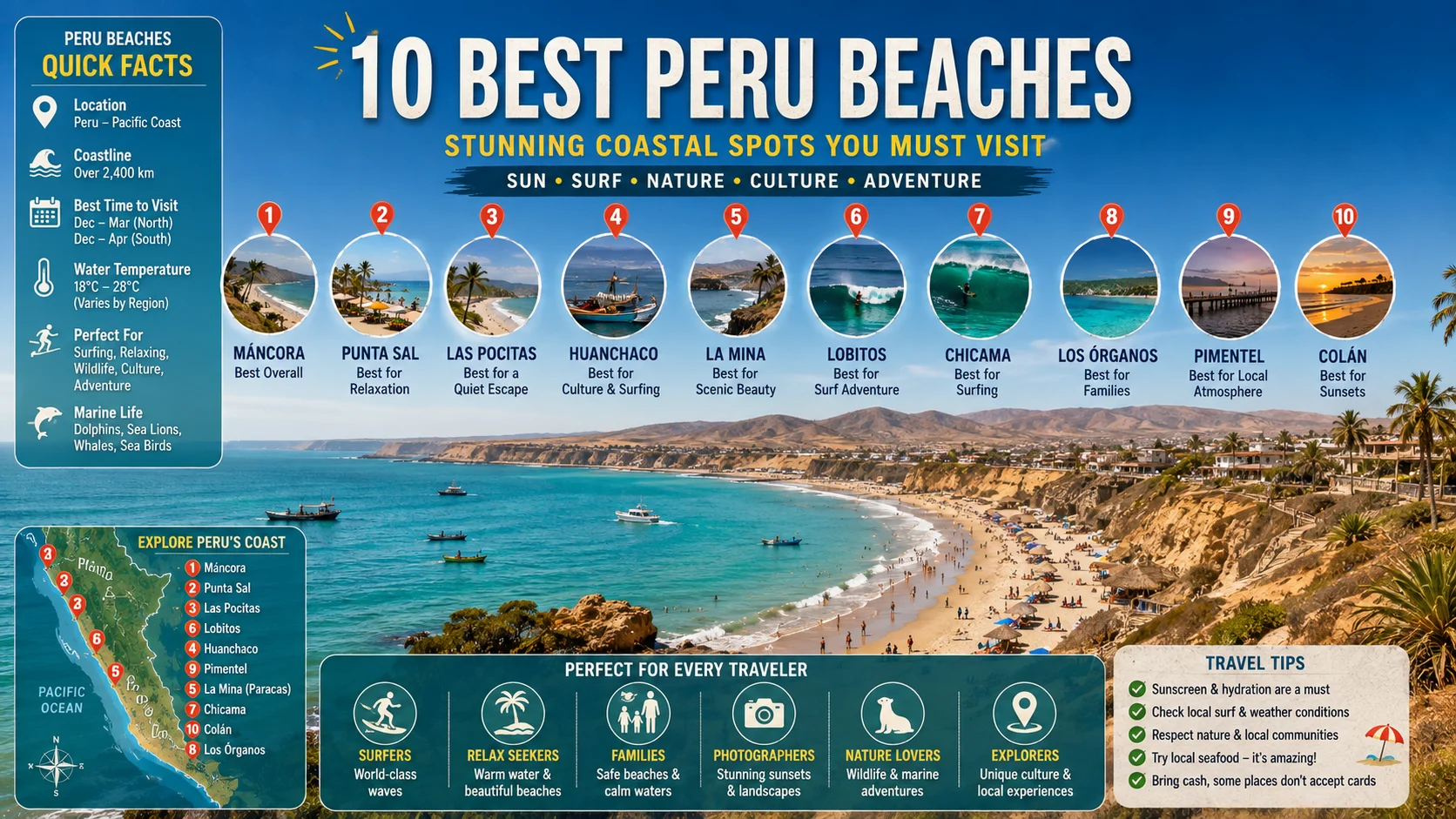

Peru beaches offer far more than most travelers expect, from the warm tropical waters of Máncora and Punta Sal to Huanchaco’s surfing heritage and Paracas’s dramatic desert coastline. The best beach depends on whether you want relaxation, waves, wildlife, or adventure.
Why Peru Beaches Deserve a Place on Your Travel List
When people plan a trip to Peru, they usually think about Machu Picchu, the Andes, ancient ruins, and the Amazon.
The beaches often come as a surprise.
But Peru’s Pacific coast offers an impressive range of experiences. In the far north, warm water, sunshine, and tropical landscapes attract swimmers and surfers. Further south, the scenery becomes drier and more dramatic, with desert cliffs, protected coastal landscapes, marine wildlife, and powerful surf.
That variety is the reason one beach can feel completely different from another.
Want warm water and a lively beach town? Go north.
Want peace and upscale relaxation? Try Punta Sal.
Want a beach with history? Huanchaco is hard to beat.
Want dramatic scenery and wildlife? Paracas should be high on your list.
The real question isn’t “What is the best beach in Peru?” It’s “What kind of beach experience are you looking for?”
Peru Beaches Quick Facts
| Feature | Details |
|---|---|
| Country | Peru |
| Ocean | Pacific Ocean |
| Best-known beach region | Northern coast |
| Warm-water destinations | Máncora, Punta Sal, Zorritos |
| Best for surfing | Huanchaco, Chicama, Lobitos, Máncora |
| Best for relaxation | Punta Sal, Las Pocitas |
| Best for wildlife | Paracas and surrounding protected coast |
| Best for culture | Huanchaco |
| Best time for sunny northern beaches | Generally December–March |
| Whale watching | Seasonal opportunities on the northern coast |
| Beach experiences | Swimming, surfing, snorkeling, wildlife, food, photography |
Peru’s northern beaches are particularly different from much of the central and southern coastline because they can offer warmer conditions and a more tropical atmosphere. Official Peruvian tourism information highlights Máncora, Punta Sal, Zorritos, Colán, Pimentel, and Huanchaco among the country’s notable northern beach destinations.
1. Máncora Beach — Best Overall for a Classic Peru Beach Vacation
Máncora is the beach most international travelers associate with Peru’s coast and for good reason.
Located in northern Peru, it combines warm weather, sandy beaches, surfing, restaurants, hotels, and a relaxed social atmosphere. It works particularly well for travelers who don’t want to spend their entire holiday sitting quietly on the sand.
You can surf in the morning, enjoy fresh seafood for lunch, relax near the water in the afternoon, and experience the town’s nightlife later.
Official tourism sources describe Máncora as one of Peru’s best-known beach resorts, with sunshine, white sand, and waves that attract surfers.
Best for: First-time visitors, surfing, nightlife, beach holidays
Don’t miss: Watching the sunset after a day on the water.


Beach Spotlight: If you only want to choose one destination for a classic tropical-style Peru beach escape, Máncora is one of the safest bets.
2. Punta Sal — Best for Warm Water and Relaxation
Punta Sal feels calmer and more refined than Máncora.
This northern beach is known for its long sandy shoreline and relatively warm, tranquil water. Official Peruvian tourism information describes Punta Sal as one of the country’s major sun-and-beach destinations, with clear sand, warm blue-green water, and a beach stretching for roughly six kilometres.
It’s a strong choice for couples, families, and travelers who prefer relaxing by the sea over a busy nightlife scene.
The surrounding marine environment also adds another reason to visit. Seasonal wildlife sightings can include dolphins and humpback whales.
Best for: Couples, families, swimming, luxury stays
Don’t miss: A sunset dinner near the coast.


3. Las Pocitas — Best for a Quieter Máncora Escape
Want the northern Peru sunshine but less of Máncora’s busy energy?
Las Pocitas, also known as Máncora Chico, is a strong alternative.
Located south of Máncora, this beach offers a more relaxed atmosphere, while still keeping you close to restaurants and accommodation. Peru’s tourism inventory describes Las Pocitas as a long stretch of white sand with turquoise water, and notes that rock pools can appear along parts of the beach.
It is ideal for travelers who want comfort without feeling like they’re in the centre of a busy resort town.
Best for: Relaxation, couples, scenic stays
Travel tip: Stay here if you want access to Máncora but prefer sleeping somewhere quieter.


4. Huanchaco Beach — Best for Culture and Surfing History
Huanchaco is much more than a beach.
This coastal destination near Trujillo combines surfing with a remarkable cultural identity. The beach is famous for its caballitos de totora traditional reed boats that have been used by local fishermen since pre-Columbian times.
Official tourism information identifies Huanchaco as an important surfing destination and notes the continuing presence of these traditional boats on its shoreline.
This is what makes Huanchaco special: you aren’t simply visiting a beautiful beach. You’re experiencing a place where coastal traditions are still visible in everyday life.
Best for: Culture, surfing, photography, history lovers
Don’t miss: Seeing the traditional reed boats along the shore.


Why visit? Huanchaco gives your Peru beach trip a sense of history that you won’t find at every resort destination.
5. La Mina Beach — Best for Dramatic Natural Scenery
La Mina offers a completely different vision of Peru’s coast.
Located within the Paracas National Reserve, the beach is surrounded by the dry, dramatic landscapes that make this part of Peru so visually striking. Clear water meets cliffs and desert scenery, creating one of the country’s most memorable coastal environments.
Peruvian tourism information highlights La Mina as a destination for nature lovers and notes opportunities for activities such as swimming and diving, while the protected setting supports coastal birdlife.
Best for: Nature lovers, photography, swimming, scenic travel
Don’t miss: Exploring more of the Paracas coastline rather than visiting only one beach.


Catchy reason to visit: Imagine standing on a beach where the Pacific Ocean meets a vast desert landscape. That’s the visual drama that makes La Mina different.
6. Lobitos — Best for Serious Surf and Adventure
Lobitos is one of the names surfers should know.
Located in the Piura region, this coastal destination has built a reputation around strong waves and water sports. Official tourism records for Playa La Punta in Lobitos describe clear emerald-toned water, fine sand, and conditions used for surfing, windsurfing, and kitesurfing.
This isn’t necessarily the best choice if your only goal is calm swimming.
But if your idea of a perfect beach day involves a surfboard and ocean adventure, Lobitos deserves serious consideration.
Best for: Surfing, kitesurfing, adventure travelers
Don’t miss: Watching experienced surfers take advantage of the local breaks.


7. Chicama — Best for the Ultimate Surf Experience
Chicama is a legendary name in the surfing world.
The beach is famous for its exceptionally long left-hand wave. A PROMPERÚ publication describes Chicama as famous for a left-hand wave extending up to around 2.5 kilometres, making it a major attraction for surfers from around the world.
You don’t need to be a professional surfer to appreciate Chicama, though. Watching the waves and exploring the coastal atmosphere can be rewarding in itself.
Still, this destination is especially meaningful for travelers who want their Peru beach itinerary to include genuine surf culture.
Best for: Surfing enthusiasts, adventure travel
Don’t miss: Spending time watching the lineup before sunset.


8. Los Órganos — Best for a Relaxed Family Beach Day
Los Órganos offers a pleasant northern coast experience without always feeling as busy as Máncora.
Its appeal comes from the combination of beach life, local seafood, and access to marine activities. It can be a good choice for travelers exploring northern Peru who want a slower pace.
The wider northern coast is known for opportunities to see marine wildlife, and destinations around this region can work well for travelers who want to combine beach relaxation with ocean-based excursions.
Best for: Families, relaxed beach days, seafood
Choose Los Órganos if: You want northern Peru’s coastal warmth with a more laid-back atmosphere.


9. Pimentel Beach — Best for a Beach With Local Character
Pimentel is a great example of how Peru’s beaches can combine recreation with local culture.
Located near Chiclayo, Pimentel is known for its surf-friendly waves and its long wooden pier, which has become one of the area’s visual landmarks. Official Peru tourism information also highlights the town’s seafront walks, nightlife, and gastronomy.
This makes Pimentel a good choice if you want more than a resort-style beach.
You can walk along the waterfront, enjoy local food, and experience a more urban coastal environment.
Best for: Photography, local culture, seaside walks
Don’t miss: The pier and the waterfront atmosphere around sunset.


10. Colán Beach — Best for Tropical Scenery and Sunsets
Colán brings a different kind of visual charm to Peru’s northern coast.
Official tourism information describes it as a warm-water destination known for blue-green sea, coconut trees, picturesque wooden houses, and memorable sunsets.
It doesn’t always receive as much international attention as Máncora, but that is part of its appeal.
Colán can be a rewarding choice for travelers who want to explore beyond Peru’s most famous beach names.
Best for: Photography, relaxation, quieter travel
Don’t miss: Staying until sunset the changing colours over the Pacific are part of the experience.


Which Peru Beach Is Best for You?
| Your Travel Style | Best Beach Choice |
|---|---|
| First Peru beach trip | Máncora |
| Warm water and relaxation | Punta Sal |
| Quiet northern escape | Las Pocitas |
| Culture and tradition | Huanchaco |
| Dramatic natural scenery | La Mina |
| Surf adventure | Lobitos |
| World-class surfing | Chicama |
| Relaxed family trip | Los Órganos |
| Local coastal atmosphere | Pimentel |
| Scenic sunsets | Colán |
Best Time to Visit Peru Beaches
The best time depends heavily on which part of Peru’s coast you’re visiting.
For northern destinations such as Máncora and Punta Sal, warmer and sunnier conditions make them attractive for classic beach holidays, with December through March commonly considered a popular period for beach weather. Northern Peru can also be more appealing outside the peak season than the cooler central and southern coast.
Central and southern coastal destinations can feel cooler and foggier during parts of the year. However, this doesn’t mean they’re not worth visiting. Paracas, for example, is often more about dramatic landscapes, wildlife, and nature than simply swimming in warm water.
Quick decision:
Want sunshine and warm water? Head north.
Want surfing? Check local conditions for your chosen break.
Want wildlife and desert scenery? Consider Paracas.
What Makes Peru Beaches Different?
Peru doesn’t offer one single type of beach holiday.
That’s actually its greatest strength.
You can spend one part of your trip in a lively surf town such as Máncora, then travel to Huanchaco for history and traditional fishing culture. Later, you could stand among desert landscapes in Paracas and experience a completely different side of the Pacific coast.
This variety creates information value for travelers because the destination isn’t just about finding the prettiest sand.
It’s about choosing the right experience.
Peru Beach Travel Tips
Before visiting, remember that beach conditions can vary significantly from region to region.
Check the water conditions
The Pacific can produce strong currents and waves. Don’t assume that a beautiful-looking beach is safe for swimming.
Choose the right beach for your activity
Máncora and Lobitos may appeal to surfers, while Punta Sal is better suited to travelers seeking a more relaxed swimming and resort experience.
Respect protected environments
Places such as Paracas are valued for their ecosystems and wildlife. Follow local rules and avoid disturbing animals or leaving waste behind.
Plan transport carefully
Some of Peru’s best beaches are far from major cities. Build realistic travel time into your itinerary instead of trying to visit too many destinations in a short period.
For current destination information and tourist assistance, travelers can also use IPERÚ, the official free information and assistance service provided by PROMPERÚ.
Final Thoughts
If you want the easiest all-round choice, start with Máncora.
For warm water and peaceful relaxation, choose Punta Sal.
For a meaningful mix of culture and coastal scenery, visit Huanchaco.
For dramatic landscapes that look unlike a traditional tropical beach, head toward La Mina and Paracas.
And if surfing is your priority, Chicama and Lobitos should be on your radar.
The best Peru beaches aren’t all the same and that’s exactly why exploring them is so rewarding. Whether you’re chasing waves, sunsets, wildlife, history, or simply a quiet place to listen to the Pacific, Peru’s coastline has far more to offer than many travelers realize.
