
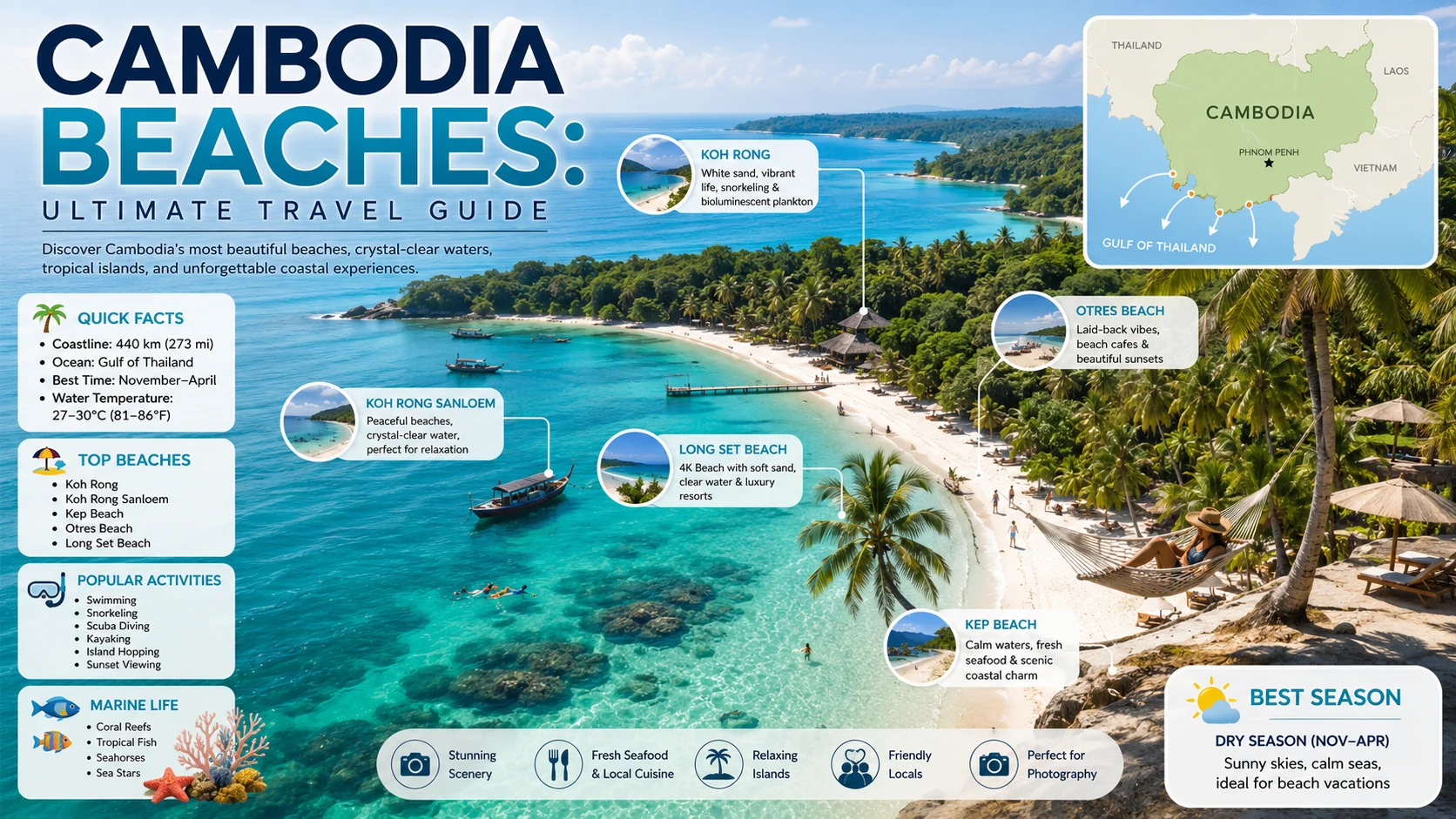

Cambodia beaches are famous for their soft white sand, crystal-clear waters, tropical islands, and laid-back atmosphere. From the lively shores of Koh Rong to the peaceful coastline of Kep and Koh Rong Sanloem, Cambodia offers beautiful beach destinations for swimming, snorkeling, diving, and relaxing throughout the year.
When people think of Cambodia, the magnificent temples of Angkor Wat often come to mind first. However, Cambodia is also home to some of Southeast Asia’s most beautiful and underrated beaches. Stretching along the Gulf of Thailand, the country’s coastline offers pristine islands, quiet fishing towns, hidden coves, and long stretches of white sand that remain less crowded than many neighboring destinations.
Whether you’re planning a romantic honeymoon, a family vacation, an island-hopping adventure, or a relaxing escape from busy city life, Cambodia’s beaches offer something for every traveler. You’ll find crystal-clear waters perfect for snorkeling, vibrant coral reefs, luxury beachfront resorts, budget-friendly accommodations, and breathtaking sunsets that rival any tropical destination in the region.
This guide explores everything you need to know about Cambodia beaches, including their location, unique characteristics, history, geography, and why they deserve a place on your travel bucket list.
Quick Facts
| Feature | Details |
|---|---|
| Country | Cambodia |
| Coastline Length | Approximately 440 km (273 miles) |
| Ocean | Gulf of Thailand |
| Famous Beach Destinations | Koh Rong, Koh Rong Sanloem, Kep Beach, Otres Beach, Lazy Beach |
| Sand Type | White, golden, and light-colored tropical sand |
| Water Color | Clear turquoise to emerald green |
| Best Time to Visit | November to April |
| Popular Activities | Swimming, snorkeling, scuba diving, kayaking, island hopping, fishing, sunset watching |
| Currency | Cambodian Riel (KHR); US Dollar widely accepted |
| Ideal For | Families, couples, backpackers, adventure travelers |
What Are Cambodia Beaches?
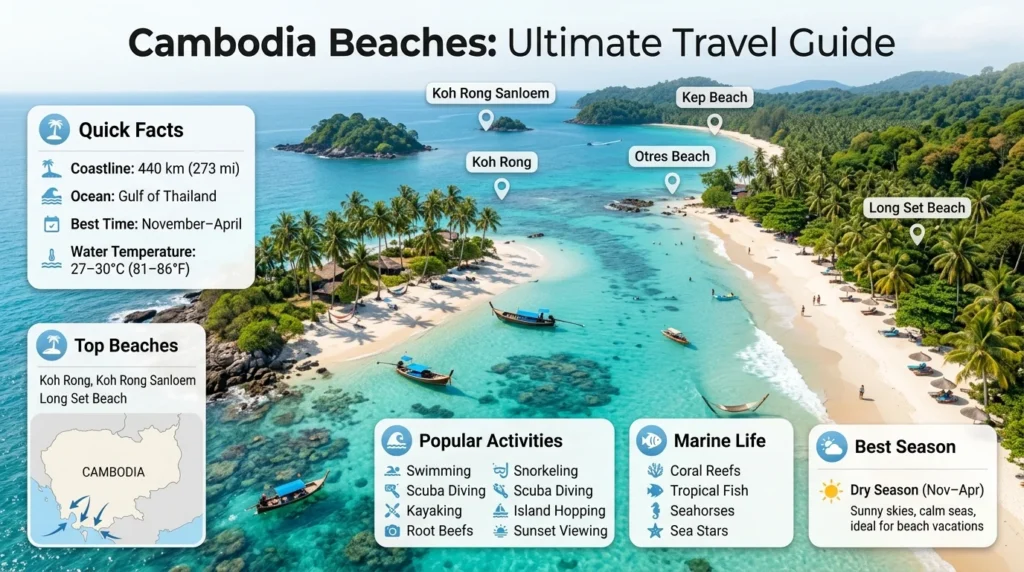
Definition
Cambodia beaches refer to the country’s coastal shorelines and tropical islands located along the Gulf of Thailand. These beaches include both mainland destinations and island beaches that attract visitors with their natural beauty, warm waters, diverse marine life, and peaceful atmosphere.
Unlike heavily commercialized beach destinations elsewhere in Southeast Asia, many Cambodian beaches have retained their natural charm. Dense tropical forests often extend right to the shoreline, while calm, shallow waters create ideal conditions for swimming and water sports.
Why Cambodia Beaches Are Famous
Cambodia’s beaches have become increasingly popular among international travelers because they combine spectacular scenery with affordability. Visitors can enjoy luxury resorts, eco-lodges, beachfront bungalows, and backpacker accommodations without the high prices often found in more famous tropical destinations.
Some of the reasons Cambodia beaches continue to attract tourists include:
- Beautiful white sand beaches
- Crystal-clear tropical waters
- Peaceful island atmosphere
- Rich marine biodiversity
- Affordable accommodation
- Excellent snorkeling and diving
- Spectacular sunsets
- Friendly local communities
- Fresh seafood
- Less crowded than many neighboring countries
These qualities make Cambodia one of Southeast Asia’s emerging beach destinations.
What Makes Cambodia Beaches Unique?
Every beach in Cambodia offers a slightly different experience.
Some beaches, such as Koh Rong, are known for lively nightlife, beachfront resorts, and exciting water activities. Others, like Koh Rong Sanloem, provide a quieter setting with eco-friendly accommodations and tranquil bays. Mainland destinations such as Kep Beach combine coastal relaxation with local seafood markets and cultural attractions.
Cambodia is also becoming well known for natural attractions like bioluminescent plankton, untouched coral reefs, hidden jungle trails, and small fishing villages that provide visitors with authentic local experiences.
Because tourism is still developing in many coastal areas, travelers often discover quiet beaches where they can enjoy nature without large crowds.
Location and Accessibility
Where Are Cambodia Beaches Located?
Cambodia’s coastline stretches across the country’s southwestern region, bordering the Gulf of Thailand. Although Cambodia has a shorter coastline than some neighboring countries, it offers an impressive variety of beaches and islands.
Most popular beach destinations are located within the provinces of:
- Preah Sihanouk Province
- Kep Province
- Koh Kong Province
These regions provide easy access to both mainland beaches and offshore islands.
Major Beach Destinations
Some of Cambodia’s best-known beaches include:
| Beach | Province | Best Known For |
|---|---|---|
| Koh Rong | Preah Sihanouk | White sand, nightlife, snorkeling |
| Koh Rong Sanloem | Preah Sihanouk | Peaceful beaches, eco-resorts |
| Otres Beach | Sihanoukville | Relaxation and cafés |
| Independence Beach | Sihanoukville | Family-friendly atmosphere |
| Kep Beach | Kep Province | Calm water and seafood |
| Lazy Beach | Koh Rong Sanloem | Quiet sunsets and nature |
| Long Set Beach | Koh Rong | Luxury resorts and swimming |
Each destination offers unique scenery, accommodation styles, and activities suitable for different travel preferences.
How to Reach Cambodia Beaches
Reaching Cambodia’s beaches is relatively straightforward thanks to improving transportation infrastructure.
International travelers typically arrive through one of Cambodia’s major airports before continuing to the coast by domestic transport.
Common transportation options include:
- Domestic flights
- Private taxis
- Tourist buses
- Minivans
- Ferry services
- High-speed boats to nearby islands
Sihanoukville serves as the primary gateway to Cambodia’s island beaches. From there, regular ferry and speedboat services transport visitors to Koh Rong, Koh Rong Sanloem, and several smaller islands.
Travel times vary depending on weather conditions and the specific destination, but most island transfers take between 30 minutes and one hour.
Nearby Cities and Travel Hubs
Several cities provide convenient access to Cambodia’s coastal attractions.
These include:
- Sihanoukville – Cambodia’s primary coastal city and island departure point.
- Kep – A charming seaside town known for seafood and family-friendly beaches.
- Kampot – A riverside destination located within easy driving distance of several beaches.
- Phnom Penh – Cambodia’s capital city, connected to the coast by road and domestic transportation.
Many travelers combine these destinations into a multi-day coastal itinerary, enjoying both cultural attractions and relaxing beach experiences.
History and Background
Historical Development of Cambodia’s Coastline
For centuries, Cambodia’s coastline played an important role in trade, fishing, and maritime transportation. Coastal communities depended on the sea for food, commerce, and cultural exchange with neighboring countries around the Gulf of Thailand.
Small fishing villages gradually developed into coastal towns where local markets, seafood restaurants, and ports became central to everyday life. While Cambodia’s beaches remained relatively unknown to international tourists for many years, improvements in transportation and tourism infrastructure have helped introduce these destinations to travelers from around the world.
Today, many coastal areas continue to balance tourism development with traditional fishing lifestyles, creating a unique blend of modern travel experiences and authentic local culture.
Cultural Significance
Cambodia’s beaches are more than just scenic destinations they are closely connected to the country’s coastal heritage. Local communities celebrate traditional festivals, rely on fishing as a livelihood, and maintain customs that have been passed down through generations.
Visitors can experience this culture by exploring seaside markets, tasting freshly caught seafood, meeting local fishermen, and discovering coastal villages where daily life still revolves around the ocean.
The combination of natural beauty and cultural authenticity is one of the reasons Cambodia’s beaches continue to attract travelers looking for experiences beyond typical resort vacations.
Geography and Natural Features
Cambodia’s coastline may be shorter than those of Thailand or Vietnam, but it offers remarkable geographical diversity. From powder-soft white sand beaches and rocky headlands to mangrove forests and tropical islands, the country’s coastal landscapes appeal to nature lovers and beach enthusiasts alike.
The coastline borders the Gulf of Thailand, where warm tropical waters, gentle waves, and lush greenery create ideal conditions for relaxation and outdoor adventures.
Sand and Shoreline
The appearance of Cambodia’s beaches varies depending on their location.
Some beaches feature fine white sand that feels soft underfoot, while others have golden sand mixed with shells or small pebbles. Island beaches such as Koh Rong and Koh Rong Sanloem are especially known for their powdery white beaches, whereas some mainland beaches have darker or slightly coarser sand.
Common shoreline features include:
- Wide sandy beaches
- Palm-lined coastlines
- Rocky coves
- Hidden bays
- Forest-backed beaches
- Shallow lagoons
Water Conditions
One of Cambodia’s biggest attractions is its warm, inviting sea.
Throughout most of the year, water temperatures range between 81°F and 86°F (27°C–30°C), making swimming comfortable in every season.
Water clarity depends on weather and location. During the dry season, visibility is excellent around many islands, making snorkeling and diving particularly enjoyable.
Waves
Unlike destinations famous for large surf, Cambodia generally experiences calm to moderate waves.
This makes many beaches ideal for:
- Families with children
- Casual swimmers
- Kayaking
- Paddleboarding
- Beginner snorkelers
Wave conditions can become rougher during the rainy season, especially when strong winds affect the Gulf of Thailand.
Climate
Cambodia has a tropical monsoon climate with two primary seasons.
Dry Season (November–April)
- Sunny weather
- Low humidity
- Calm seas
- Excellent visibility
- Comfortable temperatures
Rainy Season (May–October)
- Frequent afternoon showers
- Greener landscapes
- Fewer tourists
- Lower accommodation prices
Even during the rainy season, many mornings remain sunny before afternoon rainfall arrives.
Coastal Landscape
Cambodia’s coastal scenery combines tropical forests, small islands, coral reefs, estuaries, and mangrove ecosystems.
Unlike highly urbanized beach destinations, many Cambodian beaches still feel natural and uncrowded. Dense vegetation often extends almost to the shoreline, creating a peaceful environment where wildlife and tourism coexist.
Best Cambodia Beaches to Visit
Cambodia offers dozens of beautiful beaches, each with its own atmosphere and attractions. Whether you’re looking for nightlife, secluded islands, family-friendly swimming areas, or adventure activities, there’s a beach to match your travel style.
Koh Rong
Koh Rong is Cambodia’s most famous island and is often considered the country’s premier beach destination.
Its long stretches of white sand, crystal-clear waters, and lively atmosphere attract travelers from around the world.
Highlights
- Long Beach (7 km of white sand)
- Beachfront resorts
- Coral reefs
- Nightlife
- Bioluminescent plankton
- Boat tours
Best For
- Couples
- Backpackers
- Island hopping
- Snorkeling
- Sunset lovers
Koh Rong Sanloem
Located south of Koh Rong, this island offers a quieter alternative.
Visitors come here for peaceful beaches, luxury eco-resorts, and calm turquoise water.
Highlights
- Saracen Bay
- Lazy Beach
- Jungle hiking
- Quiet atmosphere
- Excellent snorkeling
Best For
- Honeymooners
- Families
- Nature lovers
- Relaxation
Otres Beach
Otres Beach sits near Sihanoukville and has long been popular with travelers seeking a laid-back atmosphere.
Although development has changed parts of the area, sections of Otres Beach still provide peaceful walks, cafés, and beachfront accommodations.
Activities
- Swimming
- Paddleboarding
- Beach cafés
- Sunset photography
Kep Beach
Kep Beach is Cambodia’s best-known mainland beach.
Unlike the island beaches, Kep combines coastal scenery with local culture and famous seafood markets.
Why Visit?
- Calm swimming water
- Family-friendly environment
- Fresh seafood
- Scenic promenade
- Nearby Kep National Park
Lazy Beach
Frequently ranked among Cambodia’s most beautiful beaches, Lazy Beach offers a secluded tropical escape.
Its peaceful setting makes it one of the country’s top destinations for travelers wanting privacy.
Visitors enjoy:
- Golden sunsets
- Soft sand
- Quiet swimming
- Nature walks
Long Set Beach
Also known as 4K Beach, Long Set Beach stretches for several kilometers along Koh Rong.
It combines luxury resorts with quieter sections where visitors can relax away from crowds.
Popular activities include:
- Swimming
- Beach volleyball
- Paddleboarding
- Sunrise photography
Things to Do at Cambodia Beaches
A beach vacation in Cambodia offers much more than simply relaxing on the sand. Visitors can enjoy a wide variety of outdoor activities suitable for all ages and travel styles.
Swimming
Warm tropical water makes swimming enjoyable throughout most of the year.
Many beaches feature shallow areas ideal for families, while larger islands provide more expansive swimming zones.
Snorkeling
Cambodia’s coastal waters contain colorful coral reefs and diverse marine life.
Popular snorkeling spots include:
- Koh Rong
- Koh Rong Sanloem
- Koh Ta Kiev
- Koh Sdach
Visitors often see:
- Parrotfish
- Butterflyfish
- Sea stars
- Coral gardens
- Sea cucumbers
Scuba Diving
Cambodia’s underwater world continues to attract divers looking for quieter alternatives to more crowded Southeast Asian destinations.
Certified dive operators offer:
- Beginner courses
- Open Water certification
- Advanced diving
- Night diving
- Reef exploration
Kayaking
Several beaches rent kayaks for exploring hidden coves, mangrove forests, and nearby islands.
Kayaking is especially popular around calm bays during the morning hours when the sea is smooth.
Paddleboarding
Stand-up paddleboarding has become increasingly popular along Cambodia’s calmer beaches.
The activity allows visitors to enjoy scenic coastal views while getting light exercise.
Island Hopping
Many visitors choose to explore several islands during one trip.
Popular island-hopping routes include:
- Koh Rong
- Koh Rong Sanloem
- Koh Ta Kiev
- Koh Thmei
- Koh Sdach
Boat tours often include snorkeling stops and beach picnics.
Fishing Trips
Traditional fishing remains an important part of coastal Cambodian life.
Guided fishing excursions allow visitors to experience local techniques while enjoying the Gulf of Thailand.
Hiking
Not every beach activity takes place in the water.
Several islands feature jungle trails leading to viewpoints, waterfalls, and secluded beaches that are inaccessible by road.
Photography
Cambodia’s beaches provide countless photography opportunities.
Popular subjects include:
- Palm trees
- White sand
- Fishing boats
- Tropical sunsets
- Wildlife
- Crystal-clear water
- Island landscapes
Golden hour around sunrise and sunset offers the best natural lighting.
Relaxation
Many travelers visit Cambodia simply to unwind.
Quiet beaches, hammocks, beach massages, yoga sessions, and oceanfront cafés make the coastline ideal for slowing down and enjoying nature.
Wildlife and Coastal Ecosystem
Cambodia’s coastline supports a rich variety of marine and coastal ecosystems that play an important role in protecting biodiversity and supporting local communities.
Marine Life
The warm waters of the Gulf of Thailand are home to numerous marine species, including:
- Tropical reef fish
- Seahorses
- Sea stars
- Sea cucumbers
- Crabs
- Shrimp
- Jellyfish (seasonally)
- Rays (occasionally)
Healthy coral reefs provide shelter for many of these species and contribute to the region’s underwater beauty.
Birds
Birdwatchers may spot a variety of coastal and migratory birds, such as:
- Herons
- Egrets
- Kingfishers
- Sea eagles
- Sandpipers
Mangrove forests and estuaries serve as important nesting and feeding habitats.
Coastal Plants
Cambodia’s beaches are lined with vegetation that helps stabilize the shoreline and reduce erosion.
Common coastal plants include:
- Coconut palms
- Mangroves
- Sea grasses
- Tropical shrubs
- Coastal vines
These plants also provide habitat for birds, insects, and small animals.
Protected Areas
Several coastal regions and nearby islands benefit from conservation efforts aimed at preserving coral reefs, mangroves, and marine biodiversity.
Responsible tourism including avoiding littering, respecting wildlife, and using reef-safe sunscreen helps protect these fragile ecosystems for future generations.
Best Time to Visit Cambodia Beaches
Cambodia’s tropical climate means you can visit its beaches year-round, but your experience will vary depending on the season. Understanding the weather patterns can help you choose the best time for swimming, island hopping, snorkeling, or simply relaxing by the sea.
Dry Season (November to April)
The dry season is widely considered the best time to visit Cambodia beaches. During these months, visitors can expect sunny skies, calm seas, and lower humidity, making it ideal for outdoor activities.
Why Visit During the Dry Season?
- Clear blue skies
- Calm and warm sea conditions
- Excellent snorkeling and diving visibility
- Comfortable temperatures
- Reliable ferry services to the islands
- Perfect beach weather
This period is also the busiest tourist season, so booking accommodations and ferry tickets in advance is recommended.
Rainy Season (May to October)
The rainy season brings lush green landscapes and fewer tourists. Rain usually falls in short but heavy afternoon showers rather than lasting all day.
Advantages of Visiting During the Rainy Season
- Fewer crowds
- Lower hotel prices
- Greener scenery
- Peaceful beaches
Travelers should keep in mind that rough seas may occasionally affect ferry schedules and water-based activities.
Facilities and Visitor Information
The facilities available at Cambodia’s beaches vary depending on the destination. Popular tourist areas offer modern amenities, while remote islands provide a more natural and rustic experience.
Accommodation
Visitors can choose from a wide range of lodging options, including:
- Luxury beachfront resorts
- Boutique hotels
- Eco-lodges
- Beach bungalows
- Budget guesthouses
- Backpacker hostels
Many accommodations are located just steps from the beach, offering beautiful ocean views.
Restaurants and Cafés
Cambodia’s coastal regions are well known for fresh seafood and local cuisine.
Popular dishes include:
- Grilled fish
- Fresh crab
- Prawns
- Squid
- Seafood barbecue
- Tropical fruit smoothies
International cuisine is also widely available in major beach destinations.
Transportation
Getting around Cambodia’s beach destinations is relatively easy.
Transportation options include:
- Tuk-tuks
- Taxis
- Rental scooters
- Private transfers
- Speedboats
- Ferries
Most islands are accessible by regular ferry services from Sihanoukville.
Accessibility
Many of Cambodia’s more developed beaches provide:
- Beachfront walkways
- Parking areas
- Public restrooms
- Beach chairs
- Equipment rentals
- Tourist information centers
Remote beaches may have limited facilities, so visitors should prepare accordingly.
Safety Tips for Visiting Cambodia Beaches
A few simple precautions can help ensure a safe and enjoyable beach vacation.
Swimming Safety
Always swim in designated areas where conditions are considered safe. If lifeguards are present, follow their instructions and warning flags.
Weather Awareness
Weather conditions can change quickly during the rainy season. Check local forecasts before taking boat trips or participating in water sports.
Sun Protection
Cambodia’s tropical sun can be intense throughout the year.
Remember to:
- Apply reef-safe sunscreen
- Wear sunglasses
- Use a wide-brimmed hat
- Stay hydrated
- Seek shade during midday
Marine Wildlife
Most marine life is harmless, but visitors should avoid touching coral reefs or unfamiliar sea creatures. Wearing water shoes can help protect your feet in rocky or coral-filled areas.
Protect Your Belongings
Keep valuables secure, especially on busy beaches or during boat trips. Waterproof bags are useful for protecting electronics and important documents.
Environmental Importance
Cambodia’s coastline is home to valuable ecosystems that support wildlife, local livelihoods, and sustainable tourism.
Coral Reefs
Coral reefs provide habitat for hundreds of marine species and help protect the coastline from erosion. Healthy reefs also attract divers and snorkelers from around the world.
Mangrove Forests
Mangrove forests play an essential role in coastal ecosystems by:
- Reducing coastal erosion
- Protecting shorelines from storms
- Providing nursery habitats for fish
- Supporting biodiversity
Sustainable Tourism
Visitors can help preserve Cambodia’s beaches by following responsible travel practices.
Simple ways to reduce your environmental impact include:
- Avoid leaving litter behind
- Use reusable water bottles
- Respect wildlife
- Stay on marked trails
- Choose eco-friendly accommodations when possible
- Avoid damaging coral reefs while snorkeling or diving
Responsible tourism helps ensure that Cambodia’s natural beauty can be enjoyed by future generations.
Nearby Attractions
A beach holiday in Cambodia can easily be combined with cultural, historical, and nature-based attractions.
Angkor Wat
Although located inland near Siem Reap, Angkor Wat is Cambodia’s most iconic landmark and a must-visit destination for many travelers.
Kep National Park
This protected area offers hiking trails, scenic viewpoints, and opportunities to observe local wildlife.
Kampot
Known for its riverside charm, colonial architecture, and world-famous pepper farms, Kampot is a popular stop before or after visiting nearby beaches.
Ream National Park
Located near Sihanoukville, this national park features mangrove forests, beaches, rivers, and abundant wildlife.
Local Markets
Exploring local markets allows visitors to experience Cambodian culture while sampling fresh seafood, tropical fruits, handmade crafts, and traditional cuisine.
Travel Tips
Planning ahead can make your beach vacation smoother and more enjoyable.
What to Pack
Essential items include:
- Lightweight clothing
- Swimsuits
- Reef-safe sunscreen
- Sunglasses
- Hat
- Flip-flops
- Water shoes
- Insect repellent
- Waterproof phone case
- Dry bag
Budget Tips
Travelers can save money by:
- Visiting during the shoulder season
- Booking accommodations in advance
- Using shared transportation
- Eating at local restaurants
- Choosing combination island tours
Photography Tips
For the best beach photos:
- Visit during sunrise or sunset.
- Use natural lighting.
- Include palm trees or boats for composition.
- Protect your camera from sand and water.
Family Travel Tips
Families visiting Cambodia beaches should:
- Choose beaches with calm water.
- Bring plenty of drinking water.
- Pack snacks and sun protection.
- Keep children supervised near the ocean.
- Check available facilities before visiting remote beaches.
Pros and Cons
| Pros | Cons |
|---|---|
| Beautiful tropical islands | Some beaches require ferry transportation |
| Crystal-clear warm water | Ferry schedules may change during bad weather |
| Less crowded than many neighboring destinations | Limited facilities on remote islands |
| Affordable accommodations | Internet access may be limited in some areas |
| Excellent snorkeling and diving | Rainy season can affect outdoor activities |
| Friendly local communities | Peak season accommodations book quickly |
Frequently Asked Questions
Are Cambodia beaches worth visiting?
Yes. Cambodia offers beautiful beaches with soft sand, clear water, tropical islands, and a more relaxed atmosphere than many other Southeast Asian destinations.
Which beach is considered the best in Cambodia?
Koh Rong is often regarded as Cambodia’s top beach destination thanks to its white sand, clear waters, and wide range of activities. Koh Rong Sanloem is another favorite for travelers seeking a quieter experience.
Can you swim at Cambodia beaches?
Yes. Most popular beaches have warm, swimmable water throughout the year, especially during the dry season when sea conditions are calm.
What is the best month to visit Cambodia beaches?
December through February is generally considered the best period because the weather is sunny, humidity is lower, and the sea is calm.
Are Cambodia beaches suitable for families?
Yes. Beaches such as Kep Beach and parts of Koh Rong offer calm waters and family-friendly environments. Parents should always supervise children and check local swimming conditions.
Final Thoughts
Cambodia beaches remain one of Southeast Asia’s most rewarding coastal destinations. While the country is internationally known for its ancient temples, its coastline offers an equally memorable experience with pristine islands, crystal-clear waters, rich marine biodiversity and welcoming local communities.
Whether you’re looking for adventure, relaxation, snorkeling, diving, or simply a peaceful escape by the sea, Cambodia has a beach to suit every type of traveler. From the lively atmosphere of Koh Rong to the tranquil shores of Koh Rong Sanloem and the family-friendly charm of Kep Beach, each destination offers something unique.
With careful planning, responsible tourism, and an appreciation for the country’s natural beauty, a visit to Cambodia’s beaches can become one of the highlights of any Southeast Asian journey.
