
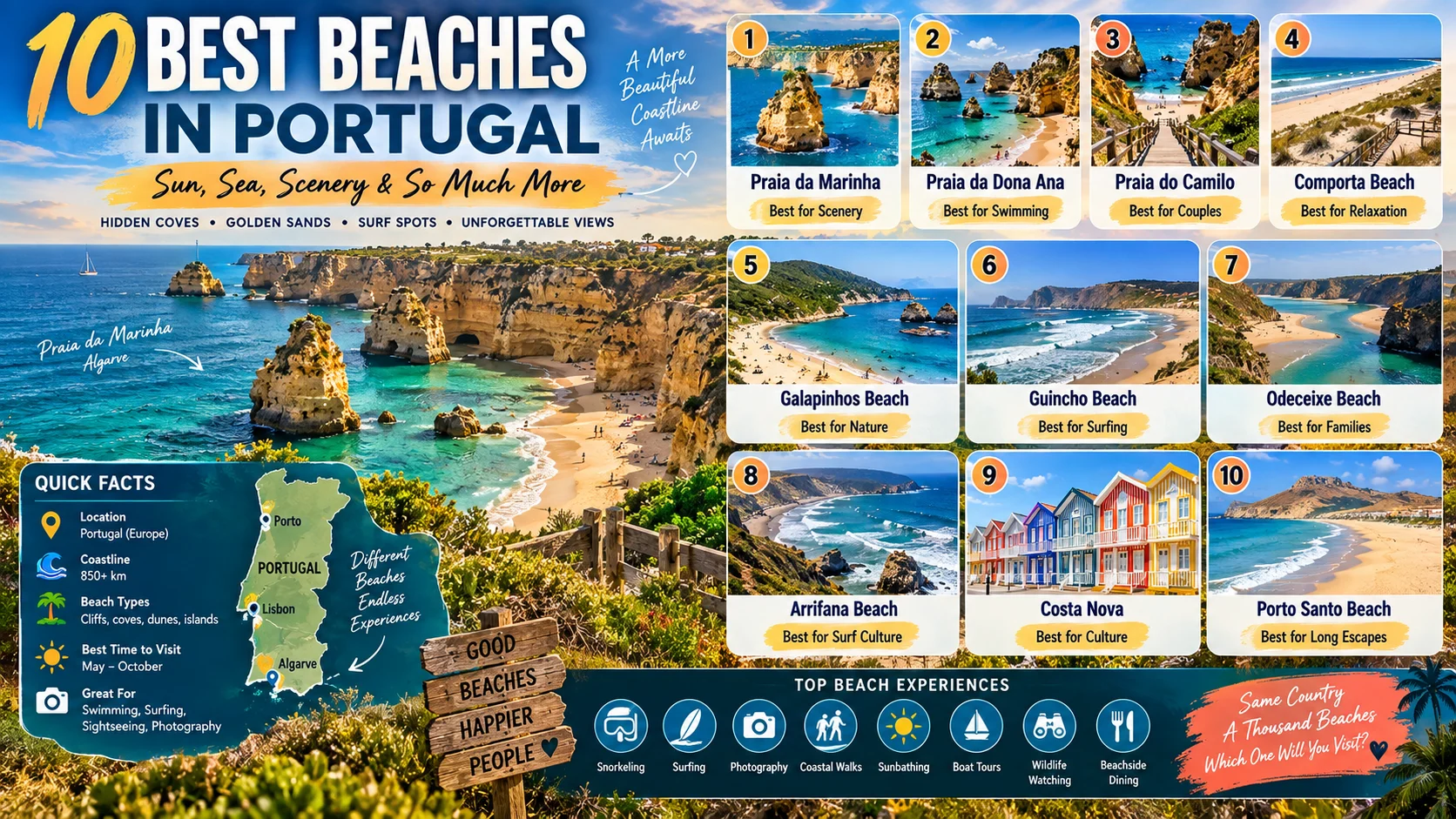

The best beaches in Portugal include Praia da Marinha, Praia da Dona Ana, Praia do Camilo, Comporta, Galapinhos, Guincho, Odeceixe, Arrifana, Costa Nova, and Porto Santo. Together, they offer dramatic cliffs, golden sand, clear water, surfing, nature, and unforgettable coastal scenery.
Why Portugal Is a Beach-Lover’s Dream
Portugal’s coastline stretches for more than 850 km, with beaches ranging from dramatic Algarve coves to wide Atlantic sands and quieter natural shores. The Algarve is especially famous for its combination of sunny weather, clear water, cliffs, coves, and resort beaches, while other regions offer stronger surf, dunes, lagoons, and wilder landscapes.
But here’s the important part: the “best” Portuguese beach depends on what you actually want to do.
Want postcard scenery? Go to Praia da Marinha.
Want a peaceful escape? Try Comporta.
Want surfing? Look toward Guincho or Arrifana.
Want a beach that feels completely different from mainland Portugal? Porto Santo is the wildcard.
So rather than giving you a random list, this guide matches each beach with the experience that makes it worth visiting.
Quick Comparison: 10 Best Beaches in Portugal
| Beach | Region | Best For | What Makes It Special |
|---|---|---|---|
| Praia da Marinha | Algarve | Scenery | Cliffs, rock formations, clear water |
| Praia da Dona Ana | Algarve | Swimming & scenery | Sheltered cove and calm-looking waters |
| Praia do Camilo | Algarve | Couples & photography | Cliffs, grottoes and intimate setting |
| Comporta Beach | Alentejo | Relaxation | Dunes, pine forest and wide sand |
| Galapinhos | Arrábida | Nature & clear water | Protected natural surroundings |
| Guincho Beach | Cascais | Surfing & wind sports | Strong waves, dunes and dramatic scenery |
| Odeceixe Beach | Aljezur | Families & nature | Ocean and river swimming |
| Arrifana Beach | Aljezur | Surfing | Cliff-backed bay |
| Costa Nova | Aveiro | Culture & beach walks | Colorful traditional houses |
| Porto Santo | Madeira | Long beach escape | 9-km golden sandy beach |
1. Praia da Marinha — Best for Jaw-Dropping Scenery
If you’ve ever seen a photograph of Portugal’s dramatic coastline, there’s a good chance it looked something like Praia da Marinha.
Located in the Algarve near Lagoa, this beach is surrounded by high limestone cliffs shaped by erosion. The combination of golden rock, pale sand and blue-green Atlantic water gives it the classic Portuguese beach look.
VisitPortugal lists Praia da Marinha among the world’s highly regarded beaches and highlights its relatively preserved natural setting and calm sea.
The viewpoint above the beach is just as important as the sand itself. Before heading down, stop and take in the coastline from above.
Best for: Photography, scenery, couples, sightseeing
Don’t miss: The cliff-top viewpoint before descending to the beach.
Attraction hint: Pair your visit with a boat trip around the nearby Algarve caves and rock formations.


2. Praia da Dona Ana — Best for a Classic Algarve Beach Day
Dona Ana is one of Lagos’s most recognizable beaches, and its setting explains why.
Tall cliffs shelter the sandy cove, while unusual rock formations rise from the water and along the beach. VisitPortugal describes its waters as clear and calm and notes its proximity to Lagos, which can be reached on foot in roughly 25 minutes.
That makes Dona Ana particularly convenient if you want to combine a beach day with exploring Lagos.
Best for: Swimming, photography, sightseeing, couples
Don’t miss: Exploring Lagos after your beach time.
Attraction hint: Don’t stop at the beach. The nearby Ponta da Piedade is one of the Algarve’s standout coastal landscapes and can be explored by boat.


3. Praia do Camilo — Best for Romantic Scenery
Praia do Camilo is smaller and more intimate than some of the Algarve’s larger beaches, which is part of its charm.
The beach sits among dramatic cliffs and is reached by a staircase of around 200 steps. That means getting there takes some effort—but the views on the way down make the journey part of the experience.
Nearby Ponta da Piedade adds another reason to visit. Its sea-carved cliffs, caves and grottoes are particularly impressive from the water.
Best for: Couples, photography, scenic escapes
Good to know: The staircase means access is less convenient for anyone who finds long stairways difficult.
Attraction hint: Take a boat excursion around Ponta da Piedade after visiting the beach.


4. Comporta Beach — Best for Peace and Space
If your idea of a perfect beach involves wide sand, dunes, pine trees and a slower atmosphere, Comporta deserves your attention.
Located on the southern end of the Tróia Peninsula, Comporta has a large sandy shoreline and sits near the Sado Estuary Nature Reserve. Its dune vegetation and surrounding pine forest help preserve a natural character.
The sea can be lively, making the area suitable for activities such as surfing and kitesurfing.
But the biggest attraction may simply be the feeling of space.
Best for: Relaxation, nature, long walks, couples
Don’t miss: Walking beyond the busiest beach areas to appreciate the dunes and open coastline.
Attraction hint: Explore the surrounding Tróia Peninsula and Sado Estuary area rather than treating Comporta as a quick beach stop.


5. Galapinhos Beach — Best for Natural Beauty
Tucked inside the Arrábida Natural Park, Galapinhos is the kind of beach to choose when natural surroundings matter as much as the sand.
VisitPortugal describes Galapinhos as a beach surrounded by unspoiled nature, with clear waters and small bays in the surrounding Arrábida coastal landscape. The beach was also selected as Europe’s best beach in 2017 by the organization referenced by Portugal’s tourism authority.
Its setting makes it especially appealing to travelers who want something more peaceful and nature-focused.
Best for: Nature, clear water, photography, relaxation
Don’t miss: Exploring the wider Arrábida coastline.
Attraction hint: Treat the beach as part of an Arrábida day rather than visiting only for a few hours.


6. Guincho Beach — Best for Surfing and Adventure
Guincho is where Portugal’s beach personality changes dramatically.
Instead of a sheltered Algarve cove, expect a broad Atlantic beach, strong winds, dunes and powerful waves. Located within the Sintra-Cascais Natural Park, Guincho is particularly popular with surfers, bodyboarders and windsurfers.
It’s also close enough to Cascais to make an easy addition to a sightseeing itinerary.
Best for: Surfing, windsurfing, bodyboarding, photography
Don’t miss: The dunes and surrounding Sintra-Cascais landscape.
Important: This is not necessarily the beach you choose for calm-water swimming. Conditions can be windy and wave-heavy.


7. Odeceixe Beach — Best for Families and Something Different
Odeceixe has one major advantage: you can experience both river and ocean swimming in the same place.
The beach sits at the mouth of the Seixe River, creating a distinctive meeting point between freshwater and the Atlantic. At low tide, small lagoons can form across the broad sandy area, which VisitPortugal notes are particularly popular with children.
That makes Odeceixe a fascinating choice if you’re tired of seeing the same type of beach landscape.
Best for: Families, nature, swimming, relaxed exploration
Don’t miss: The river mouth and surrounding viewpoints.
Attraction hint: Explore the village of Odeceixe and the wider Costa Vicentina, known for its more preserved and wild coastal character.


8. Arrifana Beach — Best for Surfing With a Dramatic Backdrop
Arrifana sits inside a bay enclosed by tall cliffs, creating one of the more dramatic settings along the Costa Vicentina.
The old fortress ruins above the beach provide particularly impressive views over the coastline. The beach is also a year-round favourite among surfers and bodyboarders, according to VisitPortugal.
This combination of surf, scenery and history makes Arrifana more than just another sandy beach.
Best for: Surfing, bodyboarding, photography, scenic drives
Don’t miss: The old fortress viewpoint.
Attraction hint: Continue exploring the Costa Vicentina instead of rushing back after your beach visit.


9. Costa Nova — Best for Colorful Coastal Culture
Costa Nova is proof that a great Portuguese beach experience doesn’t always revolve around dramatic cliffs or turquoise water.
The beach is famous for its colorful striped wooden houses known as palheiros. Originally associated with fishing communities, these buildings have become one of the most distinctive visual features of the area.
The Atlantic side can have rougher conditions and attracts surfers, while the nearby Aveiro Lagoon offers calmer water for sailing and windsurfing.
Best for: Photography, culture, beach walks, surfing
Don’t miss: The colorful houses along the coastal road.
Attraction hint: Combine Costa Nova with a visit to Aveiro for a fuller day.


10. Porto Santo Beach — Best for a Long, Relaxing Beach Escape
Want something completely different?
Take a trip to Porto Santo.
The island, part of the Madeira archipelago, is home to a remarkable 9-kilometre sandy beach along its southern coast. VisitPortugal describes its sand as fine and golden, with clear, peaceful water and a mild climate.
Unlike many famous Portuguese beaches where cliffs dominate the scenery, Porto Santo gives you long uninterrupted stretches of sand.
That makes it especially appealing for travelers who want to walk, swim and relax without constantly moving from cove to cove.
Best for: Relaxation, long beach walks, swimming, water sports
Don’t miss: Spending enough time to explore more than one section of the long beach.
Attraction hint: Porto Santo itself is worth exploring beyond the beach, including its historic and natural attractions.


Which Portuguese Beach Is Best for You?
Choosing becomes much easier when you match the beach to your travel style.
For the most iconic scenery: Praia da Marinha
For a classic Algarve beach: Praia da Dona Ana
For couples: Praia do Camilo
For peace and space: Comporta
For nature: Galapinhos
For surfing: Guincho or Arrifana
For families: Odeceixe
For photography: Costa Nova
For a long sandy beach: Porto Santo
For a mix of beach and culture: Costa Nova
Best Time to Visit Portugal’s Beaches
Summer is the obvious peak beach season, particularly from June through September. Expect more visitors, especially at famous Algarve beaches and around major resort areas.
Spring and early autumn can be excellent alternatives if you want pleasant coastal weather with a more relaxed atmosphere.
The Atlantic remains a major factor, though. Water temperatures can feel cool compared with Mediterranean destinations, particularly along exposed western beaches such as Guincho and the Costa Vicentina.
For surfing, cooler water is less of an issue if you have suitable equipment.
For swimming-focused holidays, check local conditions rather than assuming every beach will have calm water simply because the weather is sunny.
Portugal Beach Safety Tips
Portugal’s beaches can look inviting, but Atlantic conditions deserve respect.
Before swimming:
- Check local beach and weather conditions.
- Use supervised swimming areas where available.
- Pay attention to warning flags and lifeguard instructions.
- Be particularly careful around strong surf and exposed western beaches.
- Watch children closely around the ocean and river mouths.
- Don’t underestimate currents simply because the water looks calm.
- Be careful around cliffs and never ignore access restrictions.
The safest beach for swimming can change from day to day, so conditions on arrival matter more than a ranking on a travel website.
What Makes Portugal’s Beaches Different?
Portugal’s biggest advantage is variety.
The Algarve gives you limestone cliffs, hidden coves and resort beaches.
The Alentejo offers broad sandy coastlines and quieter surroundings.
The Costa Vicentina feels wilder, with strong Atlantic surf and dramatic cliffs.
The Lisbon region gives you beaches close to historic cities and towns.
And Madeira’s Porto Santo provides a completely different island beach experience.
That means you can build an entire Portugal trip around different types of coastline without visiting the same kind of beach twice.
Final Thoughts
The best beaches in Portugal aren’t necessarily the ones with the most famous names.
Praia da Marinha wins for dramatic beauty. Comporta wins when you want space. Guincho is the better choice for surf and wind. Odeceixe gives families something unusual with its river-and-ocean setting, while Porto Santo is the place to go when your dream beach day means miles of golden sand.
If you’re planning your first Portugal beach trip, start with Praia da Marinha, Dona Ana and Comporta. Then add one western beach such as Guincho or Arrifana for a completely different Atlantic experience.
That contrast is what makes Portugal’s coastline so memorable.
