
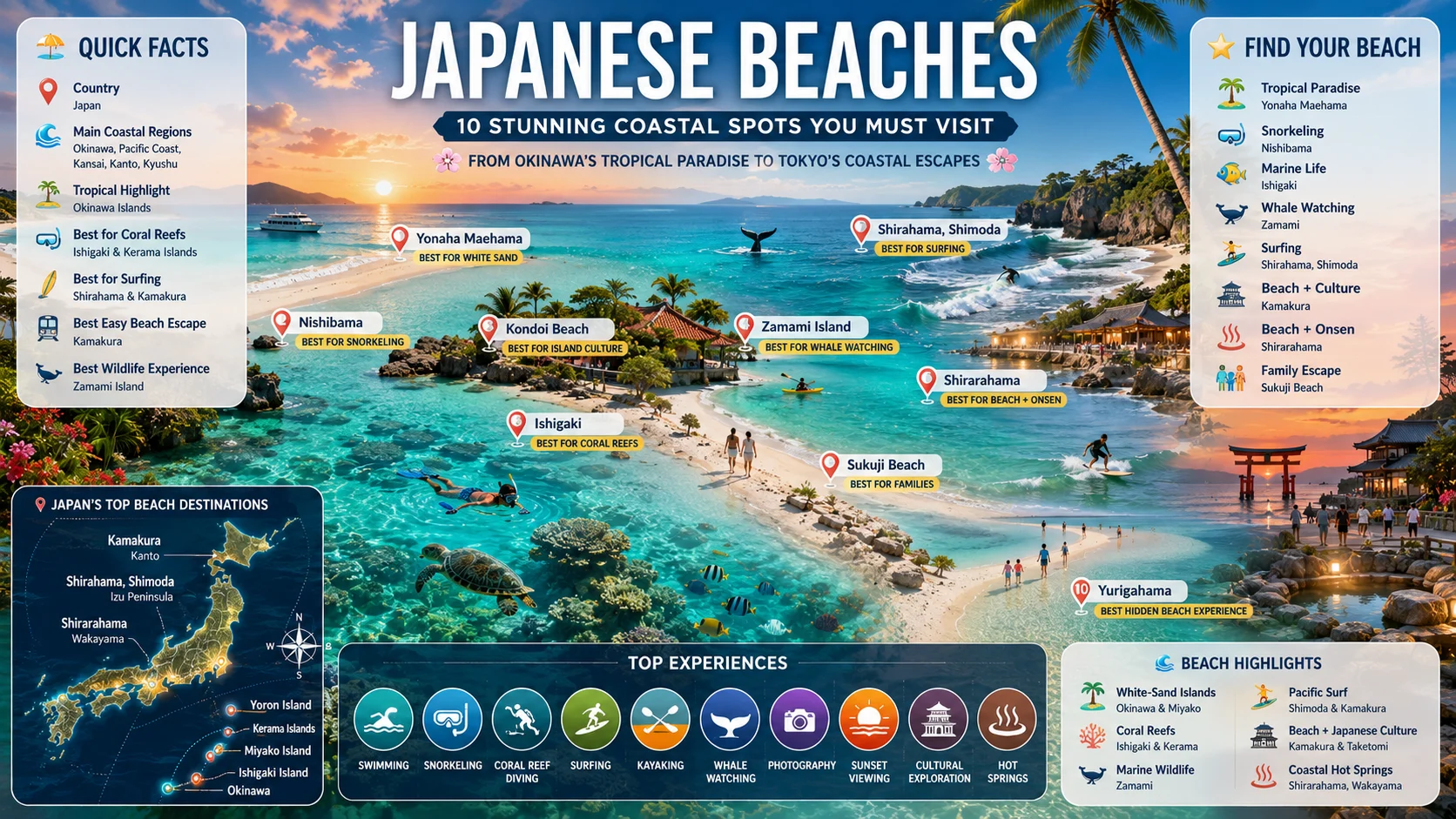

Japan’s best beaches range from Okinawa’s tropical white-sand islands to Pacific beaches near Tokyo and historic coastal escapes. Top picks include Yonaha Maehama, Nishibama, Kondoi, Zamami, Shirarahama, Shirahama, Ishigaki, and Kamakura for scenery, swimming, snorkeling, surfing, and sunsets.
When most people picture Japan, they think of Tokyo’s neon streets, Kyoto’s temples, Mount Fuji, or cherry blossoms. But Japan also has an impressive coastline filled with tropical islands, white-sand beaches, coral reefs, surf towns, dramatic cliffs, and quiet seaside escapes.
The biggest surprise is the variety. Okinawa feels almost Caribbean, while beaches around Kamakura offer a completely different experience, combining ocean views with temples, cafés, and easy access from Tokyo.
Japan’s official tourism organization highlights destinations such as Yonaha Maehama Beach, Nishibama Beach, Ishigaki Island, Taketomi Island, Yoron Island, Shirarahama Beach, Miyako Island, and the Kerama Islands among its recommended beach and island experiences.
So, which Japanese beaches are actually worth adding to your itinerary?
Here are 10 standout choices, each selected for a different travel experience.
Quick Facts About Japanese Beaches
| Feature | Details |
|---|---|
| Country | Japan |
| Best Tropical Region | Okinawa |
| Best for Coral Reefs | Ishigaki & Miyako Islands |
| Best for White Sand | Yonaha Maehama & Nishibama |
| Best for Surfing | Kamakura & Pacific coast |
| Best Near Tokyo | Kamakura |
| Best for Families | Sukuji Beach |
| Best for Island Culture | Taketomi Island |
| Best for Whale Watching | Zamami Island |
| Best for Beach + Onsen | Shirahama |
| Best for Sunsets | Zamami & Ishigaki |
| Best Tropical Escape | Miyako Island |
1. Yonaha Maehama Beach, Miyako Island — Best for White Sand


If your dream Japanese beach means powdery white sand, brilliant blue water, and a tropical island atmosphere, Yonaha Maehama should be near the top of your list.
Located on Miyako Island in Okinawa, the beach is surrounded by the island’s famous emerald-colored sea and coral reefs. Miyako is specifically known for its white-sand beaches and clear water, making it one of Japan’s strongest choices for a tropical beach holiday.
Why Visit?
- Long stretches of white sand
- Clear emerald water
- Tropical scenery
- Excellent swimming atmosphere
- Beautiful sunset photography
⭐ Attraction Point
Don’t just visit the beach explore Miyako Island by car or bicycle. The island also offers coral reefs, coastal viewpoints, and Higashi-Hennazaki Lighthouse.
Best for: Couples, photographers, tropical escapes
2. Nishibama Beach, Aka Island — Best for Crystal-Clear Water
Nishibama Beach is part of the Kerama Islands, an island group famous for exceptionally clear water and beautiful marine environments.
The area is particularly attractive to travelers interested in snorkeling and diving. Japan’s official tourism listings specifically feature Nishibama among its recommended swimming and diving destinations.
Why Visit?
- Extremely clear water
- White sandy shoreline
- Coral reefs
- Tropical fish
- Snorkeling opportunities
⭐ Attraction Point
Look beneath the surface. Nishibama isn’t just about sitting on the sand the underwater scenery is one of its biggest attractions.
Best for: Snorkeling, diving, nature lovers
3. Kondoi Beach, Taketomi Island — Best for a Traditional Island Escape
Kondoi Beach offers something many Japanese beach destinations don’t: a beautiful beach combined with traditional Okinawan island culture.
The beach is on tiny Taketomi Island, accessible by ferry from Ishigaki. JNTO describes its shallow, calm water and coral breakwater as major attractions.
But don’t rush back to the ferry.
Taketomi itself is part of the experience, with traditional architecture, quiet roads, and a slower pace of life.
⭐ Attraction Point
Ride a traditional water buffalo cart through Taketomi’s village landscape.
That turns a normal beach day into a cultural experience.
Best for: Couples, culture seekers, photographers
4. Zamami Island — Best for Snorkeling and Whale Watching


Zamami Island is one of the most exciting choices for travelers who want beach scenery plus marine wildlife.
The island is surrounded by bright blue water and subtropical marine life. Official Okinawa tourism information highlights its white beaches, sunsets, snorkeling opportunities, and winter whale watching.
The island is also relatively compact, making it appealing for travelers who prefer a peaceful escape rather than a large resort destination.
⭐ Attraction Point
Visit during winter for a chance to join whale-watching excursions for migrating humpback whales.
Best for: Wildlife, snorkeling, couples, adventure
5. Ishigaki Island — Best for Diving and Coral Reefs


Ishigaki is more than one beach. It’s a complete tropical destination with multiple beaches, coral reefs, hiking opportunities, and marine adventures.
JNTO describes Ishigaki as a tropical paradise with extensive coral reefs and highlights opportunities such as diving with manta rays around Kabira Bay.
Popular coastal areas include Fusaki, Sukuji, Yonehara, and Shiraho.
Shiraho is particularly interesting for snorkeling because the area is home to more than 120 types of coral, according to JNTO.
⭐ Attraction Point
Choose Ishigaki if you want several beach experiences in one trip rather than staying at a single beach.
Best for: Diving, snorkeling, marine life, longer vacations
6. Shirarahama Beach, Wakayama — Best Mainland Beach Escape
Not every great Japanese beach requires a trip to Okinawa.
Shirarahama Beach in Wakayama is one of the country’s most famous mainland beach destinations. The white-sand beach curves around a bay with clear water and stretches for roughly 620 meters.
It is also known for its summer beach atmosphere and fireworks events.
But the biggest reason to visit is the combination of beach + hot springs + dramatic coastal scenery.
⭐ Attraction Point
After your beach time, visit Shirahama Onsen, a historic hot-spring destination where you can soak while enjoying ocean views.
Best for: Families, couples, mainland travelers
7. Shirahama Beach, Shimoda — Best for Surfing
Don’t confuse this beach with Shirarahama in Wakayama.
Shirahama Beach in Shimoda, Shizuoka, is another excellent Japanese coastal destination. It has more than 800 meters of sand, clear water, and regular surf.
Its location on the Izu Peninsula also makes it an attractive getaway from the Tokyo region.
Why Visit?
- Clear water
- Long sandy beach
- Regular waves
- Surfing
- Nearby accommodation
- Easy combination with an Izu trip
⭐ Attraction Point
If the main beach feels busy, Shirahama Chuo Beach nearby offers a quieter alternative.
Best for: Surfers, summer trips, Tokyo-area travelers
8. Kamakura Beaches — Best for a Tokyo Day Trip


Want a Japanese beach experience without traveling to a remote island?
Kamakura is your answer.
Located about an hour from Tokyo by train, Kamakura combines beaches with temples, historic attractions, restaurants, and the famous Great Buddha.
Its main beaches include:
- Yuigahama
- Zaimokuza
- Koshigoe
Visitors can swim, surf, kayak, paddleboard, and enjoy the coastal atmosphere.
⭐ Attraction Point
Combine the beach with Kamakura’s historic temples and Great Buddha in the same day.
On clear days, you may also get views toward Mount Fuji from the coast.
Best for: Tokyo visitors, history lovers, first-time Japan travelers
9. Sukuji Beach, Ishigaki — Best for Families
Sukuji Beach sits in a sheltered bay surrounded by greenery on Ishigaki Island.
Its calm setting makes it particularly appealing to families and travelers who want a more relaxed swimming experience.
JNTO specifically identifies Sukuji as an ideal choice for visitors traveling with young children.
⭐ Attraction Point
Pair Sukuji Beach with other Ishigaki attractions, rather than treating it as your only stop. You can create a full island day around beaches, viewpoints, food, and marine activities.
Best for: Families, relaxed swimming, first-time visitors
10. Yurigahama Beach, Yoron Island — Best for a “Hidden Island” Experience
Yurigahama is unlike a normal beach because its appearance can change dramatically with the tides.
Located off Yoron Island in Kagoshima, the beach is famous as a “phantom island” because its sandbar becomes visible under favorable low-tide conditions. JNTO highlights it as one of Japan’s distinctive hidden beach experiences.
⭐ Attraction Point
Check tide conditions before planning your visit. The experience is specifically tied to when the sandbar emerges.
Best for: Adventure, photography, unique experiences
Which Japanese Beach Should You Choose?
| If You Want… | Choose |
|---|---|
| 🏝 Tropical paradise | Yonaha Maehama |
| 🤿 Snorkeling | Nishibama |
| 🐋 Whale watching | Zamami |
| 🐠 Coral reefs | Ishigaki |
| 🏖 Family swimming | Sukuji |
| 🏄 Surfing | Shirahama, Shimoda |
| 🏯 Beach + culture | Kondoi / Taketomi |
| 🚆 Easy Tokyo escape | Kamakura |
| ♨️ Beach + hot springs | Shirarahama, Wakayama |
| 🌊 Unique adventure | Yurigahama |
Best Time to Visit Japanese Beaches
The best beach season depends heavily on where in Japan you are traveling.
Okinawa
Okinawa has a subtropical climate and is generally the strongest choice for travelers seeking a warm beach vacation. Its islands combine white sand, coral reefs, and tropical marine life.
Mainland Japan
Mainland beach destinations such as Kamakura and Shirahama have more seasonal swimming periods.
For example, Kamakura’s official beach season is July 1 through August 31, while Shirahama Beach in Shimoda generally has favorable beach weather from around June through mid-September.
⭐ Smart Travel Tip
Don’t choose your beach based only on the calendar.
Choose based on your activity.
- Swimming → summer
- Surfing → check local wave and weather conditions
- Whale watching → winter around Zamami
- Snorkeling → warm-water periods and local conditions
- Photography → sunrise or sunset
- Quiet island travel → consider shoulder seasons
What Makes Japanese Beaches Different?
Japanese beaches aren’t simply tropical resorts.
They offer a combination of nature, culture, food, history, and outdoor adventure.
One day you can snorkel around a coral reef in Okinawa. The next, you can visit a centuries-old temple in Kamakura before watching the sunset over the Pacific.
That combination is what makes Japan particularly interesting for beach travelers.
Tips for Visiting Japanese Beaches
1. Check Local Beach Seasons
Swimming seasons can be shorter on mainland beaches than in tropical Okinawa. Always check current local conditions before visiting.
2. Respect Marine Life
Coral reefs and coastal ecosystems are fragile. Avoid touching coral, disturbing animals, or leaving anything behind.
3. Check Weather and Sea Conditions
Japan’s coastline can experience changing weather and strong marine conditions. Check local forecasts before swimming, snorkeling, or boating.
4. Don’t Forget Sun Protection
Even when temperatures don’t feel extreme, extended time near reflective sand and water can result in significant sun exposure.
5. Consider an Island Base
For Okinawa, staying several nights on islands such as Miyako or Ishigaki can give you more time to explore multiple beaches instead of rushing through day trips.
Final Thoughts
The best Japanese beaches aren’t all the same and that’s exactly why they are worth exploring.
If you want a classic tropical paradise, start with Yonaha Maehama. For coral reefs and diving, choose Ishigaki. For marine wildlife, Zamami stands out. If you’re staying near Tokyo, Kamakura delivers an easy beach-and-culture combination.
And if you want something truly unusual, Yurigahama’s disappearing sandbar can turn a normal beach trip into a memorable adventure.
Japan’s coastline rewards travelers who look beyond the obvious. Instead of asking only “Which is the prettiest beach?”, ask “What kind of beach experience do I want?”
That’s the better way to discover Japan’s coast.
