
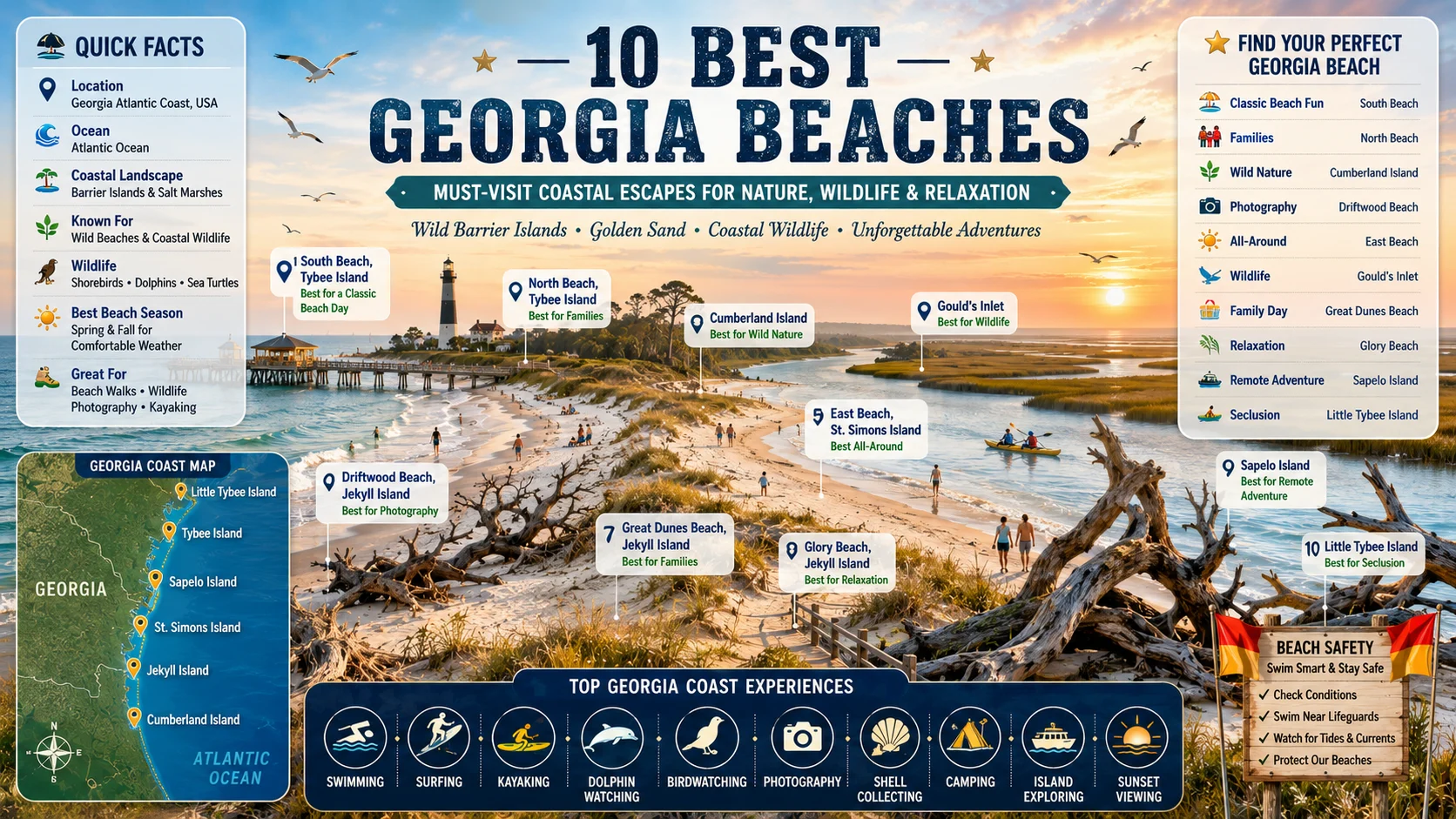

Georgia beaches are ideal for travelers who prefer natural beauty, quiet barrier islands, wildlife, and uncrowded shorelines. Top choices include Tybee Island, Cumberland Island, Driftwood Beach, St. Simons Island, Jekyll Island, and remote coastal escapes such as Sapelo and Little Tybee.
Why Georgia Beaches Feel Different
If you’re expecting Florida-style rows of giant resorts and endless nightlife, Georgia’s coast may surprise you.
The real attraction here is wild coastline.
Georgia has roughly 105 miles of sandy beaches, plus a remarkable chain of barrier islands, salt marshes, maritime forests, dunes, and tidal ecosystems. The Georgia Department of Natural Resources manages and monitors this dynamic coastal environment, which makes the state’s beaches feel more natural and less developed than many popular East Coast destinations.
That’s exactly why a Georgia beach trip can be memorable.
You might spot shorebirds instead of skyscrapers. Walk beside giant driftwood trees instead of beach clubs. Or take a ferry to an island where there are miles of sand and almost no development.
Georgia Beaches at a Glance
| Beach / Destination | Best For | Main Attraction |
|---|---|---|
| South Beach, Tybee | First-time visitors | Lively atmosphere and pier |
| North Beach, Tybee | Families | Quieter shoreline and lighthouse area |
| Cumberland Island | Nature lovers | Wild, undeveloped beaches |
| Driftwood Beach | Photography | Famous weathered trees |
| East Beach, St. Simons | All-around beach day | Wide sand and activities |
| Gould’s Inlet | Wildlife | Birds, fishing, and tidal scenery |
| Great Dunes Beach | Families | Easy access and park facilities |
| Glory Beach | Relaxation | Dunes and quieter scenery |
| Sapelo Island | Remote adventure | Wild barrier-island landscapes |
| Little Tybee Island | Seclusion | Boat-access-only wilderness |
1. South Beach, Tybee Island — Best for a Classic Beach Day
For many travelers, Tybee Island is the easiest introduction to Georgia’s coast.
South Beach is the liveliest section of the island, with a more energetic atmosphere, nearby restaurants, accommodations, and the recognizable Tybee Pier area. It’s a strong choice if you want your beach day to include more than simply sitting on the sand.
You can swim, walk along the shoreline, enjoy the ocean views, and then move easily into Tybee’s restaurants and attractions.
Best for: First-time visitors, friends, couples, classic beach vacations
Don’t miss: The Tybee Pier and an evening walk along the ocean.
Why visit? South Beach is the place to start if you want the most convenient and lively Georgia beach experience.


2. North Beach, Tybee Island — Best for Families and Beachcombing
If South Beach feels too busy, head north.
North Beach has a calmer personality and is particularly appealing for families, long walks, birdwatching, dolphin spotting, and beachcombing. The area also sits near the Tybee Island Light Station and other attractions, so you can turn a beach visit into a fuller day of exploring.
Best for: Families, quieter beach days, birdwatching, fossil hunting
Travel tip: Check seasonal lifeguard coverage and current conditions before swimming.
Pick North Beach if: You want Tybee Island’s scenery without the more social atmosphere of South Beach.
3. Cumberland Island — Best for Wild, Untouched Beauty
Cumberland Island is the Georgia beach experience for people who want nature first.
The National Park Service describes the island as having around 17–18 miles of undeveloped beach, backed by dunes, maritime forest, and important wildlife habitat. Cumberland is Georgia’s largest and southernmost barrier island, and reaching it is part of the adventure because visitors typically arrive by boat or ferry from St. Marys.
This isn’t a beach where you arrive, rent a chair, and order a drink.
Instead, expect wide open sand, walking, wildlife, and a genuine feeling of escape.
Best for: Nature lovers, hiking, camping, beachcombing, photography
Must-know: There are no lifeguards, and ocean conditions can include rip currents, so visitors should check conditions and prepare carefully.
Travel Hook: If your dream beach has more dunes and wildlife than hotels, Cumberland Island may be your perfect match.
4. Driftwood Beach, Jekyll Island — Best for Photography
Some beaches are famous for swimming.
Driftwood Beach is famous for looking unforgettable.
Located on Jekyll Island, this remarkable shoreline is known for its weathered tree trunks, twisted roots, and dramatic coastal scenery. Erosion and natural coastal processes have helped create a landscape that feels completely different from a typical sandy beach. Georgia tourism sources identify it as one of the coast’s signature photography destinations.
Sunrise and sunset are especially popular times for photographers.
Best for: Photography, couples, scenic walks, sunrise
Notable feature: The iconic driftwood creates one of Georgia’s most recognizable coastal landscapes.
5. East Beach, St. Simons Island — Best All-Around Beach
East Beach is one of the most versatile beach choices on Georgia’s coast.
Located on St. Simons Island, it offers wide stretches of sand and opportunities for beach walking, biking, shelling, and family recreation. Nearby access points also provide different experiences depending on what you’re looking for.
The Coast Guard Station area is particularly convenient because of its facilities and access to the beach.
Best for: Families, couples, beach walks, biking, shelling
Why visit? East Beach offers a balanced mix of natural scenery and visitor convenience.


6. Gould’s Inlet — Best for Wildlife and Birdwatching
For a quieter and more nature-focused stop on St. Simons Island, visit Gould’s Inlet.
This area is known for birdwatching, fishing, tidal scenery, and opportunities to launch a kayak. Its setting feels different from a traditional open beach because the surrounding inlet and sandbars create excellent wildlife-viewing opportunities.
Best for: Birdwatching, fishing, kayaking, photography
Don’t miss: Sunrise or early morning when the coastal environment is often at its most peaceful.
Perfect for you if: Wildlife and scenery matter more than crowds and beach facilities.
7. Great Dunes Beach, Jekyll Island — Best for Families
Traveling with children? Great Dunes Beach deserves a serious look.
It is one of Jekyll Island’s most family-friendly beach areas, with convenient access and nearby recreational features. Official tourism information highlights its beachfront park, picnic areas, play spaces, and sports facilities.
That combination makes it easier to spend several hours here without feeling like everyone has to stay in the water all day.
Best for: Families, picnics, easy beach access
Why it stands out: It combines a beach day with practical facilities.
8. Glory Beach, Jekyll Island — Best for Peace and Relaxation
Glory Beach offers a quieter side of Jekyll Island.
Sea oats, dunes, and open sand create a more natural atmosphere, making this a good choice for travelers who want to slow down and enjoy the coastline.
You won’t find the same visual drama as Driftwood Beach, but that’s exactly the appeal.
Best for: Relaxation, beach walks, quiet photography
Travel tip: Bring water and sun protection if you’re planning to spend a long time walking along the shore.
9. Sapelo Island Beaches — Best for a Remote Adventure
Sapelo Island is for travelers who want to go beyond the usual Georgia beach itinerary.
This state-managed barrier island is accessible by passenger ferry and is known for its natural landscapes, coastal ecosystems, research facilities, and the historic Hog Hammock community.
The beach environment feels far more remote than Tybee or Jekyll.
Best for: Adventure travelers, nature lovers, remote escapes
What makes it special: Reaching the island is part of the experience.
Good to know: Plan transportation and ferry arrangements in advance.

10. Little Tybee Island — Best for Seclusion and Adventure
Little Tybee Island isn’t the place for a quick roadside beach stop.
This largely undeveloped barrier island is accessible by boat or watercraft and offers an adventure-focused escape into Georgia’s coastal wilderness. Visitors can explore beaches, tidal creeks, marshes, and wildlife-rich landscapes.
Best for: Kayaking, boating, camping, wildlife, seclusion
Important: There are no lifeguards or regular beach facilities, so this destination requires more preparation than Tybee’s developed beaches.
The biggest reward: Feeling like you’ve discovered a completely different side of Georgia.
Which Georgia Beach Is Right for You?
| Your Travel Goal | Best Choice |
|---|---|
| First Georgia beach trip | South Beach, Tybee |
| Family-friendly day | North Beach or Great Dunes |
| Wild nature | Cumberland Island |
| Photography | Driftwood Beach |
| Relaxed all-around trip | East Beach |
| Wildlife and birds | Gould’s Inlet |
| Quiet escape | Glory Beach |
| Remote adventure | Sapelo Island |
| Boat-access wilderness | Little Tybee Island |
This is one of the easiest ways to choose your destination. Georgia doesn’t have one “best beach” for everyone the right beach depends on the experience you want.
Best Time to Visit Georgia Beaches
Georgia’s beaches can be enjoyable throughout much of the year, but the best time depends on your priorities.
Late spring and fall can be especially attractive for travelers who want warm conditions without the busiest summer crowds.
Summer is ideal for traditional swimming and beach vacations, although heat, humidity, and larger crowds are more likely.
Winter can be surprisingly good for quiet walks, photography, birdwatching, and peaceful coastal escapes.
For the safest and most current beach plans, check local conditions before entering the water. Georgia’s Healthy Beaches Program regularly monitors water quality at coastal swimming beaches and provides current advisory information.
Georgia Beach Safety Tips
Georgia’s beaches may look calm, but ocean and tidal conditions can change.
Before swimming:
- Check weather and surf conditions.
- Look for local water-quality advisories.
- Respect posted warning signs.
- Keep children closely supervised.
- Avoid entering unfamiliar water alone.
- Learn about tides before kayaking or boating.
- Stay on designated paths when crossing dunes.
On remote beaches such as Cumberland Island, preparation is particularly important because lifeguards and nearby facilities may not be available.
Why Georgia’s Coast Is Worth Protecting
Georgia beaches are more than vacation destinations.
Barrier islands help protect the mainland from waves and storms while supporting dunes, marshes, estuaries, maritime forests, and wildlife habitats. Georgia’s coastal ecosystems support numerous species and are shaped continuously by tides, sand movement, and changing shorelines.
When visiting, keep the coast beautiful:
- Don’t disturb wildlife.
- Stay off sensitive dunes.
- Use designated beach crossings.
- Take your trash with you.
- Respect nesting and protected areas.
Final Thoughts
Georgia beaches don’t compete by being the biggest or the most heavily developed.
They win with character.
You can spend one day at lively Tybee Island, photograph ancient-looking driftwood on Jekyll, walk through wild dunes on Cumberland Island, or take a boat toward a secluded barrier island.
The 10 must-visit spots each offer something different:
🏖 Tybee South Beach — classic beach fun
👨👩👧 North Beach — families and quiet walks
🌿 Cumberland Island — wild nature
📸 Driftwood Beach — unforgettable photography
☀️ East Beach — all-around enjoyment
🦅 Gould’s Inlet — wildlife
🧺 Great Dunes — family facilities
🌾 Glory Beach — peaceful scenery
⛴️ Sapelo Island — remote adventure
🛶 Little Tybee — true coastal escape
My strongest recommendation: Don’t try to rush through every beach. Pick the experience you want first, then choose the Georgia beach that matches it. That’s how you’ll discover why this quiet stretch of the Atlantic coast feels so different from America’s more crowded beach destinations.
