

If you’ve typed “Naples beaches” into a search bar, you’ve probably already scrolled through a dozen articles that all say the same three things: soft white sand, calm Gulf water, gorgeous sunsets. All true but none of that tells you where to actually park without getting a $102 ticket, which beach to skip during red tide season, or which stretch of sand is quiet enough that you can hear yourself think. This guide fills in those gaps.
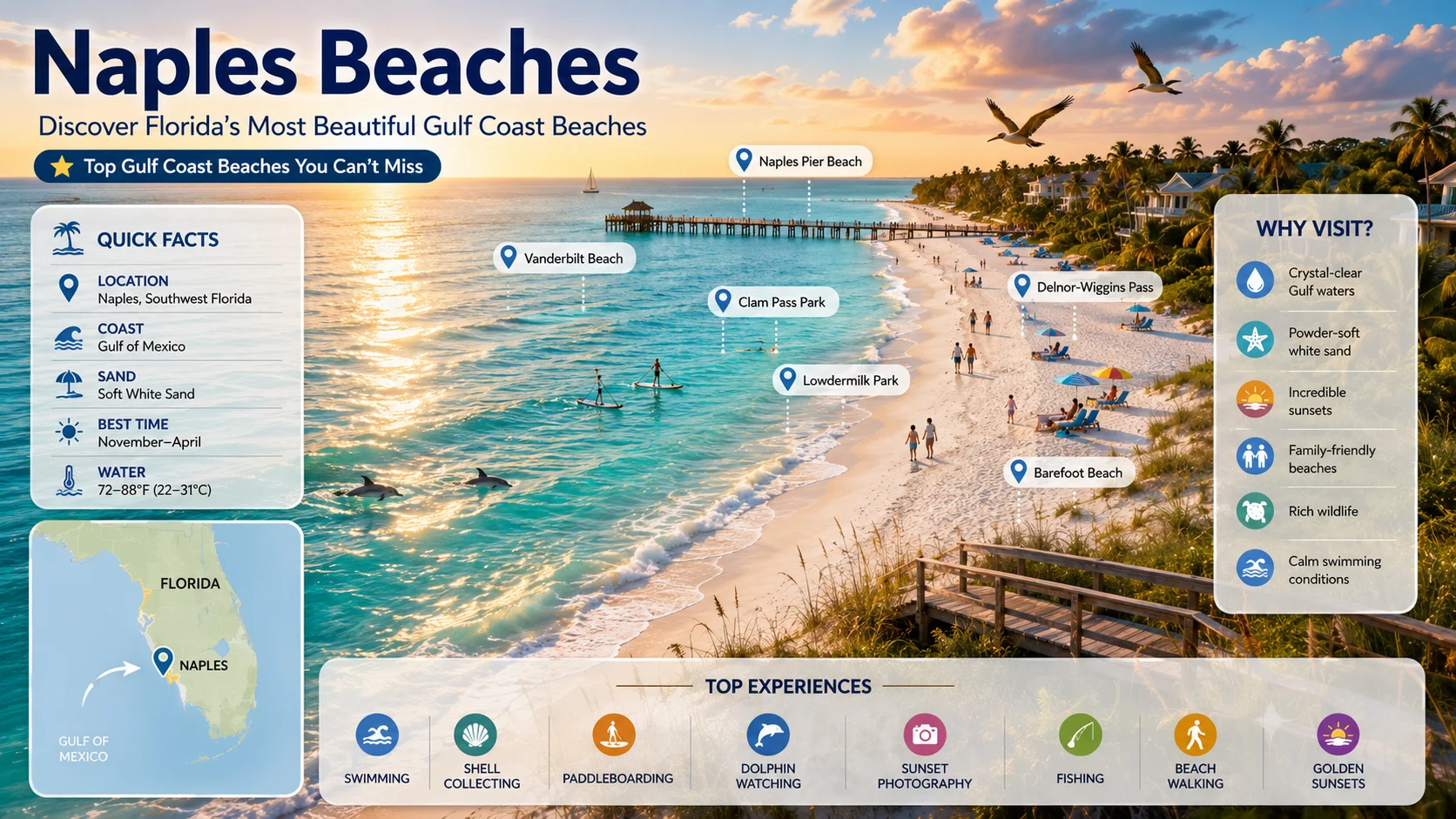
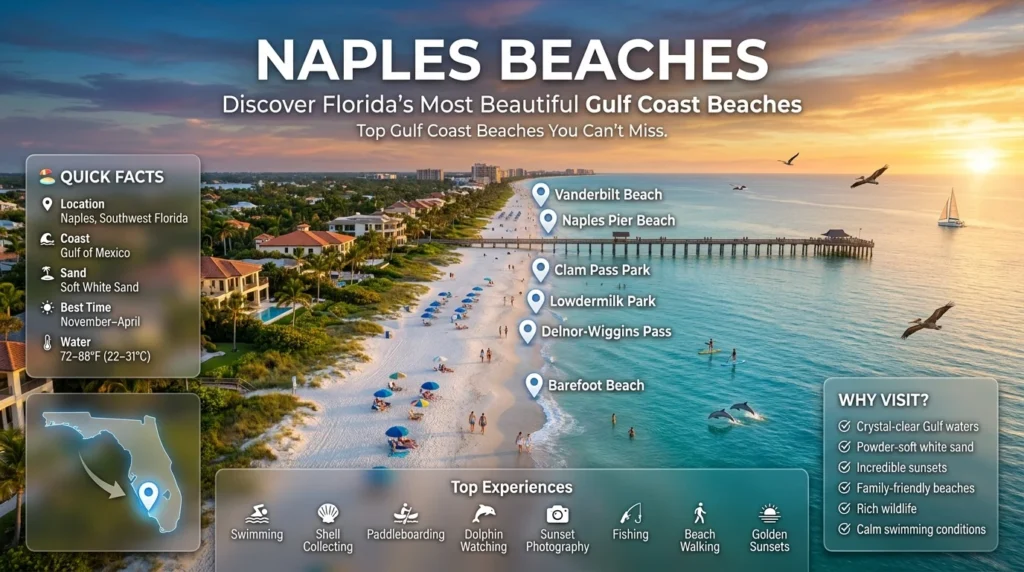
Naples, Florida sits on the Gulf of Mexico in Collier County, about 40 minutes south of Fort Myers, and it stretches across roughly 10 miles of coastline dotted with more than a dozen distinct public beach access points. Every one of them shares the same powdery, almost sugar-fine sand and calm, warm water but each has its own personality, crowd, and quirks. Whether you’re planning a family vacation, a solo sunset walk, or a weekend of shelling and paddleboarding, here’s everything you need to know before you go.
Why Naples Beaches Are Different From the Rest of Florida
Most of Florida’s Gulf Coast beaches are pretty. Naples beaches are a step above for a few concrete reasons:
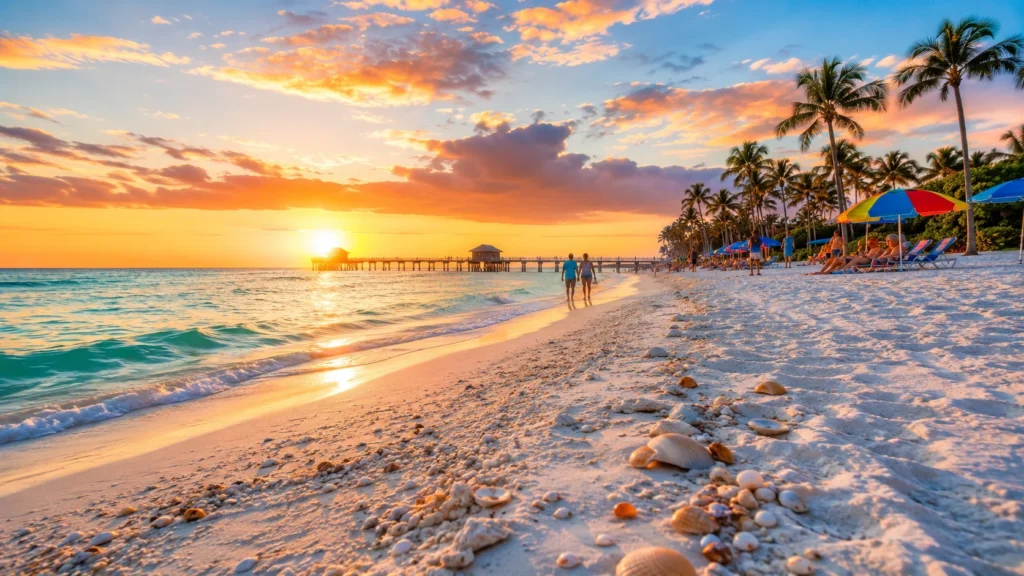
The sand itself. Naples sand is quartz-based, ground down over thousands of years into a fine, almost powdery texture that stays cool underfoot even in the peak of summer. It’s free of the shell fragments and coarse grit you’ll find on many East Coast Florida beaches, which is part of why it photographs so well and feels so good to walk on barefoot.
Gentle, swimmable water. Because Naples sits on the Gulf side rather than the Atlantic, wave action is minimal outside of storm season. That makes it one of the most reliably swimmable stretches of coast in the state, especially for young children, and it’s a big reason Naples consistently shows up on “best family beaches” lists.
Nearly 300 sunny days a year. Naples has a genuinely favorable climate for beach-going almost year-round, with the exception of the hottest, stickiest weeks of summer and the occasional tropical system.
Sunsets over open water. Because Naples faces west and the beaches are largely unobstructed by high-rise development compared to other Florida cities, the sunset views here are some of the best on the Gulf Coast. Locals gather at the Naples Pier most evenings specifically for this reason, and it’s genuinely worth building your day around.
Best Time of Year to Visit Naples Beaches
This is a detail most beach guides skip entirely, and it matters more than almost anything else on this list.
- December through April (peak/dry season): Warm, low humidity, minimal rain, and the most crowded. Snowbirds and northern visitors flood the area, so beaches and parking fill up fast, especially on weekends and holidays.
- May and early June (shoulder season): A genuine sweet spot. Water is warm, crowds thin out, and rain is still infrequent.
- June through September (wet/hurricane season): Hot, humid, and prone to afternoon thunderstorms that roll in almost daily, usually by early-to-mid afternoon. Mornings are often clear, so an early beach start is your best strategy in summer.
- Late summer through fall (red tide risk window): This is when harmful algal blooms, known locally as red tide, are most likely to appear. More on this below it’s one of the most important practical details for anyone planning a trip.
Red Tide and Water Quality: What Nobody Tells You
This is arguably the single most important piece of practical information missing from most “best Naples beaches” articles, and it can make or break your trip.
Red tide is caused by a naturally occurring algae called Karenia brevis, which typically originates offshore and gets pushed toward the coast by wind and currents. When it blooms, it can cause eye and respiratory irritation, and in more severe cases it can trigger genuine breathing difficulty for people with asthma or other respiratory conditions. It can also cause fish kills, which affects both the smell and the appeal of a beach for a few days at a time.
A few things worth knowing:
- Red tide is highly localized. One Naples beach can be completely clear while another just a few miles away is affected. Don’t assume a single bad report means your whole trip is ruined check the specific beach you’re planning to visit.
- It typically blooms in late summer through fall, though it can technically occur at other times of year too.
- Before heading out, especially between August and November, check the Collier County water quality samples through the Florida Healthy Beaches Program, the FWC’s statewide red tide status page, or the Beach Conditions Reporting System at visitbeaches.org, which relies on real-time reports from beach staff and volunteers.
- If you or anyone in your group has asthma, COPD, or another chronic respiratory condition, take any active red tide advisory seriously and consider an alternative beach or day.
- Aside from red tide, general beach water quality (bacteria levels after heavy rainfall, for instance) is monitored separately and can also trigger short-term swimming advisories, particularly after storms.
The takeaway: build a five-minute check into your morning routine before a Naples beach day. It’s the difference between a great afternoon and a wasted drive.
Naples Beach Parking: The Real Numbers (Most Guides Get This Wrong or Skip It)
Parking is genuinely the most common complaint about Naples beaches, and it’s the detail visitors need most and get the least clear information about.
- City of Naples metered spaces (along Gulf Shore Boulevard and near the Pier): roughly $4 per hour, payable by app, kiosk, or meter.
- Collier County beach parks (Vanderbilt Beach, Barefoot Beach, Tigertail Beach, etc.): typically a flat daily fee around $10 per vehicle.
- Delnor-Wiggins Pass State Park: a state park entrance fee, generally around $6 per vehicle.
- Resident-only lots: A number of City of Naples beach parking areas are restricted to residents with a valid parking permit. If you park in one of these without a permit, expect a ticket in the neighborhood of $100 and it can double if you pay late. Always read the posted signage carefully before you park.
- Free alternatives: Some hotels along the beach, such as larger resorts, allow non-guests to park and use a shuttle or golf cart service to reach the beach tipping the driver is customary. Ride-share (Uber/Lyft) is also a genuinely practical option for popular spots like Naples Pier or Lowdermilk Park during peak season, since it avoids the parking hunt entirely.
- Best strategy: Arrive before 9 a.m. on weekends and holidays, especially at Vanderbilt Beach, Lowdermilk Park, and the Pier. Lots here fill up fast and don’t reliably clear until mid-afternoon.
The Best Beaches in Naples, Florida (By Vibe, Not Just by Name)
For Families With Young Kids: Lowdermilk Park
Lowdermilk is the most popular public beach in Naples for a reason. It has a wide, easy-access stretch of sand, calm shallow water, restrooms, picnic pavilions, a playground, and metered parking nearby. It gets crowded, especially on weekends, but the amenities make it worth the trade-off for families.
For a Natural, Untouched Feel: Barefoot Beach Preserve
Located in Bonita Springs just north of the city, Barefoot Beach is one of the few remaining stretches of coastline that hasn’t been heavily developed. It’s backed by dunes, sea grape, and mangrove habitat, and it’s one of the better spots in the area for both shelling and spotting shorebirds. It has a $10 daily parking fee and is a longer walk from the lot than some other beaches, which naturally filters out casual crowds.
For Shelling: Barefoot Beach and Tigertail Beach
Both are recognized regionally as some of the better shelling spots in Southwest Florida, particularly early in the morning after overnight tides.
For Scenery and a Boardwalk Walk: Clam Pass Park
Clam Pass involves a roughly half-mile walk (or a free tram ride) through a mangrove preserve before you reach the beach itself, which keeps the crowd lighter than beaches with direct parking-lot access. The payoff is a wide, roughly 3,200-foot stretch of white sand and genuinely calm water, plus beach chair and umbrella rentals if you don’t want to haul your own gear.
For Solitude: Delnor-Wiggins Pass State Park
Frequently ranked among the best beaches in the entire country, Delnor-Wiggins offers a mile of protected, natural dune coastline in North Naples. Because it’s a state park with an entrance fee and slightly more remote access, it tends to be less crowded than the city beaches, while still offering swimming, kayaking, and fishing.
For Birdwatching: Tigertail Beach (Marco Island)
A bit further south, Tigertail is known specifically for its tidal lagoon and sandbar system, which attracts pelicans, ospreys, plovers, and roseate spoonbills. It’s a legitimately different experience from the straight-sand beaches closer to downtown Naples.
For Sunset Watching: Naples Pier and Vanderbilt Beach
The Naples Pier is the classic, most crowded sunset spot arrive at least 30–45 minutes before sunset if you want a decent vantage point during peak season. Vanderbilt Beach, with its parking garage and wide sand, is a slightly less congested alternative with equally good westward views.
For Bringing Your Dog: Dog Beach Park (Bonita Springs)
Most Naples-area beaches don’t allow dogs, which is another detail that trips up a lot of visitors. Dog Beach Park, just north of Naples in Bonita Springs, is the designated exception free parking, dog showers, waste stations, and a two-dog-per-person limit.
Activities Beyond Sunbathing
Naples beaches support a wider range of activities than most guides mention:
- Kayaking and paddleboarding — rentals are widely available at Clam Pass, Vanderbilt Beach, and Delnor-Wiggins.
- Fishing — several parks, including Delnor-Wiggins and Barefoot Beach, allow surf fishing, and the passes (inlets) tend to be the most productive spots.
- Cycling — many beach parks connect to paved paths, making an early-morning bike ride to the beach a genuinely pleasant, parking-free way to start the day.
- Beach yoga and volleyball — several parks, including Lowdermilk, have volleyball courts, and informal beach yoga sessions are common at quieter access points in the early morning.
Accessibility and Amenities
If mobility is a consideration, look specifically for beaches with wheelchair-friendly access Delnor-Wiggins Pass State Park and several City of Naples beach accesses provide mats or firmer pathways down to the sand, and this is worth confirming directly with the specific park before your visit, since not every access point is equally accessible.
For amenities in general, Vanderbilt Beach, Lowdermilk Park, and Clam Pass Park are your best bets for restrooms, outdoor showers, and food or rental concessions nearby. Smaller, quieter access points (the many unnamed public beach accesses along Gulf Shore Boulevard, for instance) typically have no facilities at all good for solitude, less convenient for a full day out.
Practical Tips for Your Naples Beach Day
- Go early. Between parking availability, cooler temperatures, and (in summer) beating the daily thunderstorm cycle, arriving before 9 or 10 a.m. is consistently the best strategy.
- Check conditions the same day you go. Weather, red tide, and water quality can all change quickly in Southwest Florida check the morning of, not the night before.
- Bring reef-safe sunscreen. Florida’s coastal waters and marine life benefit from mineral-based, reef-safe formulas, and some parks actively encourage their use.
- Pack cash or a parking app. Not every meter takes cards, and many City of Naples spaces now run through a mobile payment app download it before you arrive so you’re not fumbling in a parking lot.
- Watch the afternoon sky in summer. Thunderstorms are extremely predictable in June through September, typically rolling in between noon and 3 p.m. Plan your beach block for the morning if you’re visiting in summer.
- Respect posted signage. Resident-only parking restrictions are strictly enforced, and turtle nesting season (roughly May through October) means some beaches restrict items like tents, chairs left overnight, and open flames near the dune line.
Frequently Asked Questions
Is Naples, Florida good for a beach vacation? Yes Naples is widely regarded as one of the top beach destinations in Florida, thanks to its soft white sand, calm swimmable water, and consistently sunny climate.
Are Naples beaches free? The sand and water are free and open to the public, but parking at almost every access point carries a fee, ranging from metered street parking to flat daily rates at county and state parks.
Is Naples beach water clear? Generally yes, especially from early spring through late summer, when the Gulf water off Naples is calm and clear enough to see your feet in shallow areas. Clarity can decrease temporarily after storms or during red tide events.
Which Naples beach is best for families? Lowdermilk Park is generally considered the top choice for families, thanks to its calm shallow water, playground, restrooms, and picnic areas.
Do I need to worry about red tide in Naples? It’s a real, seasonal risk, particularly in late summer and fall, but it’s also highly localized and easy to check in advance through Collier County and state water quality resources. Most visits are unaffected, but it’s worth a quick check before you go.
Final Thoughts
Naples beaches earn their reputation the sand really is that soft, the water really is that calm, and the sunsets really are worth planning your evening around. The difference between an average trip and a great one usually comes down to the details most articles leave out: knowing which lots require a resident permit, checking water quality the morning of your visit, and picking the right beach for what you actually want out of the day, whether that’s a quiet walk, a family swim, or a serious shelling haul. Use this guide as your starting point, and you’ll spend a lot less time circling for parking and a lot more time actually enjoying the coast.
