
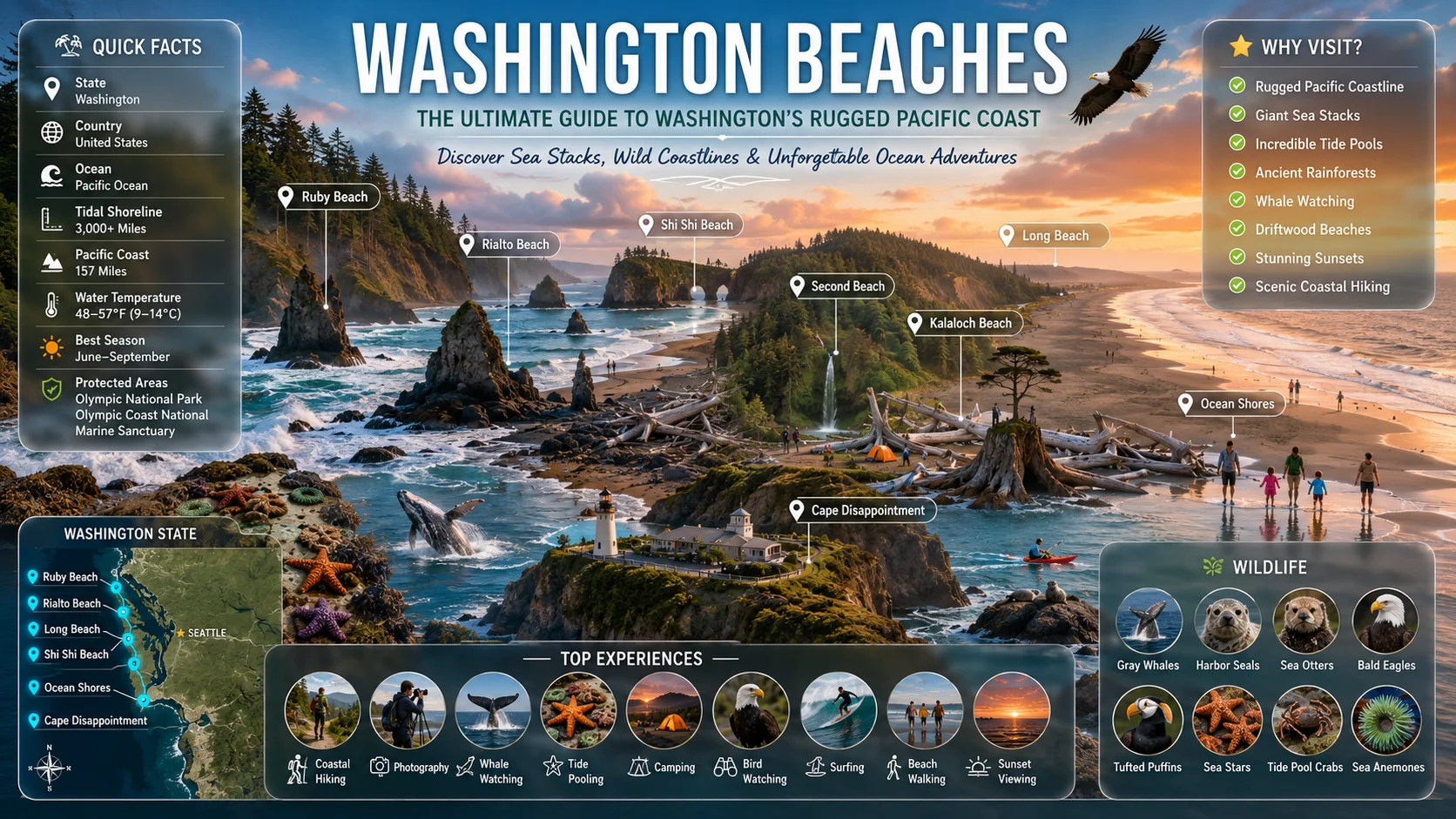

Washington beaches are famous for their rugged Pacific coastline, dramatic sea stacks, tide pools, driftwood-covered shores, and rich marine wildlife. Stretching over 3,000 miles of tidal shoreline, they offer scenic hiking, beachcombing, whale watching, surfing, and unforgettable sunsets in every season.
🌊
Washington beaches offer some of the most diverse coastal landscapes in the United States, featuring rugged cliffs, sandy shores, sea stacks, tide pools, and protected marine habitats. Whether you’re looking for outdoor adventure, wildlife viewing, or peaceful ocean scenery, Washington’s coastline provides unforgettable experiences throughout the year.
Washington State is home to one of the most spectacular coastlines in North America. Unlike tropical destinations known for warm waters and palm trees, Washington’s beaches are celebrated for their untamed natural beauty, dramatic Pacific scenery, and thriving coastal ecosystems.
From the iconic sea stacks of Ruby Beach to the expansive shoreline of Long Beach Peninsula, every coastal destination offers its own unique landscape. Visitors can explore rocky tide pools filled with colorful marine life, walk beneath towering evergreen forests, discover hidden coves, or watch gray whales migrate along the Pacific coast.
Washington’s coastline also plays a significant ecological role. Large portions of its beaches lie within protected national parks, wildlife refuges, and marine sanctuaries, helping preserve habitats for seabirds, marine mammals, and endangered species.
Whether you’re planning a scenic road trip, searching for the best beach to watch a sunset, photographing dramatic coastal scenery, or simply wanting to learn more about Washington’s shoreline, this guide covers everything you need to know.
Quick Facts
| Feature | Details |
|---|---|
| State | Washington |
| Country | United States |
| Region | Pacific Northwest |
| Ocean | Pacific Ocean |
| Tidal Shoreline | Over 3,000 miles (4,800+ km) |
| Pacific Coastline | Approximately 157 miles (253 km) |
| Major Coastal Counties | Clallam, Jefferson, Grays Harbor & Pacific |
| Beach Types | Sandy Beaches, Rocky Shores, Tide Pools, Driftwood Beaches, Sea Stack Coastlines |
| Water Temperature | Approximately 48–57°F (9–14°C) throughout the year |
| Climate | Temperate Oceanic Climate |
| Best Time to Visit | June–September |
| Peak Tourist Season | July–August |
| Famous Beaches | Ruby Beach, Rialto Beach, Long Beach, Shi Shi Beach, Second Beach, Kalaloch Beach, Ocean Shores |
| Popular Activities | Beachcombing, Hiking, Whale Watching, Tide Pooling, Surfing, Photography, Camping, Fishing |
| Marine Ecosystems | Kelp Forests, Tide Pools, Estuaries, Coastal Wetlands |
| Wildlife | Gray Whales, Harbor Seals, Sea Otters, Bald Eagles, Puffins, Starfish, Sea Anemones |
| Protected Areas | Olympic National Park, Olympic Coast National Marine Sanctuary, Willapa National Wildlife Refuge |
| UNESCO Recognition | Olympic National Park (UNESCO World Heritage Site) |
| Nearest Major Airports | Seattle–Tacoma International Airport (SEA), William R. Fairchild International Airport |
| Currency | US Dollar (USD) |
| Language | English |
| Best For | Families, Nature Lovers, Hikers, Wildlife Enthusiasts, Photographers & Road Trips |
💡 EEAT Insight
Washington’s beaches are globally recognized not for tropical scenery but for their ecological importance. Much of the coastline lies within protected public lands, supporting marine biodiversity, coastal forests, migratory birds, and one of the healthiest temperate coastal ecosystems in North America.
What Are Washington Beaches?
Definition
Washington beaches are the coastal shorelines located along the Pacific Ocean in the western part of Washington State. They include sandy beaches, rocky coastlines, driftwood-covered shores, sea stacks, tidal flats, estuaries, and marine habitats that stretch from the mouth of the Columbia River to the Olympic Peninsula.
Unlike many warm-weather beaches, Washington’s coast is shaped by powerful Pacific waves, changing tides, and lush temperate rainforests. These natural forces create landscapes that are both visually stunning and ecologically significant.
Why Are Washington Beaches Famous?
Washington beaches are internationally admired for their dramatic scenery rather than tropical conditions. Towering sea stacks rise from the ocean, massive driftwood logs line the shore, and colorful tide pools reveal fascinating marine life during low tide.
The coastline is also one of the best places in the United States to experience untouched natural beauty. Many beaches remain largely undeveloped, allowing visitors to enjoy peaceful landscapes, abundant wildlife, and some of the most scenic hiking trails in the Pacific Northwest.
Some of the reasons Washington beaches attract visitors include:
- Rugged Pacific coastline
- Giant sea stacks and coastal rock formations
- Colorful tide pools
- Ancient temperate rainforests
- Whale watching opportunities
- Stunning sunset viewpoints
- Driftwood-covered beaches
- Excellent hiking trails
- Protected national parks
- Rich marine biodiversity
⭐ Did You Know?
Washington is one of the few U.S. states where you can walk from an ancient temperate rainforest directly onto a wild Pacific beach within just a few minutes.
What Makes Washington Beaches Unique?
Unlike the white-sand beaches of Florida or Hawaii, Washington’s coastline offers a completely different coastal experience.
Instead of palm trees and warm turquoise water, visitors encounter dramatic cliffs, misty forests, sea arches, offshore rock formations, and beaches covered with weathered driftwood that has washed ashore over decades.
Many beaches are bordered by dense evergreen forests, creating a striking contrast between lush green landscapes and the deep blue Pacific Ocean.
The coastline is also famous for its extreme tidal changes, which expose fascinating tide pools filled with sea stars, anemones, crabs, mussels, and other marine creatures.
🌿 Natural Wonder
Washington’s Olympic Coast is one of the few places in the continental United States where visitors can experience rugged beaches, temperate rainforests, marine sanctuaries, and snow-capped mountains within a single day.
Location
Washington is located in the Pacific Northwest region of the United States and borders the Pacific Ocean to the west. Its coastline stretches from the mouth of the Columbia River near Oregon to the rugged shores of the Olympic Peninsula, offering a remarkable variety of coastal landscapes.
The state’s beaches are primarily concentrated in four coastal counties:
- Clallam County
- Jefferson County
- Grays Harbor County
- Pacific County
These regions include some of the country’s most celebrated natural destinations, many of which are protected within Olympic National Park and the Olympic Coast National Marine Sanctuary.
Pacific Coast
Washington’s Pacific coast is defined by:
- Rugged rocky shorelines
- Wide sandy beaches
- Towering sea stacks
- Coastal bluffs
- Powerful ocean waves
- Dense evergreen forests
This combination creates a landscape unlike almost anywhere else in the United States.
Olympic Peninsula
The Olympic Peninsula contains many of Washington’s most iconic beaches, including Ruby Beach, Rialto Beach, Shi Shi Beach, and Second Beach.
This region is renowned for its pristine wilderness, coastal trails, dramatic scenery, and exceptional wildlife viewing opportunities.
Geography and Natural Features
Washington’s coastline is unlike any other in the United States. Rather than endless stretches of tropical beaches, the state features a rugged Pacific shoreline shaped by powerful ocean waves, ancient glaciers, rivers, and millions of years of geological activity.
From dramatic sea stacks and driftwood-covered beaches to rocky headlands and temperate rainforests, every coastal landscape tells a story of nature’s constant evolution.
The combination of ocean, forests, mountains, and wetlands makes Washington one of North America’s most ecologically diverse coastal regions.
Sandy Beaches
Although Washington is famous for its rugged coastline, it also offers miles of wide sandy beaches.
These beaches are perfect for:
- Beach walks
- Family outings
- Kite flying
- Beachcombing
- Wildlife photography
- Horseback riding (selected beaches)
Popular sandy beaches include:
- Long Beach
- Ocean Shores
- Damon Point
- Grayland Beach
- Twin Harbors Beach
Unlike tropical beaches, the sand here is often firmer due to the cooler climate and stronger tides.
🌊 Did You Know?
Long Beach Peninsula features one of the longest continuous sandy beaches in the United States, stretching for nearly 28 miles (45 km) along the Pacific Ocean.
Rocky Coastlines
The Olympic Peninsula is famous for its dramatic rocky shores.
Visitors will find:
- Massive sea cliffs
- Rocky headlands
- Hidden coves
- Natural sea arches
- Offshore rock formations
These landscapes are constantly shaped by Pacific storms, ocean currents, and coastal erosion.
The rugged coastline creates breathtaking viewpoints that attract photographers from around the world.
Sea Stacks
One of Washington’s most recognizable natural features is its towering sea stacks.
Sea stacks are isolated rock pillars that rise from the ocean after surrounding cliffs gradually erode away.
Famous sea stack locations include:
- Ruby Beach
- Rialto Beach
- Shi Shi Beach
- Second Beach
Many of these formations are covered with moss, seabirds, and coastal vegetation, making them iconic symbols of Washington’s Pacific coast.
⭐ Natural Wonder
Some of Washington’s sea stacks are estimated to be millions of years old, formed by relentless Pacific waves carving away softer rock over thousands of generations.
Driftwood Beaches
Large driftwood logs are another defining feature of Washington beaches.
Storms, rivers, and ocean currents carry enormous tree trunks from inland forests before depositing them along the shoreline.
These weathered logs create spectacular natural landscapes while also providing habitat for insects, birds, and small coastal animals.
Visitors are encouraged to admire driftwood but avoid climbing unstable logs during high tides.
Tide Pools
Low tide reveals one of Washington’s greatest natural attractions its vibrant tide pools.
These shallow pools provide shelter for an incredible variety of marine organisms.
Common species include:
- Sea stars
- Sea anemones
- Mussels
- Barnacles
- Hermit crabs
- Chitons
- Sea urchins
- Limpets
Tide pooling is especially popular at:
- Kalaloch Beach
- Rialto Beach
- Ruby Beach
- Salt Creek Recreation Area
Visitors should observe marine life carefully without disturbing delicate ecosystems.
Coastal Forests
Washington is one of the few places in the world where dense temperate rainforests meet the Pacific Ocean.
Towering Sitka spruce, western hemlock, western red cedar, and Douglas fir grow right to the edge of many beaches.
This creates an unforgettable landscape where visitors can walk directly from ancient forests onto rugged ocean shores.
The nearby Hoh Rain Forest receives over 140 inches (355 cm) of rainfall annually, supporting one of the largest temperate rainforest ecosystems on Earth.
Rivers, Estuaries and Wetlands
Numerous rivers flow into Washington’s Pacific coastline, forming productive estuaries and wetlands.
These habitats provide nursery areas for fish and feeding grounds for migratory birds.
Important estuaries include:
- Willapa Bay
- Grays Harbor
- Columbia River Estuary
These coastal wetlands help:
- Improve water quality
- Reduce flooding
- Support marine biodiversity
- Protect shorelines from storms
Climate
Washington beaches experience a temperate maritime climate influenced by the Pacific Ocean.
Unlike many beach destinations, temperatures remain relatively cool throughout the year.
Summer (June–September)
Summer is the most popular season for visiting Washington beaches.
Average conditions include:
- Mild temperatures
- Longer daylight hours
- Lower rainfall
- Calm ocean views
- Excellent hiking conditions
Temperatures typically range between 60–75°F (16–24°C).
Autumn (September–November)
Autumn brings colorful forests, cooler weather, and quieter beaches.
Many photographers consider this one of the most beautiful seasons because of dramatic skies and fewer crowds.
Winter (December–February)
Winter transforms Washington’s coastline into a dramatic landscape of crashing waves, misty forests, and powerful Pacific storms.
Storm watching has become a popular seasonal activity, especially around:
- La Push
- Kalaloch
- Ocean Shores
- Long Beach
Spring (March–May)
Spring brings blooming wildflowers, migrating gray whales, and increasing sunshine.
This season is excellent for wildlife enthusiasts and hikers.
🌿 Expert Tip
If your goal is wildlife photography, visit during spring when migrating whales, nesting seabirds, and blooming coastal plants create exceptional photographic opportunities.
History and Background
Washington’s coastline has been shaped by thousands of years of human history and millions of years of natural evolution.
Long before European explorers arrived, Indigenous peoples lived along the Pacific coast, relying on the ocean for food, transportation, and cultural traditions.
Tribes including the Makah, Quileute, Quinault, Hoh, and Shoalwater Bay maintained deep spiritual and economic connections to these coastal environments.
Fishing, whale hunting, shellfish gathering, and cedar canoe building were essential parts of daily life.
Today, these tribal nations continue to preserve their cultural heritage while helping manage and protect Washington’s coastal resources.
European Exploration
During the late 18th century, European explorers reached the Pacific Northwest and began mapping Washington’s coastline.
The region later became important for:
- Maritime trade
- Commercial fishing
- Timber transportation
- Lighthouse construction
- Coastal settlements
Several historic lighthouses still stand along Washington’s coast, guiding ships through challenging Pacific waters.
National Park Protection
One of the most significant milestones in Washington’s coastal history came with the establishment of Olympic National Park in 1938.
The park protects hundreds of thousands of acres of wilderness, including:
- Pacific beaches
- Temperate rainforests
- Alpine mountains
- Rivers
- Wildlife habitats
Today, Olympic National Park is recognized as both a UNESCO World Heritage Site and an International Biosphere Reserve, highlighting its global ecological importance.
💡 Did You Know?
Washington’s Olympic Coast is one of the few places in the continental United States where visitors can explore untouched wilderness stretching from mountain peaks to the Pacific Ocean without passing through major urban development.
Wildlife and Marine Ecosystem
Washington’s beaches support one of the richest marine ecosystems on the Pacific Coast.
The combination of cold ocean currents, nutrient-rich waters, estuaries, and protected marine habitats allows thousands of species to thrive.
Marine Mammals
Visitors frequently spot:
- Gray Whales
- Humpback Whales
- Harbor Seals
- California Sea Lions
- Sea Otters
- Orcas (occasionally offshore)
Gray whale migration each spring is one of the state’s most spectacular wildlife events.
Coastal Birds
Washington’s beaches provide important nesting and feeding grounds for hundreds of bird species.
Common birds include:
- Bald Eagles
- Tufted Puffins
- Pelicans
- Great Blue Herons
- Black Oystercatchers
- Cormorants
- Gulls
Birdwatchers visit throughout the year to observe both resident and migratory species.
Tide Pool Wildlife
Low tide reveals an extraordinary underwater world.
Visitors commonly discover:
- Sea stars
- Sea cucumbers
- Sea anemones
- Crabs
- Mussels
- Octopus (occasionally)
- Snails
- Barnacles
These organisms play an essential role in maintaining healthy coastal ecosystems.
Coastal Vegetation
Washington’s coastline supports diverse plant communities, including:
- Beach grasses
- Coastal wildflowers
- Mosses
- Sitka spruce
- Western red cedar
- Shore pine
- Salal shrubs
These plants help stabilize dunes, reduce erosion, and provide habitat for wildlife.
Notable Washington Beaches
Washington is home to some of the most breathtaking beaches in the Pacific Northwest. Unlike tropical coastlines known for warm waters and palm trees, Washington’s beaches are celebrated for their rugged beauty, towering sea stacks, driftwood-covered shores, ancient forests, and thriving marine ecosystems.
Each beach has its own unique character some are ideal for hiking and photography, while others are famous for surfing, wildlife viewing, beachcombing, or peaceful coastal escapes.
Whether you’re planning an outdoor adventure or simply looking for spectacular ocean scenery, these beaches represent the very best of Washington’s coastline.
Ruby Beach
Overview
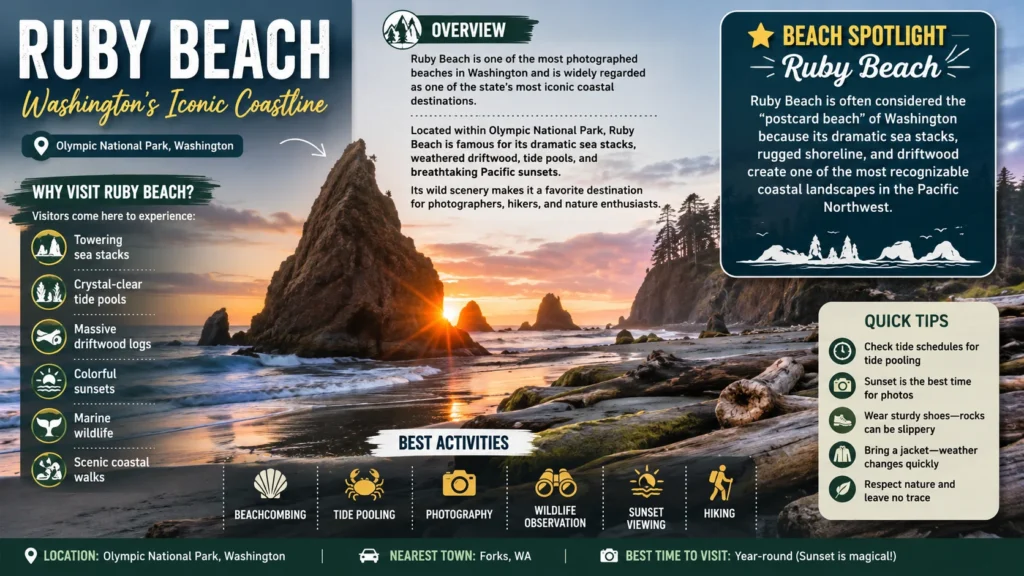
Ruby Beach is one of the most photographed beaches in Washington and is widely regarded as one of the state’s most iconic coastal destinations.
Located within Olympic National Park, Ruby Beach is famous for its dramatic sea stacks, weathered driftwood, tide pools, and breathtaking Pacific sunsets.
Its wild scenery makes it a favorite destination for photographers, hikers, and nature enthusiasts.
Why Visit Ruby Beach?
Visitors come here to experience:
- Towering sea stacks
- Crystal-clear tide pools
- Massive driftwood logs
- Colorful sunsets
- Marine wildlife
- Scenic coastal walks
Every visit offers a different experience depending on the tides and weather conditions.
Best Activities
- Beachcombing
- Tide pooling
- Photography
- Wildlife observation
- Sunset viewing
- Hiking
⭐ Beach Spotlight – Ruby Beach
Ruby Beach is often considered the “postcard beach” of Washington because its dramatic sea stacks, rugged shoreline, and driftwood create one of the most recognizable coastal landscapes in the Pacific Northwest.
Rialto Beach
Overview
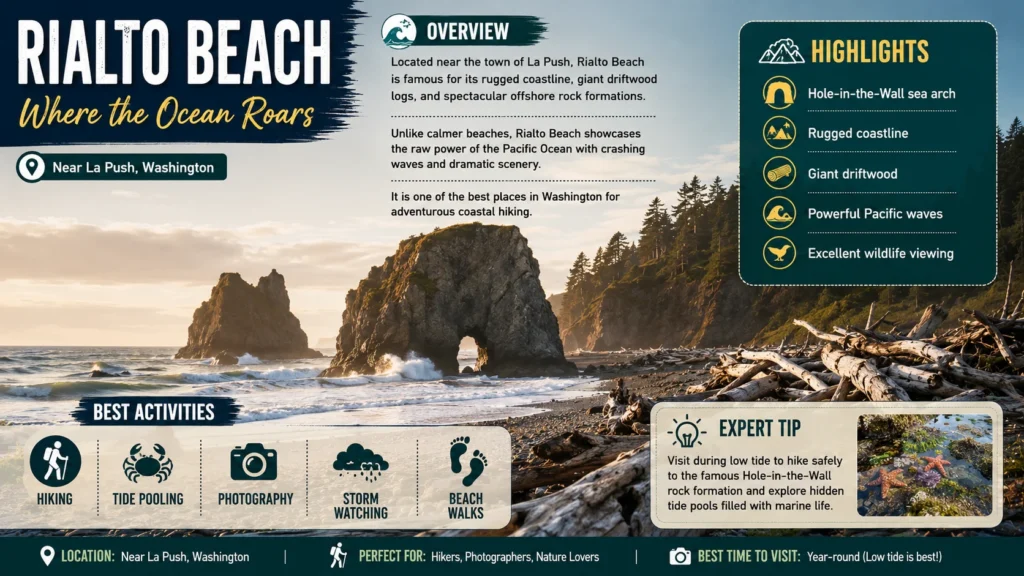
Located near the town of La Push, Rialto Beach is famous for its rugged coastline, giant driftwood logs, and spectacular offshore rock formations.
Unlike calmer beaches, Rialto Beach showcases the raw power of the Pacific Ocean with crashing waves and dramatic scenery.
It is one of the best places in Washington for adventurous coastal hiking.
Highlights
- Hole-in-the-Wall sea arch
- Rugged coastline
- Giant driftwood
- Powerful Pacific waves
- Excellent wildlife viewing
Best Activities
- Hiking
- Tide pooling
- Photography
- Storm watching
- Beach walks
💡 Expert Tip
Visit during low tide to hike safely to the famous Hole-in-the-Wall rock formation and explore hidden tide pools filled with marine life.
Long Beach
Overview
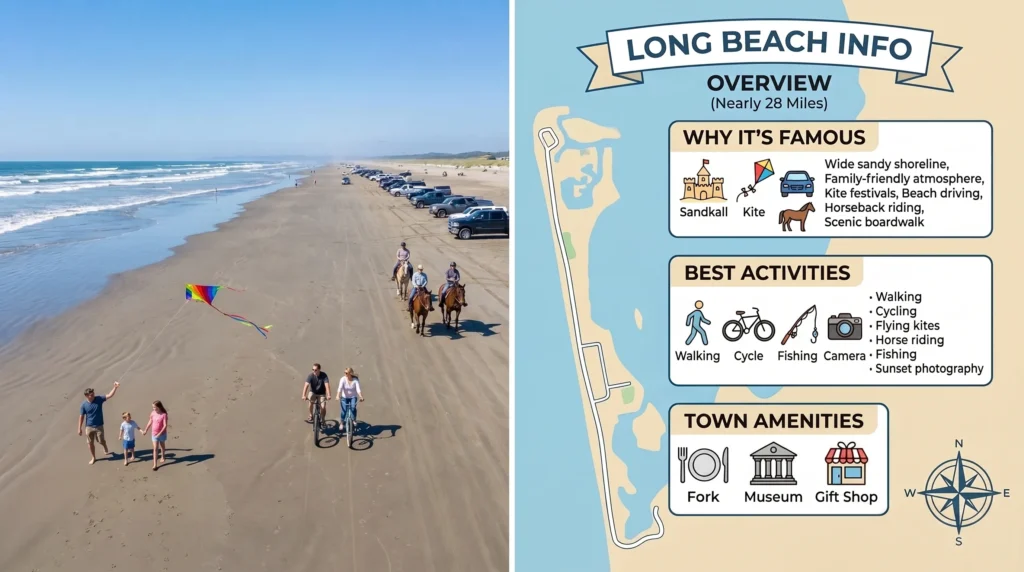
Stretching nearly 28 miles (45 km), Long Beach is one of the longest continuous sandy beaches in the United States.
Unlike Washington’s rocky beaches, Long Beach offers wide open shoreline that is perfect for families and outdoor recreation.
The nearby town provides restaurants, museums, shops, and seasonal festivals.
Why It’s Famous
Long Beach is known for:
- Wide sandy shoreline
- Family-friendly atmosphere
- Kite festivals
- Beach driving (permitted in designated areas)
- Horseback riding
- Scenic boardwalk
Best Activities
- Walking
- Cycling
- Flying kites
- Horse riding
- Fishing
- Sunset photography
Shi Shi Beach
Overview
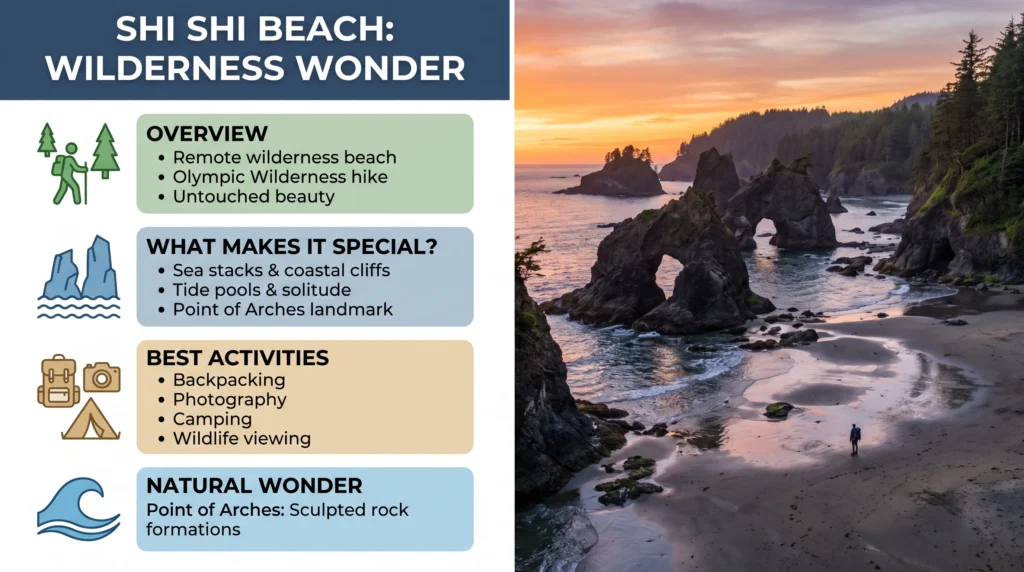
Shi Shi Beach is often ranked among America’s most beautiful wilderness beaches.
Located within the Olympic Wilderness, it requires a scenic hike through dense rainforest before reaching the coastline.
Its remote location helps preserve its untouched natural beauty.
What Makes It Special?
Visitors are rewarded with:
- Sea stacks
- Coastal cliffs
- Sandy beaches
- Tide pools
- Incredible solitude
The famous Point of Arches is one of Washington’s most photographed natural landmarks.
Best Activities
- Backpacking
- Photography
- Camping
- Hiking
- Wildlife viewing
🌿 Natural Wonder
Point of Arches contains dozens of natural rock formations sculpted by Pacific waves over thousands of years.
Second Beach
Overview
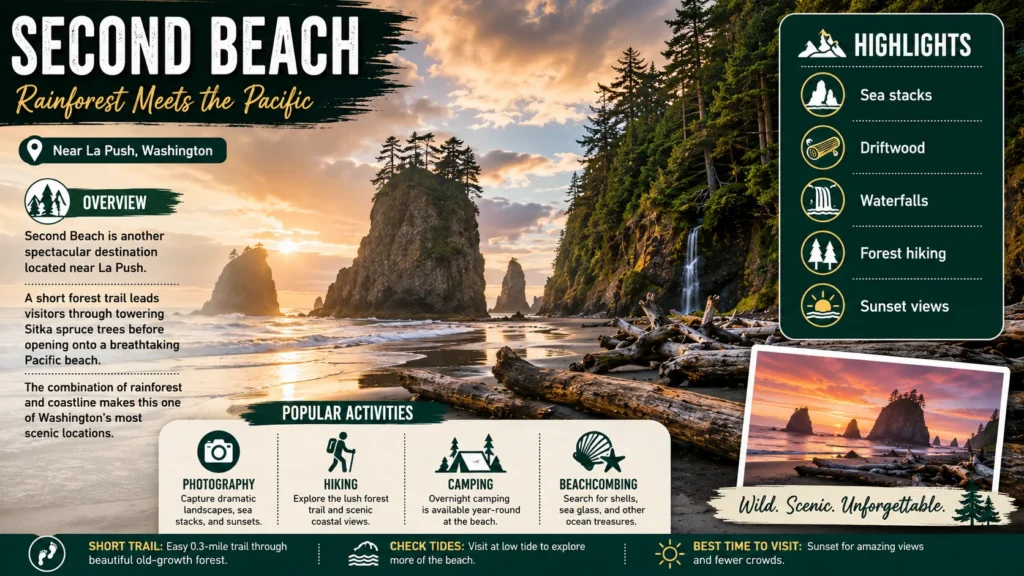
Second Beach is another spectacular destination located near La Push.
A short forest trail leads visitors through towering Sitka spruce trees before opening onto a breathtaking Pacific beach.
The combination of rainforest and coastline makes this one of Washington’s most scenic locations.
Highlights
- Sea stacks
- Driftwood
- Waterfalls
- Forest hiking
- Sunset views
Popular Activities
- Photography
- Hiking
- Camping
- Beachcombing
Kalaloch Beach
Overview
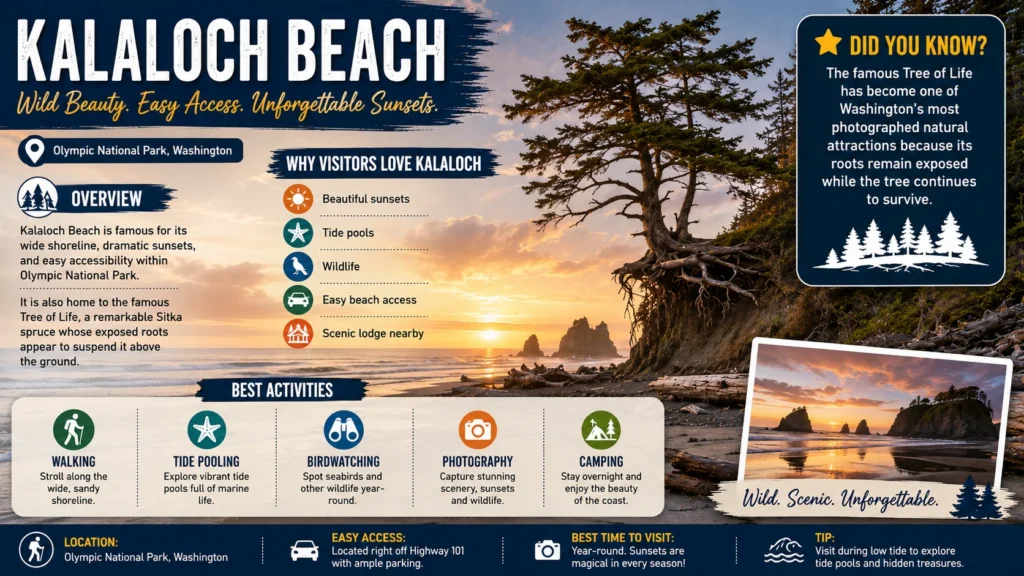
Kalaloch Beach is famous for its wide shoreline, dramatic sunsets, and easy accessibility within Olympic National Park.
It is also home to the famous Tree of Life, a remarkable Sitka spruce whose exposed roots appear to suspend it above the ground.
Why Visitors Love Kalaloch
- Beautiful sunsets
- Tide pools
- Wildlife
- Easy beach access
- Scenic lodge nearby
Best Activities
- Walking
- Tide pooling
- Birdwatching
- Photography
- Camping
⭐ Did You Know?
The famous Tree of Life has become one of Washington’s most photographed natural attractions because its roots remain exposed while the tree continues to survive.
Ocean Shores
Overview
Ocean Shores is one of Washington’s most popular family beach destinations.
Located on a peninsula between the Pacific Ocean and Grays Harbor, it offers miles of sandy beaches with numerous recreational opportunities.
Unlike many remote beaches, Ocean Shores has modern tourist facilities and year-round attractions.
Highlights
Visitors enjoy:
- Beach driving
- Surfing
- Horseback riding
- Coastal parks
- Family entertainment
- Local seafood restaurants
Best Activities
- Swimming
- Flying kites
- Fishing
- Beach walks
- Wildlife watching
Damon Point
Overview
Damon Point is a protected coastal area located near Ocean Shores.
It is known for its peaceful atmosphere and exceptional birdwatching opportunities.
The beach is particularly attractive to photographers because of its dunes, tidal flats, and expansive ocean views.
Why Visit?
- Quiet environment
- Birdwatching
- Sand dunes
- Wildlife photography
- Beachcombing
Cape Disappointment State Park
Overview
Despite its unusual name, Cape Disappointment is one of Washington’s most spectacular coastal destinations.
The park combines dramatic cliffs, historic lighthouses, dense forests, and rugged Pacific scenery.
It also marks the meeting point of the Columbia River and the Pacific Ocean.
Main Attractions
- Cape Disappointment Lighthouse
- North Head Lighthouse
- Coastal hiking trails
- Historic military sites
- Scenic viewpoints
Best Activities
- Hiking
- Lighthouse photography
- Whale watching
- Birdwatching
Grayland Beach
Overview
Grayland Beach is a peaceful stretch of coastline known for its natural beauty and fewer crowds.
It offers wide sandy beaches, gentle dunes, and excellent opportunities for long beach walks.
Popular Activities
- Beachcombing
- Fishing
- Kite flying
- Walking
- Camping
Twin Harbors Beach
Overview
Twin Harbors Beach State Park offers a relaxing coastal experience with camping facilities, picnic areas, and easy beach access.
Its calm atmosphere makes it a favorite destination for weekend getaways.
Best Activities
- Camping
- Family picnics
- Walking
- Photography
- Birdwatching
Beach Comparison Table
| Beach | Best For | Unique Feature |
|---|---|---|
| Ruby Beach | Photography & Tide Pools | Iconic sea stacks and driftwood |
| Rialto Beach | Hiking | Hole-in-the-Wall sea arch |
| Long Beach | Families | 28-mile sandy coastline |
| Shi Shi Beach | Wilderness Adventures | Point of Arches rock formations |
| Second Beach | Scenic Hiking | Rainforest trail to the beach |
| Kalaloch Beach | Nature Lovers | Famous Tree of Life |
| Ocean Shores | Family Vacations | Resort town with beach activities |
| Damon Point | Birdwatching | Protected coastal habitat |
| Cape Disappointment | History & Views | Historic lighthouses and cliffs |
| Grayland Beach | Relaxation | Peaceful uncrowded shoreline |
| Twin Harbors Beach | Camping | Family-friendly state park |
🏆 Editor’s Pick
If you’re visiting Washington for the first time, don’t miss Ruby Beach, Rialto Beach, Shi Shi Beach, and Long Beach. Together, they showcase the incredible diversity of Washington’s coastline from rugged sea stacks and rainforest-backed shores to expansive sandy beaches perfect for families and sunset walks.
Things to Do at Washington Beaches
Washington’s beaches offer much more than beautiful scenery. Whether you’re looking for outdoor adventure, wildlife encounters, peaceful nature walks, or unforgettable photography, the Pacific coastline provides activities for visitors of every age and interest.
Unlike tropical beach destinations, Washington combines ocean landscapes with rainforests, mountains, rivers, and protected marine ecosystems, making every visit unique.
Beachcombing
Why It’s Popular
Beachcombing is one of the most relaxing and rewarding activities along Washington’s coastline.
Every tide brings new treasures onto the shore, making each visit different from the last.
Visitors often discover:
- Colorful seashells
- Sea glass
- Smooth stones
- Driftwood
- Feather collections
- Marine fossils (where permitted)
Some beaches also reveal fascinating tide pools after the tide recedes.
Best Beaches
- Long Beach
- Kalaloch Beach
- Ruby Beach
- Ocean Shores
- Grayland Beach
💡 Expert Tip
Visit during low tide for the best beachcombing opportunities, as more of the shoreline becomes accessible.
Tide Pool Exploration
Discover a Hidden Underwater World
Washington’s rocky beaches transform into living aquariums during low tide.
Tide pools contain an amazing variety of marine organisms that can be safely observed without entering the ocean.
Common marine life includes:
- Sea stars
- Sea anemones
- Hermit crabs
- Mussels
- Barnacles
- Sea urchins
- Limpets
- Small fish
Best Locations
- Rialto Beach
- Ruby Beach
- Kalaloch Beach
- Salt Creek Recreation Area
- Shi Shi Beach
⭐ Did You Know?
Tide pools are among the most delicate marine ecosystems. Even a single misplaced step can damage organisms that have taken years to grow.
Hiking
Coastal Trails with Incredible Views
Many Washington beaches can only be reached by scenic hiking trails, adding to their sense of adventure.
Popular hiking destinations include:
- Second Beach Trail
- Shi Shi Beach Trail
- Cape Flattery Trail
- Rialto Beach to Hole-in-the-Wall
- Ozette Triangle Loop
These trails pass through:
- Old-growth forests
- Moss-covered trees
- Wooden boardwalks
- Coastal cliffs
- Wildflower meadows
- Ocean viewpoints
Some hikes are suitable for beginners, while others require moderate fitness and careful planning.
Wildlife Watching
Washington’s coastline supports one of North America’s richest coastal ecosystems.
Wildlife enthusiasts regularly spot:
Marine Mammals
- Gray whales
- Harbor seals
- Sea lions
- Sea otters
- Orcas (occasionally)
Birds
- Bald eagles
- Puffins
- Pelicans
- Great blue herons
- Oystercatchers
- Cormorants
The best wildlife viewing often occurs during the early morning or late afternoon when animals are most active.
Whale Watching
Gray whales migrate along Washington’s coast every spring, creating one of the state’s most spectacular wildlife events.
Several tour operators also offer offshore excursions to observe:
- Gray whales
- Humpback whales
- Orcas
- Dolphins
- Harbor porpoises
Best Whale Watching Areas
- Cape Flattery
- La Push
- Westport
- Long Beach
- Neah Bay
🐋 Wildlife Highlight
Spring migration is one of the best times to witness gray whales traveling between Mexico and Alaska along Washington’s coastline.
Surfing
Although Washington’s water remains cool year-round, surfers from around the world visit its Pacific beaches for consistent waves.
Popular surfing destinations include:
- Westport
- La Push
- Long Beach
- Damon Point
Surfers generally wear full wetsuits due to the colder ocean temperatures.
Kayaking & Paddleboarding
Protected bays, estuaries, and calmer coastal waters provide excellent conditions for kayaking and paddleboarding.
Popular areas include:
- Willapa Bay
- Grays Harbor
- Lake Quinault
- Hood Canal
Paddlers often encounter seals, seabirds, and calm coastal scenery away from the crowds.
Fishing & Clamming
Washington’s coast has a long tradition of recreational fishing and shellfish harvesting.
Popular activities include:
- Surf fishing
- Salmon fishing
- Razor clam digging (seasonal)
- Crabbing (where permitted)
Always check local regulations and seasonal openings before harvesting shellfish.
Camping
Camping allows visitors to experience Washington’s beaches after the day crowds have left.
Several beaches offer nearby campgrounds with stunning ocean views.
Popular camping locations include:
- Kalaloch Campground
- Mora Campground
- Cape Disappointment State Park
- Twin Harbors State Park
Waking up to the sound of Pacific waves is one of the highlights of a coastal camping trip.
Photography
Washington is one of the best destinations in the United States for landscape photography.
Photographers are drawn to:
- Sea stacks
- Driftwood
- Foggy mornings
- Golden sunsets
- Stormy coastlines
- Wildlife
- Tide pools
- Lighthouses
Best Photography Locations
- Ruby Beach
- Rialto Beach
- Cape Disappointment
- Shi Shi Beach
- Second Beach
📸 Photography Tip
Visit during golden hour shortly after sunrise or before sunset for softer light, richer colors, and dramatic reflections on the wet sand.
Storm Watching
Unlike many beach destinations, Washington becomes even more dramatic during winter.
Large Pacific storms create:
- Towering waves
- Powerful surf
- Dramatic clouds
- Incredible coastal photography
Popular storm-watching locations include:
- Kalaloch Lodge
- Ocean Shores
- La Push
- Cape Disappointment
Many visitors travel specifically to experience the raw power of winter storms from safe viewing areas.
Best Time to Visit Washington Beaches
Washington’s beaches are beautiful year-round, but each season offers a different experience. The ideal time depends on your interests, preferred weather, and planned activities.
Spring (March–May)
Spring is one of the best seasons for wildlife lovers.
Highlights
- Gray whale migration
- Blooming wildflowers
- Fewer crowds
- Mild weather
- Excellent hiking
Best for: Wildlife photography, hiking, nature lovers
Summer (June–September)
Summer is the most popular season thanks to warmer temperatures and longer daylight hours.
Highlights
- Sunny days
- Beach walks
- Camping
- Family vacations
- Kayaking
- Surfing
Average temperatures range between 60–75°F (16–24°C).
Best for: Families, sightseeing, outdoor adventures
Autumn (September–November)
Autumn offers peaceful beaches with colorful forests and cooler temperatures.
Highlights
- Fewer visitors
- Beautiful sunsets
- Scenic photography
- Comfortable hiking
Best for: Couples, photographers, road trips
Winter (December–February)
Winter transforms the coastline into a dramatic natural landscape.
Highlights
- Storm watching
- Cozy coastal lodges
- Huge Pacific waves
- Quiet beaches
- Wildlife
Best for: Storm photography, peaceful getaways, experienced photographers
Beach Facilities
Facilities vary depending on the beach, but many popular destinations provide convenient visitor services.
Common amenities include:
- Parking areas
- Public restrooms
- Picnic tables
- Visitor centers
- Hiking trails
- Campgrounds
- Boat launches
- Beach access paths
Developed beaches such as Ocean Shores and Long Beach offer more services than remote wilderness beaches.
Beach Safety Tips
Washington’s coastline is beautiful but can also be unpredictable. Following basic safety guidelines helps ensure a safe and enjoyable visit.
Ocean Safety
- Never turn your back on the ocean.
- Be aware of sneaker waves.
- Stay away from unstable driftwood during high tide.
- Avoid climbing wet sea stacks or cliffs.
- Keep a safe distance from wildlife.
Tide Safety
Always check local tide tables before hiking or exploring tide pools.
Some beaches become inaccessible during high tide, especially around sea stacks and headlands.
Weather Safety
Weather can change rapidly along the Pacific coast.
Carry:
- Waterproof clothing
- Warm layers
- Sturdy hiking shoes
- Drinking water
- Navigation tools if hiking remote trails
⚠️ Safety Reminder
Washington beaches are known for sneaker waves unexpected, powerful waves that can surge much farther onto the beach than normal. Always stay alert, especially near driftwood and rocky shorelines.
Environmental Importance
Washington’s beaches are far more than scenic destinations they are among the Pacific Northwest’s most valuable natural ecosystems. These coastal environments protect biodiversity, support local communities, reduce coastal erosion, and contribute significantly to scientific research, sustainable tourism, and fisheries.
From rocky intertidal zones and estuaries to kelp forests and temperate rainforests, Washington’s coastline plays a vital role in maintaining the health of the Pacific Ocean ecosystem.
Marine Conservation
Washington has made significant efforts to preserve its coastal ecosystems through national parks, marine sanctuaries, and wildlife refuges.
Protected coastal areas help conserve:
- Rocky intertidal habitats
- Kelp forests
- Estuaries
- Coastal wetlands
- Sandy dune systems
- Seabird nesting islands
- Marine mammal habitats
Many beaches are managed under strict environmental regulations to ensure future generations can continue enjoying these natural landscapes.
🌿 EEAT Insight
Washington’s coastal conservation programs focus on balancing recreation with environmental protection, ensuring that beaches remain healthy ecosystems while supporting responsible tourism.
Olympic Coast National Marine Sanctuary
One of Washington’s greatest conservation achievements is the Olympic Coast National Marine Sanctuary.
This protected marine area safeguards approximately 3,188 square miles (8,255 km²) of Pacific Ocean waters.
The sanctuary protects:
- Coral habitats
- Kelp forests
- Whale migration routes
- Seabird colonies
- Rocky reefs
- Marine biodiversity
It is considered one of the most important marine protected areas on the U.S. West Coast.
Olympic National Park
Much of Washington’s most famous coastline lies within Olympic National Park.
The park protects:
- Nearly 73 miles (117 km) of wild Pacific coastline
- Ancient temperate rainforests
- Alpine ecosystems
- Rivers and glaciers
- Diverse wildlife habitats
Its protected status has preserved much of the coastline in a near-natural condition.
Coastal Wetlands
Wetlands are among the most productive ecosystems found along Washington’s coast.
These habitats:
- Filter pollutants
- Improve water quality
- Reduce flooding
- Store carbon
- Provide nursery habitat for fish
- Support migratory birds
Major wetland systems include:
- Willapa Bay
- Grays Harbor Estuary
- Nisqually Delta
- Leadbetter Point
Marine Wildlife Protection
Washington’s beaches provide essential habitat for numerous protected species.
Conservation programs focus on protecting:
Marine Mammals
- Gray whales
- Harbor seals
- Sea otters
- California sea lions
Birds
- Bald eagles
- Tufted puffins
- Black oystercatchers
- Marbled murrelets
Marine Life
- Sea stars
- Giant Pacific octopus
- Rockfish
- Salmon
- Dungeness crab
Many species depend on healthy coastal habitats for breeding, feeding, and migration.
Environmental Challenges
Like many coastlines worldwide, Washington beaches face several environmental pressures.
Coastal Erosion
Powerful Pacific storms naturally reshape beaches each year.
However, rising sea levels and stronger storms have accelerated erosion in some coastal areas.
Climate Change
Climate change is influencing Washington’s coast through:
- Rising sea levels
- Ocean warming
- Ocean acidification
- Increased coastal flooding
- Stronger winter storms
These changes affect marine ecosystems and coastal communities alike.
Plastic Pollution
Marine debris remains one of the greatest threats to wildlife.
Plastic waste can harm:
- Seabirds
- Sea turtles
- Marine mammals
- Fish
Visitors are encouraged to leave beaches cleaner than they found them.
Invasive Species
Several invasive marine species threaten native coastal ecosystems.
Monitoring programs help reduce their spread while protecting local biodiversity.
Sustainable Tourism
Responsible travel helps preserve Washington’s natural beauty.
Visitors can reduce their environmental impact by:
- Staying on designated trails
- Respecting wildlife viewing distances
- Using reusable water bottles
- Packing out all trash
- Avoiding removal of shells and marine organisms
- Supporting local conservation programs
- Following Leave No Trace principles
⭐ Travel Responsibly
Even small actions such as staying on marked paths and leaving driftwood where it naturally belongs help protect fragile coastal ecosystems.
Nearby Attractions
Washington’s beaches are surrounded by incredible natural attractions, making them perfect for longer road trips and outdoor adventures.
Olympic National Park
One of America’s most spectacular national parks, featuring:
- Rugged beaches
- Temperate rainforests
- Alpine mountains
- Waterfalls
- Scenic hiking trails
Hoh Rain Forest
Located just inland from the Pacific coast, the Hoh Rain Forest is one of the world’s largest temperate rainforests.
Visitors enjoy:
- Moss-covered trees
- Nature trails
- Wildlife viewing
- River walks
Cape Flattery
Cape Flattery marks the northwesternmost point of the contiguous United States.
It offers:
- Dramatic sea cliffs
- Coastal viewpoints
- Sea caves
- Whale watching
Quinault Rain Forest
Another beautiful rainforest destination known for:
- Giant trees
- Lakes
- Scenic drives
- Waterfalls
North Head Lighthouse
Built in 1898, this historic lighthouse overlooks the Pacific Ocean and remains one of Washington’s most photographed landmarks.
La Push
La Push is a small coastal community famous for:
- Ocean scenery
- Surfing
- Fishing
- Nearby beaches
- Quileute cultural heritage
Interesting Facts About Washington Beaches
- Washington has over 3,000 miles of tidal shoreline.
- Olympic National Park is a UNESCO World Heritage Site.
- The state contains some of the largest temperate rainforests in the world.
- Washington’s beaches are famous for massive driftwood logs carried by rivers into the Pacific Ocean.
- Gray whales migrate along the Washington coast every spring.
- Ruby Beach is consistently ranked among America’s most beautiful beaches.
- Long Beach is nearly 28 miles (45 km) long.
- The Pacific Ocean remains relatively cool throughout the year, even during summer.
- Washington is one of the best U.S. destinations for tide pooling.
- Several beaches can only be reached through scenic forest hikes.
Frequently Asked Questions
Which are the best beaches in Washington State?
Some of the best beaches in Washington include Ruby Beach, Rialto Beach, Long Beach, Shi Shi Beach, Second Beach, Kalaloch Beach, Ocean Shores, and Cape Disappointment. Each offers a unique experience, from dramatic sea stacks and tide pools to sandy shorelines and scenic hiking trails.
Are Washington beaches good for swimming?
Swimming is possible at many Washington beaches, but the Pacific Ocean remains cold throughout the year, with water temperatures generally ranging from 48–57°F (9–14°C).
Some beaches, such as Long Beach and Ocean Shores, are more suitable for wading and recreational swimming during warmer months. However, visitors should always be cautious of:
- Strong currents
- Sneaker waves
- Rip currents
- Cold-water shock
Checking local beach conditions before entering the water is strongly recommended.
What is the best time to visit Washington beaches?
The best time to visit is June through September, when the weather is generally warmer, drier, and more suitable for outdoor activities.
However, every season offers something unique:
| Season | Best For |
|---|---|
| Spring | Whale watching, wildflowers, hiking |
| Summer | Camping, beach walks, family trips |
| Autumn | Photography, peaceful scenery, fewer crowds |
| Winter | Storm watching, dramatic coastal landscapes |
Which Washington beach is best for families?
Several beaches are ideal for families thanks to their easy access and visitor facilities.
Top family-friendly beaches include:
- Long Beach
- Ocean Shores
- Kalaloch Beach
- Twin Harbors Beach
- Damon Point
These locations offer wide beaches, nearby parking, restrooms, picnic areas, and opportunities for beachcombing and wildlife viewing.
Where can I see tide pools in Washington?
The best tide-pooling beaches include:
- Ruby Beach
- Rialto Beach
- Kalaloch Beach
- Salt Creek Recreation Area
- Shi Shi Beach
Visit during low tide to safely observe sea stars, sea anemones, crabs, mussels, and other fascinating marine life.
Can you camp on Washington beaches?
Yes. Several Washington beaches have nearby campgrounds, while some remote wilderness beaches allow backcountry camping with the appropriate permits.
Popular camping locations include:
- Kalaloch Campground
- Mora Campground
- Cape Disappointment State Park
- Twin Harbors State Park
- Shi Shi Beach (backcountry camping)
Always check current regulations and reservation requirements before planning your trip.
Are dogs allowed on Washington beaches?
Many Washington beaches welcome dogs, especially state parks and public beaches. However, leash rules vary by location.
Always:
- Keep pets under control.
- Clean up after them.
- Respect wildlife protection zones.
- Follow posted regulations.
What wildlife can you see at Washington beaches?
Washington’s coastline supports remarkable biodiversity.
Visitors may encounter:
- Gray whales
- Harbor seals
- Sea otters
- Bald eagles
- Tufted puffins
- Sea lions
- Sea stars
- Sea anemones
- Dungeness crabs
- Tide pool fish
Spring and early summer are particularly rewarding for wildlife enthusiasts.
Which beach is best for photography?
Photography enthusiasts often choose:
🥇 Ruby Beach
🥈 Second Beach
🥉 Rialto Beach
🏅 Shi Shi Beach
These locations offer dramatic sea stacks, driftwood, colorful sunsets, misty forests, and stunning Pacific Ocean views that change with every tide.
Is Washington a good beach vacation destination?
Absolutely. While Washington is not known for tropical beaches, it offers one of the most scenic and ecologically rich coastlines in the United States. Visitors come for rugged landscapes, outdoor adventures, wildlife, and peaceful natural surroundings rather than warm ocean water.
Final Thoughts
Washington’s beaches showcase a side of the Pacific Coast that is both wild and unforgettable. Instead of palm trees and tropical resorts, you’ll find towering sea stacks, driftwood-lined shores, ancient rainforests, and thriving marine ecosystems that create some of North America’s most dramatic coastal scenery.
Whether you’re hiking to the remote beauty of Shi Shi Beach, photographing the iconic sea stacks of Ruby Beach, exploring the tide pools at Rialto Beach, or enjoying a family day at Long Beach, each destination offers a unique connection to nature. From whale watching and beachcombing to camping beneath towering evergreens, Washington’s coastline provides memorable experiences in every season.
As these beaches are also home to fragile ecosystems and protected wildlife, responsible travel is essential. Staying on designated trails, respecting tide pools, keeping a safe distance from marine animals, and following Leave No Trace principles help preserve these remarkable landscapes for future generations.
If you’re looking for a destination that combines breathtaking scenery, outdoor adventure, and ecological significance, Washington’s beaches deserve a place on your travel list.
